
Golf Instruction
Want Lower Scores…Setup/Swing To Your Miss

Every golfer ranging from the weekend hacker to the plus handicap, has fought either a slice or a hook and often both at one point or another in their golf career. In essence, a slicer’s ball flight mirrors a hook and vice versa. Slicers have a tendency to strike the ball more toward the heel of the clubface, while the latter too often make contact closer to the toe. Rather than addressing the root cause(s) of such misses, these players often respond to their respective miss in one of two ways.
Some will become all but resigned to the fact that they are going to hit a slice or a hook over every shot, while others work diligently to eliminate such misses with little long-term success. Falling into either of these categories or both eventually matures into a series of swing compensations that are unique to the individual. Some will develop shorter, poorly timed swings with lots of hand action and little control/power. Others will lean on draw/fade bias drivers to mitigate such deficiencies if only a little. Whatever the contrived remedy, each one caps the player’s potential to exercise control over their own ball flight.
Despite the long-term advantages which result from addressing root causes, many golfers find themselves in pressure-packed situations where practicing acceptance regarding their shot trajectory is not just advantageous in order to salvage a score but absolutely necessary. Others may not have the time to practice off the course in order to implement the necessary changes.
In either case, these golfers should pay particularly close attention to finishing on balance and doing what they can to hit the center of the face as often as possible. Take an extra club or two, and on the rare occasion you do arrive at the course 15 minutes before your tee time, don’t go to the range. The range is only going to remind you of the same miss you’ve been watching your entire golf career while also failing to help you mitigate its impact on your game that day.
Instead, get your body loose by spending a minute or two on the first tee swinging two clubs simultaneously like hitters so frequently do in the on-deck circle with a donut on the bat for added weight. Those precious pre-round minutes will be spent most optimally at the practice green focusing on 30-footers and 3-footers. Your putter can make up for a lot of sins that are committed before we reach the green.
Focusing more time on the putter versus your predictable full swing during your warmup can save you those shots, so many players lose over the course of their round simply finding their speed on the greens. This applies to an even greater degree on courses you’re unfamiliar with and/or are seeing for the first time.
If you’re a slicer with ample practice time, you can work on addressing what almost always is an open setup relative to your target at address. For right-handed players, this means that you tend to align your body (shoulders, hips, and/or feet) too far left of the target. Sometimes, your open setup allows you to start the ball left of your target and have it finish where you want.
Other times, you’ll hit the dreaded straight ball, which starts and finishes left of your intended target. Mostly, perpetual slicers hit the spinny miss off the heel of the clubface, which starts at or near the target and finishes to the right of it for right-handed players. Try closing your stance at the setup so that your shoulders, hips, and feet are all pointed more toward your target along with the clubface. In order to produce a more reliable, consistent ball flight that starts closer to the target and stays there, one must set up to the ball properly.
A fundamentally-sound setup position includes aligning our hips, shoulders, and feet all on the same line or plane at address. Furthermore, these three imaginary lines must point where we want to start the ball and in accordance with our clubface.
If you’re consistently fighting a hook, opening your stance and/or keeping the clubhead more outside your hands in relation to your body on the takeaway should go a long way in helping you gain control of the clubhead. Gaining control of the clubhead allows us to hit the ball flush and with our intended flight.
Similarly, many slicers lose control of the clubhead on the takeaway. In each case, regaining control of the clubhead during the swing is a challenging ordeal that commonly manifests itself in slicing or hooking the ball. Instead of taking the clubhead back with your hands, feel as if you’re taking the clubhead back more with your chest. Making this distinction can have an enormous impact on neutralizing your ball flight.
If you feel you’re square to your target and you’re still fighting a slice or a hook, there’s a very good chance your grip is either too weak or too strong with your lead hand. Normally, slicers grip the club too weak in their lead hand compared to their hooking counterparts, who are too strong with their lead hand position. Weakening/strengthening your grip in response to your preferred miss may be the recipe for you. With that being said, be mindful that adjusting your grip too frequently/dramatically can be extremely uncomfortable and produce inconsistent results.
Slicing the golf ball is a direct result of striking the golf ball with a clubface that is open to our club path. Similarly, slicers swinging “out to in” too much or “across the body” often create these ineffective paths due to an overactive trail hand on the downswing. Rather than swinging left (if you’re a right-handed slicer) with an open clubface (pointed too far right), you need to swing more to the right with more of a closed clubface. If you fight a hook, implement the equal and opposite alterations in order to also neutralize your club path and/or face angle at impact. Neutralizing one or both will result in straighter, longer golf shots.
Setting up “to the miss” simply means aligning both the clubface and our body more towards the target than we’re otherwise used to. This refined setup will be more square to the target rather than too open or closed to it. At first, setting up to the ball in this manner can be extremely uncomfortable for several players. This lack of comfort derives from a failure to comprehend how the clubpath/clubface relationship directly impacts ball flight.
In other words, this uncomfortable feeling at the setup results from our inherent fear of aiming more in the direction of where our ball too often comes to rest. As such, these players struggle to mentally commit to a setup position that “feels” as if they’re going to produce a poor, all-too-familiar result.
Remember, undergoing setup/swing changes is supposed to feel awkward and uncomfortable. If you’re not uncomfortable when you’re trying to make impactful changes to your swing there’s a very good chance you’re not implementing the proper adjustments, or you’re not emphasizing them enough. Aiming and/or swinging more toward where your fear your ball will come to rest is a mental hurdle that you will overcome if you dedicate yourself to setting up and/or swinging more to your miss.
In simpler terms, right-handed players who often miss to the right of the target, as evidenced by a left-to-right ball flight, need to swing out to right field more with a clubface which is more closed in relation to our swing direction or club path.
If you struggle with your lines setting up to the golf ball, try videoing yourself from “down the line” as opposed to “face on.” Videoing yourself from this point of view makes it much easier to obtain an actual understanding of where your lines are over the golf ball. “Down the line” simply means the camera should be pointing in the same direction as your intended target.
You can always drop a club on the ground in order to check your feet line at the setup, too. Checking your hip and shoulder line at the setup position without use of a camera is a bit trickier.
On the course, we don’t have the luxury of using the above visual confirmation aids in order to see how we’re aligned in relation to the target. If you’re a slicer, you may struggle with an open position at the setup. As such, your lead shoulder is often too “behind” your body in relation to the ball we’re about to strike. This open setup is often paired with a trail shoulder that’s too “in front” of our chest or body in relation to the golf ball.
If this is you, try putting your lead hand on the golf club prior to your trail hand as you prepare to step into your setup position over the golf ball when you’re on the course. This should make it easier to setup more square or less open to the target with your shoulders.
Again, in order to understand ball flight, we must understand the effects of clubpath and face angle. For right-handed players, swinging to right field or creating an “in to out” club path with a clubface that’s closed to that club path will produce a right-to-left ball flight. If you’re hooking the ball too often and play right-handed, try setting up more to your miss by aligning more to the left or open to the target. Again, slicers would be wise to make equal and opposite tweaks with respect to golfers who favor a draw.
Setting up more square to the target increases the probability that we will produce a straighter ball flight with respect to the target each and every time.
More often than not, neutralizing your ball flight involves making the necessary adjustments to either your grip, alignment and/or posture at the setup. Before tweaking your grip, always check your lines at the setup position. Golf’s basic truths have a funny way of pointing us back in the direction of greener pastures, especially when we’re struggling to hit the ball where we’re aimed and/or in the direction we intended.


LIV Golf Could Be Facing its Final Chapter

Foresight GC2 Review: A Surprisingly Affordable Launch Monitor From Foresight

FIRST LOOK: Rapsodo MLM2XPRO Adds Putting, Faster Performance & More

FIRST LOOK: Titleist’s 2027 Pro V1 and Pro V1x Are Officially Showing Up on Tour

2026 Presidents Cup Preview: Did Team USA Get It Right?
2026 Presidents Cup Preview: Did Team USA Get It Right?
FIRST LOOK: Rapsodo MLM2XPRO Adds Putting, Faster Performance & More
Foresight GC2 Review: A Surprisingly Affordable Launch Monitor From Foresight
FIRST LOOK: Titleist’s 2027 Pro V1 and Pro V1x Are Officially Showing Up on Tour
LIV Golf Could Be Facing its Final Chapter

We Played This Old Golf Course Where Thomas Edison Was A Member

Are You MEASURING Your Golf Swing Correctly? (This Can Help)
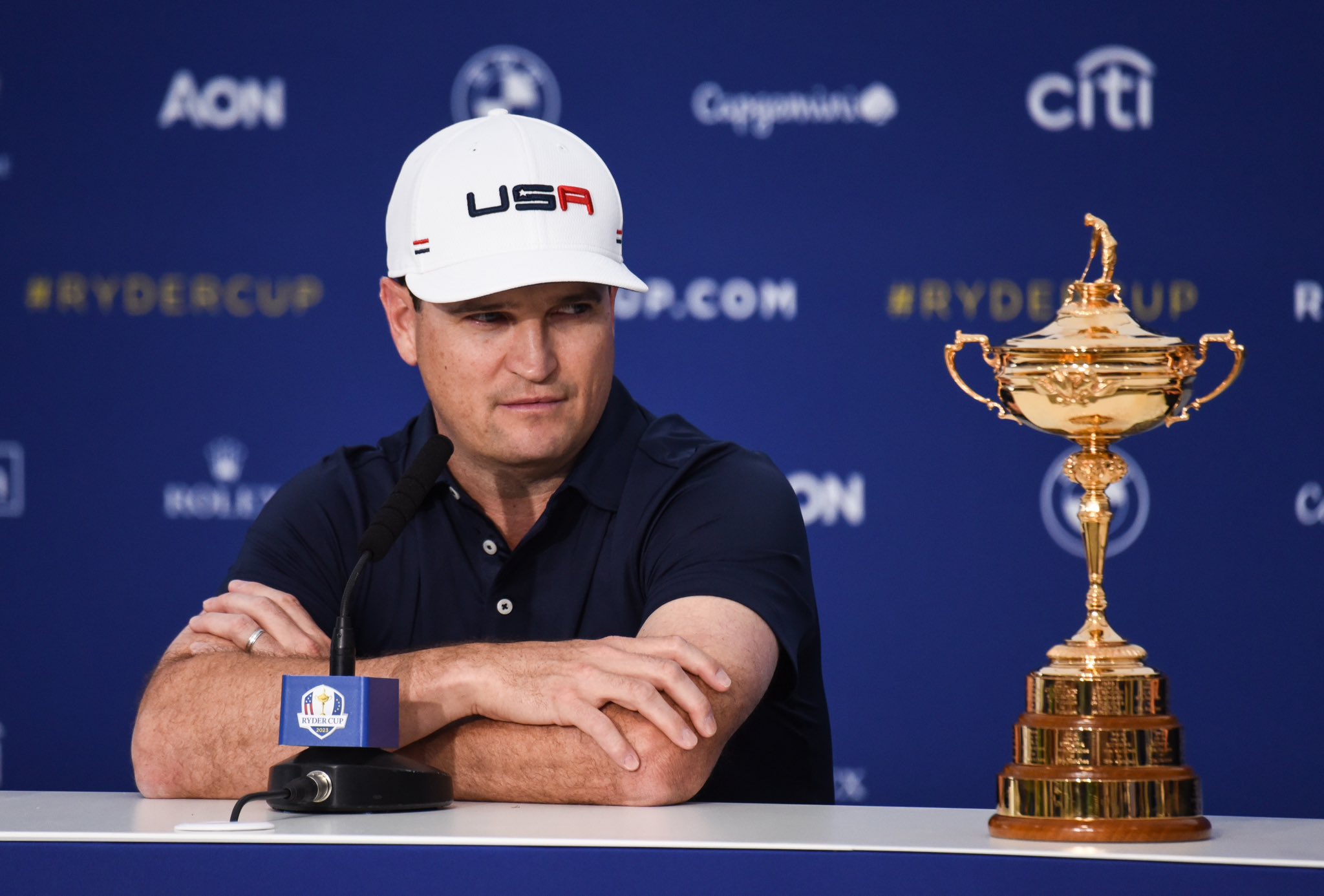
Zach Johnson Explains Why He Didn’t Pick Bryson DeChambeau for the Ryder Cup

Justin Thomas FIRES Coach before Ryder Cup…Who’s Next?
