
LIV Golf Tour
Alan Shipnuck’s ‘LIV and Let Die’ Captures the Intensity of LIV and PGA Tour Drama

Alan Shipnuck’s LIV and Let Die had me aching to have all 325 pages in my hands weeks ago when excerpts of the book were released online by the Fire Pit Collective. Many may have read the portions of the book and figured the juiciest parts were released to bring hype, and of course, why not?
There was a rant from Brooks Koepka about Ryder Cup teammates Justin Thomas and Jordan Spieth, calling them “country club kids,” and there were plenty of details about Rory McIlroy and his thoughts, as well as sentiments his former Ryder Cup teammates, who went unnamed, had voiced.
Nevertheless, I marched my ass right over to Amazon and ordered the book, eagerly waiting for its delivery on release day, which was yesterday, October 17.
I know what I’m doing this evening @AlanShipnuck pic.twitter.com/lYIeOr1j8p
— Joey Klender (@KlenderJoey) October 17, 2023
As someone who has three writing jobs to keep a roof over my head, afford to play the game I love, and take occasional trips to enjoy food and friends, I have never been someone who enjoys reading. The last book I read was at jury duty in 2021. “The Iceman,” a biography about mafia hitman Richard Kuklinski, was the book I took into the York County Judicial Center, where cell phones are forbidden.
But this one was different. I dove into some of Shipnuck’s Phil last year and enjoyed a lot of it, but I never got around to finishing it. This one, however, was a juicy tale of the most current event in golf, detailing a power struggle between the “good” PGA Tour and the “evil” LIV Golf. In reality, these are two high-profile organizations which, in reality, were both established by powerful figures wanting to change the game of golf.
A lot of people don’t know that Arnold Palmer and Jack Nicklaus were rebels in their own right, aiming to put more power in the hands of the players decades ago. Shipnuck’s book starts off with this important history lesson, which is crucial to the overall story that the book tells.
As it went on, I found myself completely invested in finding out the full, well-rounded story of how something that happened in the 1960s truly is occurring again today, just on different terms. There, of course, is a lot more to digest with the modern version of the story, as LIV and Let Die truly encapsulates an entire written history of what has transpired since LIV Golf was an idea that nearly collapsed as Dustin Johnson, the tour’s golden goose, committed his future to the PGA Tour just months before jumping ship to the Saudi-backed golf league.
It painted a full picture of how and why people have struggled with the terms of this golf league and its financiers. Several high-profile figures in the book, including Jimmy Dunne, who was one of the catalysts for the PGA Tour’s framework agreement (and not a merger, as Shipnuck emphasizes well into the book), lost 66 colleagues on 9/11, when he was playing a Mid-Am Qualifier instead of being at his office in the World Trade Center’s South Tower.
That is a day that is still a question mark to many, as some believe it to be financed by the very same people who paid names like Phil Mickelson and Brooks Koepka hundreds of millions of dollars to leave the Tour that had given them so much.
All of the points connect, and LIV and Let Die did a great job of telling the behind-the-scenes stories of everything that went on, from the considerations of players that decided to either take or not take the massive piles of cash that LIV had thrown at them, to the shit-talking stories from players casting stones at their adversaries.
My favorite part of the book involved a text exchange between Rory McIlroy and Greg Norman just days after the Northern Irishmen had captured the Canadian Open. After winning the event, Rory went on to say in his post-tournament interview with CBS Sports that he had passed “someone” who was running a rival golf league on the all-time wins list, cryptically taking a jab at Norman.
Rory McIlroy wins the RBC Canadian Open. His 21st.
Afterwards, asked about winning:
“21. 1 more than someone else.”
LIV Golf commissioner Greg Norman has 20. 😳PETTY pic.twitter.com/bB1vH2Ylh5
— The Plugged Lie (@PluggedLiePod) June 12, 2022
Just days later, McIlroy watched a documentary on Norman, which included tidbits of his 1996 collapse at Augusta National that gave Nick Faldo a Green Jacket. Rory, also a victim of a Sunday meltdown at the Masters (his occurred in 2011), hit Norman with a compliment. He was thankful that The Shark had reached out to him after the 2011 Masters, stating that it meant a lot to him.
“Hopefully it reminds everyone of what a great golfer you were,” Rory said to Norman.
Norman justified his involvement with LIV Golf, offering McIlroy an explanation that claimed he was trying to better the game. Rory accepted it. But just weeks later, Norman was casting stones at McIlroy in an interview, and Rory said, in response, that he vowed to become the most annoying thorn in the LIV CEO’s side.
Of course, reading the book had its moments of frustration. I couldn’t help but think about Brooks Koepka and his Mom, who vehemently denied that a phone call involving tears and discussions over $150 million ever took place. I thought about the fact that the guy who Koepka called a “country club kid,” Justin Thomas, had called Shipnuck an uncredible source, and Koepka only echoed that belief.
With that being said, there are a lot of direct quotes in this book, a lot of things that are just good journalism. Is some of it perhaps questionable on the fact that some players deny what is written in the book ever happened? Maybe, but I would go out and say that the source notes in the back of the book are a pretty good indication that Shipnuck is telling a story that only a handful of people would have access to, and he is one of them, and he was nice enough to share it with all of us.
Another point of criticism I felt was there were numerous points throughout the book where Shipnuck brought up Donald Trump when I didn’t feel like the 45th President needed to be talked about. Parts of the book felt like more of a political stance than a documentation of LIV Golf. Trump had a big part of this story.
He was vocal on several occasions about LIV and the PGA Tour over the past few years. Did he deserve some mention in this book? Yes. Did I feel like he needed to be mentioned as many times as he was? No. But then again, I’m not an author, Shipnuck was, and he felt it was best to put these bits of information in LIV and Let Die, and I bought it, and I loved it.
This is a book that, hopefully, can have a continuation after this framework agreement has established terms. There is undeniably going to be fireworks when:
- The agreement of terms is reached
- LIV Golfers and PGA Tour golfers are competing against one another again, and it is not during a Major Championship
- The subsequent players meetings take place
I can only hope that Shipnuck decides to write another masterpiece like this one, which he finished in a year.
Cover Image via CBS Sports


17 Ways to Play Private Golf Courses Without a Membership

Has LIV Golf Just Been Saved by a Mega Investor?

Shot Scope Brings its GPS and Performance Tracking to Apple Watch

Bankruptcy or Bailout…Will LIV Golf Survive?

Can LIV Golf’s Latest Survival Plan Actually Work?

We Played This Old Golf Course Where Thomas Edison Was A Member

Are You MEASURING Your Golf Swing Correctly? (This Can Help)
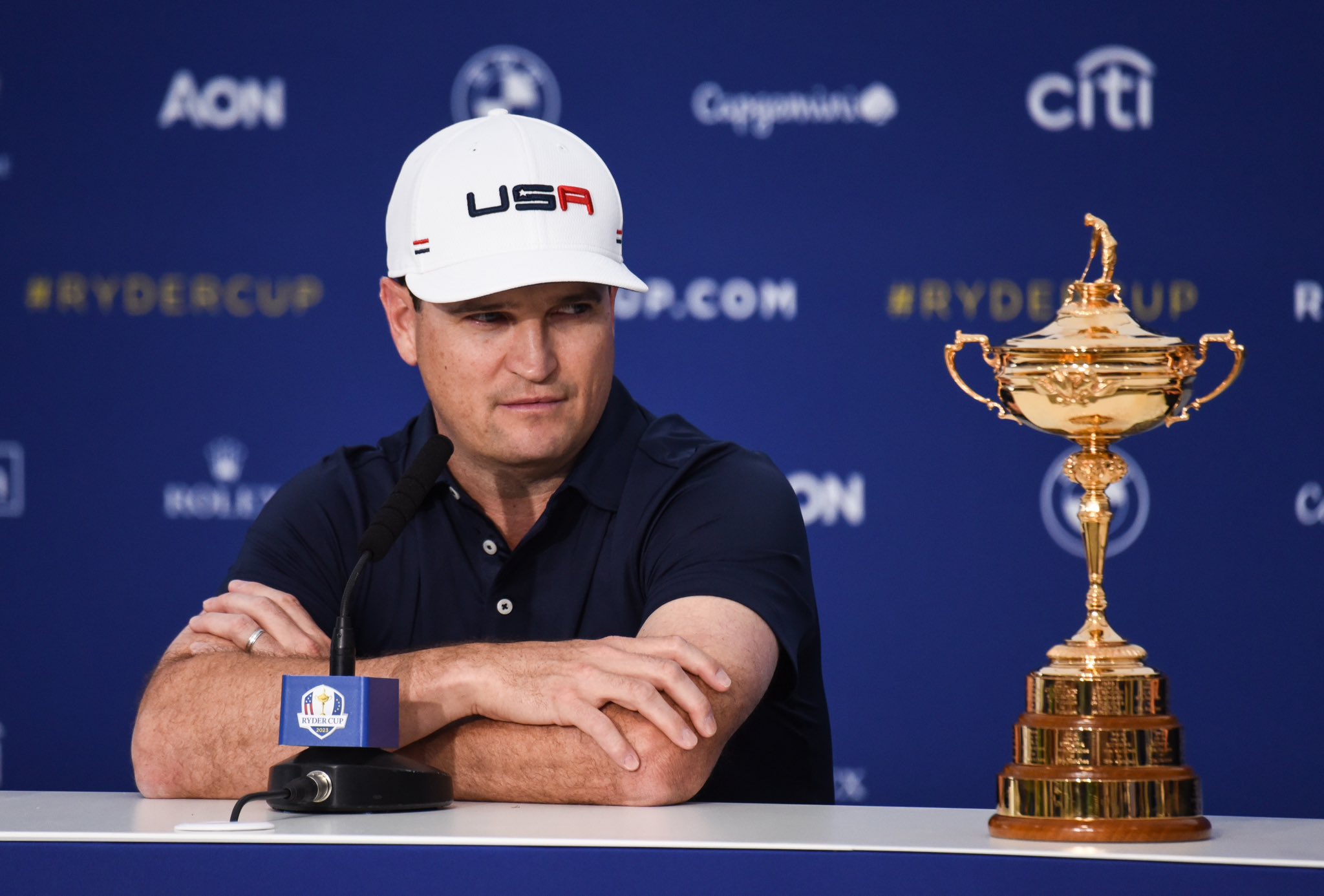
Zach Johnson Explains Why He Didn’t Pick Bryson DeChambeau for the Ryder Cup
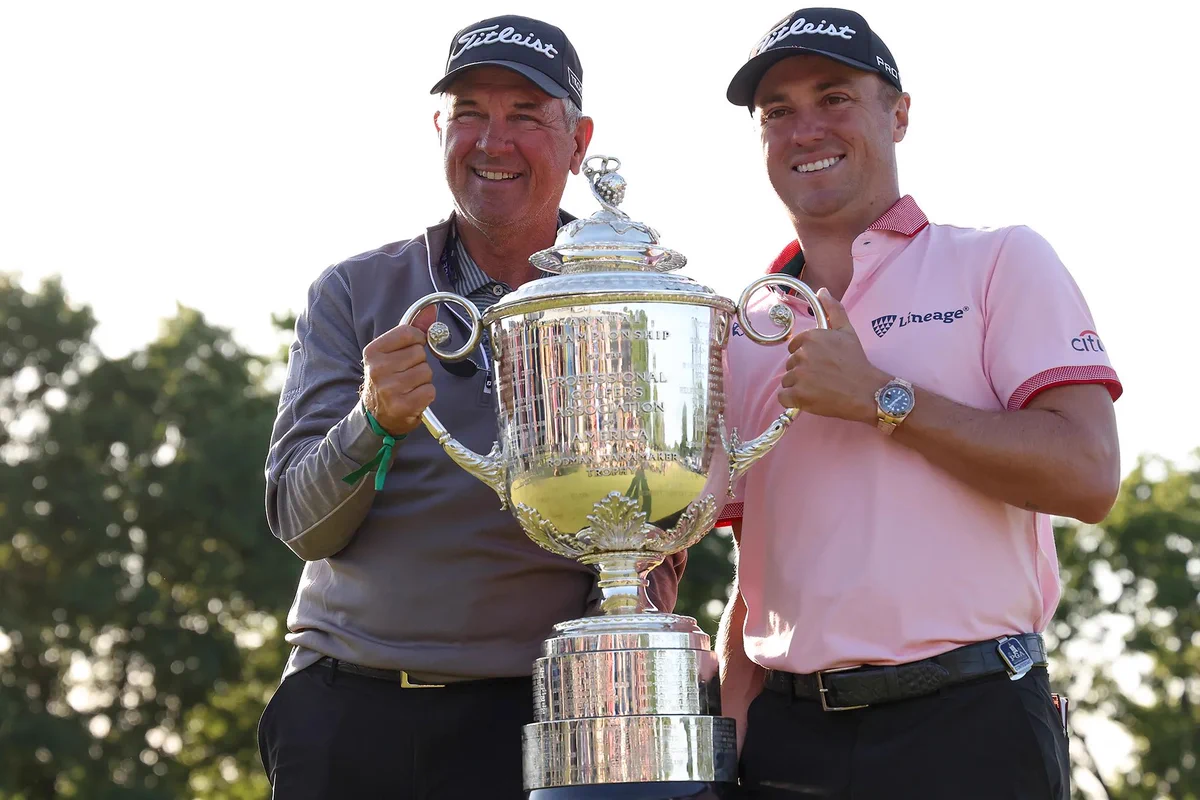
Justin Thomas FIRES Coach before Ryder Cup…Who’s Next?
