
Equipment
TEASER: the 2026 Equipment Releases Are Coming

As the 2025 professional golf season enters its home stretch and the Ryder Cup is just a few weeks away, equipment OEMs are already looking ahead to 2026. But it seems some are just a little more eager than others.
PXG
While PXG’s irons and wedges have always been its highlight offerings (indeed, PXG can largely be credited with developing the high-performance, player’s distance iron design that eventually led to offerings like the P790), their metalwoods are finally starting to generate similar, drool-worthy performance.
Indeed, the GEN6 woods were credited with being some of the most forgiving, while the Black Ops added some additional firepower. It appears that PXG has potentially developed a follow-up that will take performance even further.
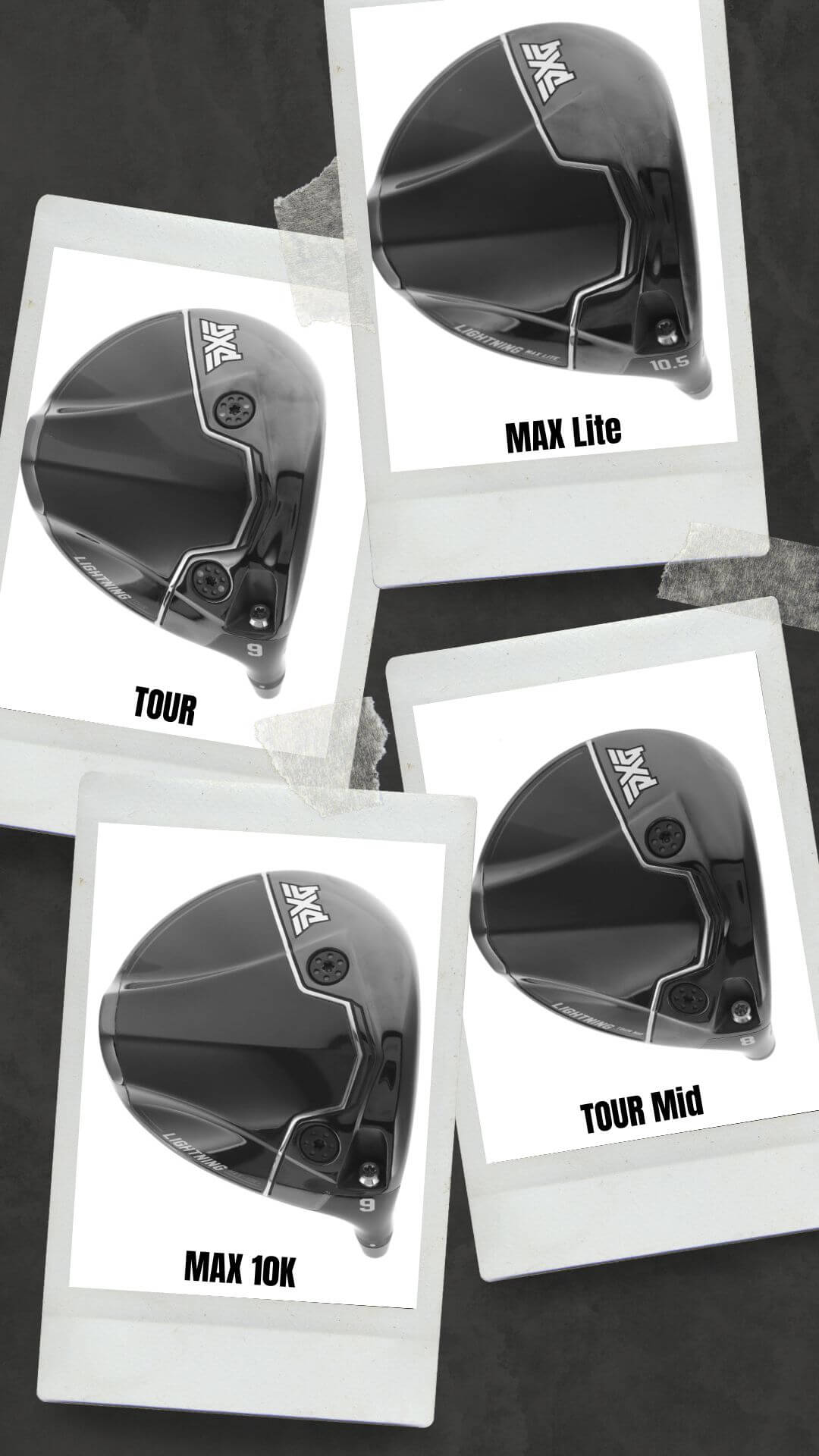
The USGA Database recently revealed four new PXG “Lightning” driver models: the Tour, Tour Mid, MAX 10K, and MAX Lite.
While it’s never easy to discern the features and changes from the black and white photos found on the USGA site, it appears that this will be an evolution of the Black Ops lineup. A gloss-finish, carbon sole paired with a center-positioned bridge that narrows as it runs from the face to the rear of the club. The biggest differentiator between the different models appears to be the sole weights. To explain, the Tour, Tour Mid, and MAX 10K each feature two, front-positioned weights (rather than three), while the MAX LITE features none. I, however, am guessing that the third, rear-weight has been repositioned to the absolute back of the clubhead, which is why it’s not visible from the sole.
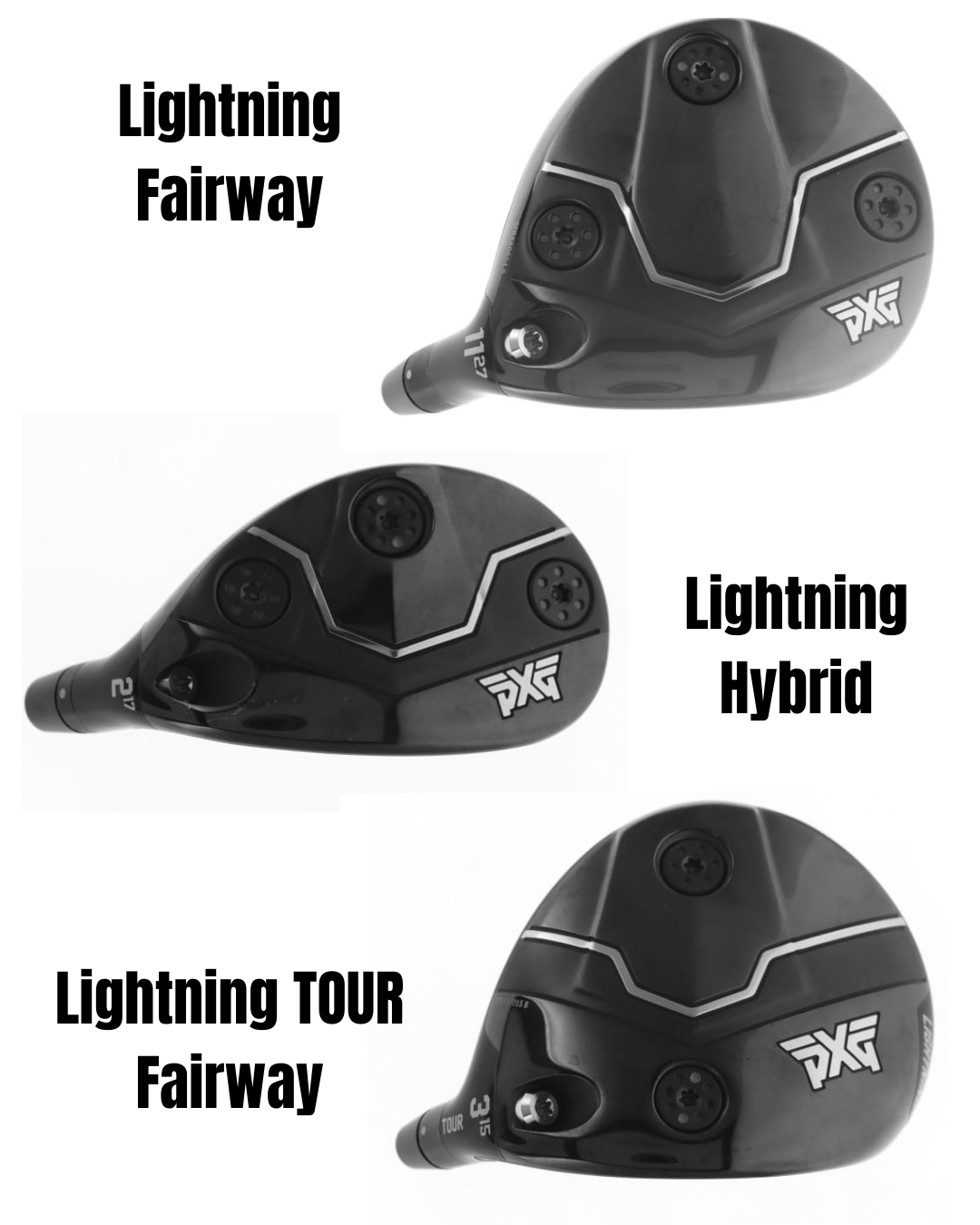
The Lightning drivers aren’t alone. PXG has also submitted two Lightning fairways (a standard and Tour variant, like the Black Ops) and a hybrid. These feature a little more variation; the standard Lightning fairway (and hybrid) features three sole weights, while the Tour only features two, positioned in a front and back orientation.
I anticipate that consistent with the Black Ops, the “Tour” designation will be designed with a fade-bias ball flight, lower launching, lower spinning model and slightly less forgiving. Building off that, it’s possible the Tour Mid will reign that in (straight-bias, low spin, low launch with middle of the road forgiveness) and the MAX 10K will be the most draw-biased, with a middle spin/higher launch and most forgiving.
As someone who’s playing the Black Ops metals right now, I am very excited to find out if Lightning can bring a little extra firepower with a dispersion improvement to help my handicap continue to trend in the right (lower) direction.
Titleist
After a few years of being the top performing (max distance) golf ball, the Pro V1x Left Dash was finally unseated this year by mix of alternatives from competitors.
The maker of the No. 1 ball in golf wasn’t going to let that stand, and shortly after the news broke, Titleist announced that the Tour-offering-gone-mainstream Left Dash was coming for its crown.
View this post on Instagram
7 years after it went mainstream, the Left Dash is finally receiving an update. And like all Titleist products, the Left Dash has entered its Tour Validation process, where the game’s best will give their final feedback and thoughts before entering mainstream production.
It’s safe to assume that, like its original design philosophy, the Left Dash will be a firmer-feeling, high compression ball that targets a high flight with lower spin.
Mizuno
If we’re playing a word association game, when I say “Mizuno,” most people would respond with “irons,” because “nothing feels like a Mizuno.” But that certainly doesn’t mean Mizuno’s other offerings should be overlooked; indeed, their golf balls were among the top performers for ball speed and distance.
Likewise, Mizuno’s drivers shouldn’t be overlooked.
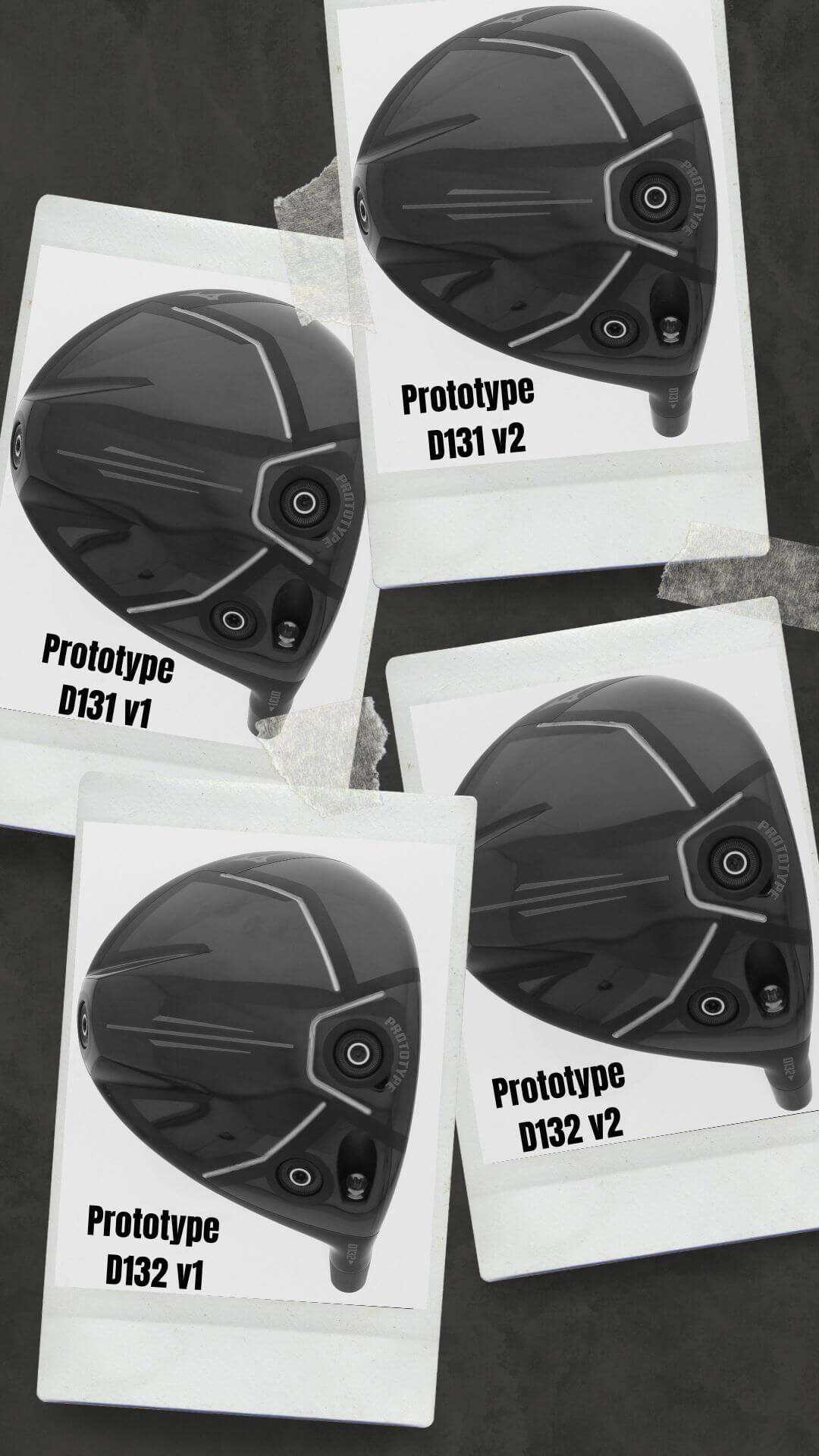
It seems that the Mizuno design team is taking a different direction. First spotted on the LPGA, the four Mizuno Prototype Drivers have appeared on the USGA Conforming List: versions 1 and 2 of D131 and D132.
It is difficult to discern differences between the four models, but what is clear is that they each feature three weights: one in the center, front, one in the forward, heel, and a third in the center, absolute rear.
Like many recent drivers, the Mizuno also seems to feature a center-positioned bridge with a weight located at the rear. The philosophy behind the design feature is that it increases forgiveness and stability on off-center shots, while also enhancing aerodynamics (more clubhead speed equals greater distance).
Most significant about these prototypes is the absence of Mizuno’s CORTECH Chamber—a small channel located on the sole and immediately behind the club face that looks to promote a rebound effect and increased ball speeds.
Due to the positioning of the front, center sole weight, it appears that the CORTECH Chamber may be getting benched, rather than completely redesigned and upgraded.
As initially mentioned, the winter product debut season is far away (hopefully, very far so I can enjoy a lengthy fall golf season here in the NY area), but it seems that some OEMs are already “all gas, no brakes” with their upcoming equipment releases. And just like a powder keg, all it takes is one OEM to start showcasing stuff before it becomes an all-out arms race, so expect more leaks and teasers of 2026 equipment in the very near future.
Cover Image via PGA TOUR


Blind Ranking The Most Iconic Masters Moments

FIRST LOOK: Titleist Unveils New Vokey WedgeWorks Grind Lineup

New Shot Scope LM1: The Best Budget Launch Monitor Under $200?

Did LIV Golf Finally Get its Big Breakthrough?

FIRST LOOK: Titleist’s New GTS Driver Lineup Spotted on Tour

Streamsong Unveils “Bone Valley”: A Bold New Name and Logo for Its Highly Anticipated Fifth Course
FIRST LOOK: Titleist’s New GTS Driver Lineup Spotted on Tour

6 Big Changes Coming to the PGA TOUR
New Shot Scope LM1: The Best Budget Launch Monitor Under $200?
FIRST LOOK: Titleist Unveils New Vokey WedgeWorks Grind Lineup

We Played This Old Golf Course Where Thomas Edison Was A Member

Are You MEASURING Your Golf Swing Correctly? (This Can Help)
Zach Johnson Explains Why He Didn’t Pick Bryson DeChambeau for the Ryder Cup
Justin Thomas FIRES Coach before Ryder Cup…Who’s Next?