
Golf Instruction
Your Swing – Lower Scores (Part Two)


Most of the time when I play, I am experimenting with this or that. Trying out new moves that I’ve worked on at the range, trying to improve my distance, or trying to shape my shots. And so, under these circumstances, I’m not really too concerned about my score. I’m having fun.
But competitive golf is a different animal. When there’s money at stake, or a tournament match, or a championship, an entirely different mind set is required. One where every stroke is carefully calculated for maximum efficiency. One where the lowest possible score becomes paramount.
Here’s the Situation…
Halve the hole and you win. You’re getting a stroke. It’s a tough 420 yard par 4. You have to make bogey or better for the money and the match. You’re going to do that by planning to arrive on the green in 3 shots, with the third being an attacking pitch shot from a chosen lay up spot.
Play it Close to the Vest: Take no Chances
Avoid trouble. That’s the first principle in this situation. That’s axiomatic. You want the money? You want the trophy? All you have to do is to make bogey. So avoid trouble.
This likely means not using the Driver off the tee. Unless you hit the fairway 80% of the time (that’s 4 out of 5) with that club, leave it in the bag. You’re going to play this hole down the middle of the fairway arriving in 3 shots, not the standard two.
The Key
The key to this strategy is having your pitching distances from 40 to 70 yards dialed in cold. Here’s how to do that. Take a wedge and make a half swing. This half swing is going to be repeated over and over. The swing should be comfortable for you. It should stop at about 10 o’clock on the back swing, and at about 2 o’clock on the follow through. 10 to 2. 10 to 2. Over and over. Same rhythm. Same speed.
Start with your 60 degree wedge. Put the half swing on it. Hit it 15 times. Carefully measure average the distance to the end of the roll out. There’s no back up on this shot. Rather, it should bounce once or twice after landing and settle right down.
What’s the distance you get? It should be around 40 yards. Good. Go to the 56 degree wedge. Same swing. Same rhythm. Same speed. 15 shots. Distance? Should be about 50 yards.
Try the 52 next. You’ll get 60 yards. Then the pitching wedge (48 degrees) and you’ll get 70 yards. Practice these shots, and the half swing so that you can repeat it, and them, at any time under any condition. Whatever the wedges in your bag, find the exact distances for each with your half swing.
Now, when you’re at your lay up spot, find the exact distance to the pin. Don’t rely on your eye. Use a range finder. Then, when you’re within 70 yards of the hole, there’s no guessing about how hard to hit the shot. You’ve got the swing and the exact distance. Attack! If you’re between clubs, take the higher wedge and stay below the hole.
Your aggressive play should leave you with 5 to 15 foot par putts. You’ll make some of these. After a while, you’ll make a lot of these.
Getting to the Lay Up Spot
Study the hole from the tee. If the pin is on the left, lay up to the right. Open up the green for your attack. If the pin is on the right, lay up to the left. If the pin is in the middle, front or back, lay up to the middle.
How far from the green depends on the topography of the hole. Where is the best spot on the left, the right or in the center? You want a lay up spot that is flat, with no obvious trouble to skirt and one that offers an unencumbered view of the hole.
For example, if the hole is on the left and 420 yards from the tee. And there’s a nice flat patch 60 yards from the green on the right, you’ll pick that spot. That means that you are 360 yards from the lay up spot.
Now, you are going to hit two shots to get to the lay up spot. What two clubs best give you the safest and most reliable 360 yards? A 3 wood and an 8 iron? Two 4 irons? A 2 hybrid and a 7 iron? A 3 rescue and a 6 iron? Whatever the combination is, use it. Play to the lay up spot. Then attack the pin with your wedge.
You are taking as much risk out of the hole as is possible. You don’t want to flirt with the trees, or the water, or the O.B. or the deep rough or whatever defenses the hole throws at you. You just want to matriculate the ball down the fairway so that you can attack with your wedge.
The Pitch Shot
Now that you’re at the lay up spot, there’s one last item of business: decide where on the green you want to leave the ball. You don’t want to leave it above the hole and have to putt downhill. If you’re right handed player you probably don’t want to leave it on the left side of the pin either. You likely want to leave it below the hole and to the right, that way your par putt will be the easiest technical putt: uphill and breaking to the left. Look at the green and see where it has to land to leave you with that putt. Now you’re good to go. Put that good half swing on the 52.
After Thought…
On the surface, this strategy doesn’t sound too sexy. But if you are playing for money or a tournament championship, or even if you’re just playing some guy at the club and you want to beat his brains in and maybe permanently get into his head, … and you’re getting a stroke on the hole, and all you need is a bogey, what’s not to like? It’s an easy bogey. And you win.
An Interesting Experiment
Play a round where you bring this ‘arrive in 3’ strategy to all the par 4’s on the course. See what kind of numbers you put up. Compare with what you get when you play your regular game. You’ll find that staying in the fairway and hitting shorter shots makes for better scoring.
Cover Photo via Flickr


LIV Golf Could Be Facing its Final Chapter

Foresight GC2 Review: A Surprisingly Affordable Launch Monitor From Foresight

FIRST LOOK: Rapsodo MLM2XPRO Adds Putting, Faster Performance & More

FIRST LOOK: Titleist’s 2027 Pro V1 and Pro V1x Are Officially Showing Up on Tour

2026 Presidents Cup Preview: Did Team USA Get It Right?
2026 Presidents Cup Preview: Did Team USA Get It Right?
FIRST LOOK: Rapsodo MLM2XPRO Adds Putting, Faster Performance & More
Foresight GC2 Review: A Surprisingly Affordable Launch Monitor From Foresight
FIRST LOOK: Titleist’s 2027 Pro V1 and Pro V1x Are Officially Showing Up on Tour
LIV Golf Could Be Facing its Final Chapter

We Played This Old Golf Course Where Thomas Edison Was A Member

Are You MEASURING Your Golf Swing Correctly? (This Can Help)
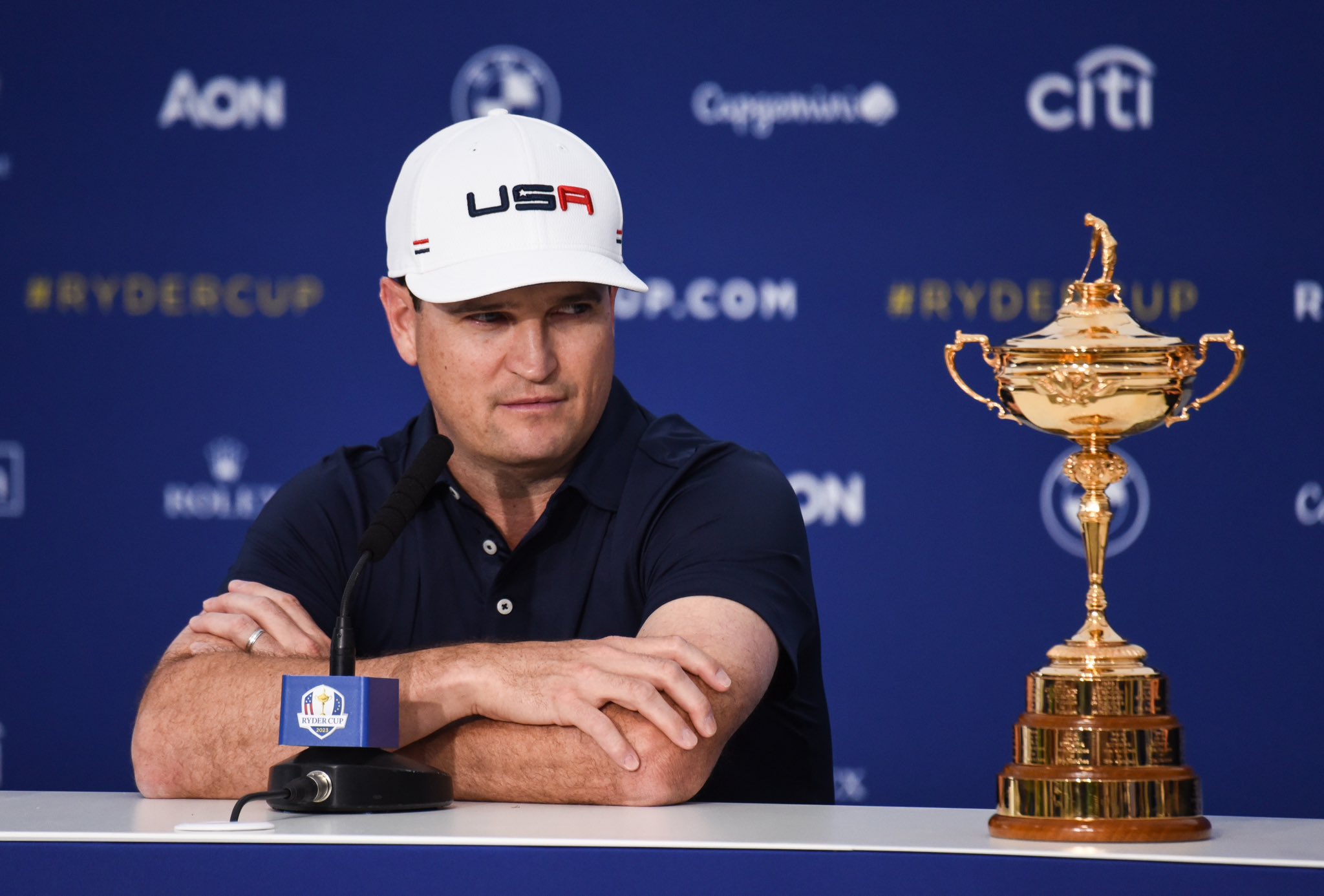
Zach Johnson Explains Why He Didn’t Pick Bryson DeChambeau for the Ryder Cup

Justin Thomas FIRES Coach before Ryder Cup…Who’s Next?
