
Golf Instruction
Here’s How to Start Dropping More Mid-Range Putts

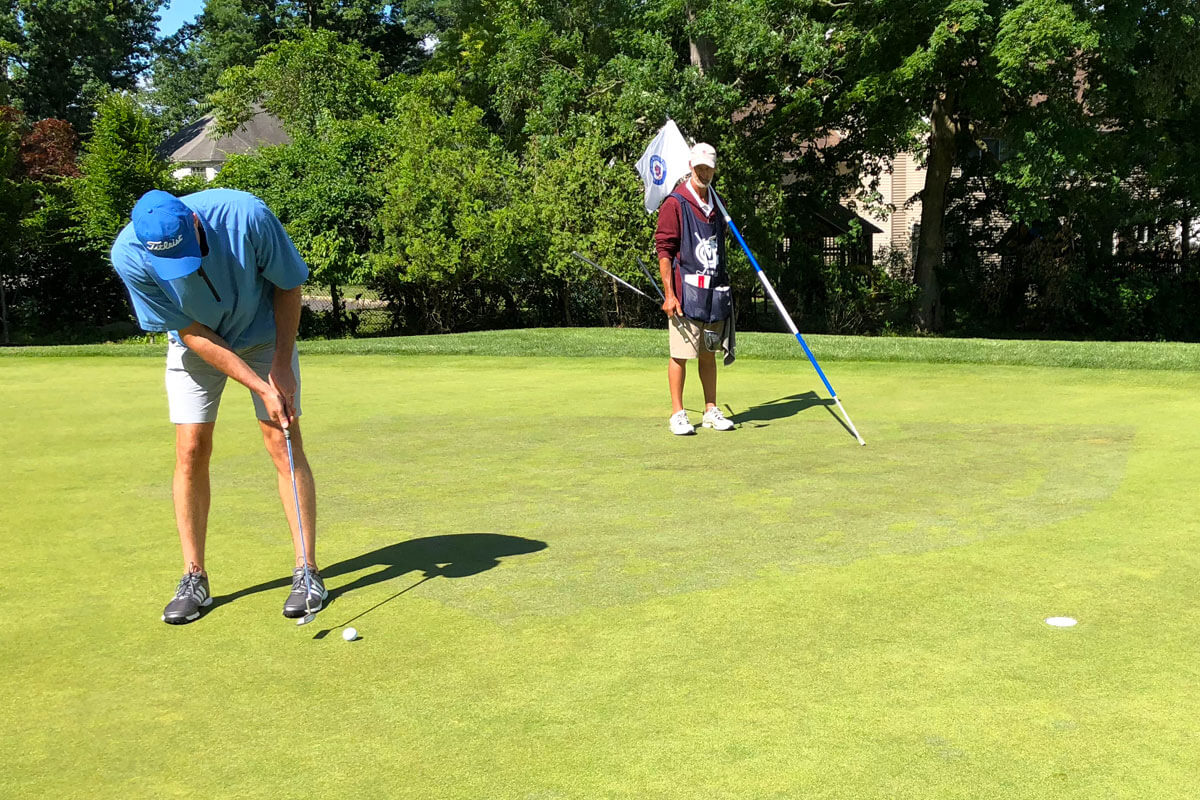
When on the greens, you can break putts down into three basic categories – short putts, mid-range putts, and long putts. For two of those categories, the goal for the putt is pretty obvious.
When you have a short putt, you are only thinking about knocking it in. Anything less would be a disappointment. On the other hand, when you are facing a long putt, the goal is to lag it up close for an easy tap-in.
It’s a nice bonus to make one of those bombs from downtown from time to time, but that is never your expectation.
So, that leaves the mid-range putt. What are you trying to do with these?
The mental approach you should take is somewhat of a blend between the two other categories of putts mentioned above. You want to give yourself a chance to make your mid-range putts while not doing anything that is going to bring the possibility of a three putt into the picture.
A solid putt that has a chance to go in and leaves an easy tap-in if it doesn’t fall is the ideal outcome.
With that in mind, let’s cover some tips which will hopefully help you make a few more of those tricky mid-range putts.
Prepare Your Speed Control
We can’t emphasize this point enough – speed control is the key to great putting. It’s great to hit your putts on the line that you intend, but that kind of accuracy is only useful if you roll the ball with the right pace.
Hitting your putts too hard or too soft is going to mean they aren’t successful in the end. Distance control is obviously important from long range, but it is a significant part of the equation on mid-range putts as well.
The best thing you can do for your speed control on a given day is to give yourself some time before the round to roll plenty of practice putts back and forth across the putting green. Green speeds change from course to course, and even from day to day on the same course. Giving yourself time to get acclimated with the green speeds you will face once your round begins is a huge part of knocking some in from mid-range.
Play More Break
In golf circles, the low side of the hole is often referred to as the ‘amateur’ side. Why is that? Simple – amateurs tend to under read their putts.
If you feel like you are constantly seeing your putts slide by on the low side, it’s time to start playing more break. Give the ball an inch or two more than you are seeing during your read and you might be surprised how many of them fall in.
There is an additional benefit to playing more break which should be mentioned. When you play minimal break and try to force the ball to hold that line, you wind up hitting your putts pretty hard. That is out of necessity – if you don’t hit the ball hard, it isn’t going to stay up and have a chance to grab the hole. Of course, if it doesn’t catch the hole, it’s going to race past and you may have a long comebacker to save your two putt.
On the other hand, if you play plenty of break, you can afford to use less pace and let the ball run out of speed right around the cup. Sometimes, the ball will drop in, and sometimes it won’t. When it doesn’t, it should stop near to the hole for an easy tap-in and a stress-free two putt.
If you don’t like having to deal with stressful three-footers over and over again during your rounds, the combination of more break and less speed may be for you.
Think Ahead
It’s hard to make mid-range putts when you are positioned above the hole. You can’t be too aggressive with a downhill putt, and you may have a hard time getting the ball to hold its line as it wanders down the slope.
You are going to face downhill putts from time to time but do what you can to position your ball under the hole instead. If you can place your ball so you are putting uphill from mid-range, you will have a better chance to make a few.
Yuka Onaga of Japan hits an approach shot on the second hole during…
Yuka Onaga of Japan hits an approach shot on the second hole during the second round of the Daikin Orchid Ladies Golf Tournament at Ryukyu Golf Club on March 08, 2019 in Nanjo, Okinawa, Japan. Get premium, high resolution news photos at Getty Images
As you get ready to hit your approach shot, take a look at the general slope of the green and decide which side would be better to target. Of course, if the green is relatively flat, or if you are playing a short approach with a wedge, you’ll probably just aim right at the flag. This kind of strategy comes into play mostly when facing a long approach or an approach into a severely sloped putting surface.
Hold that Head Steady
This is a tip that you aren’t going to be surprised to see on this list. When you want to make putts, you need to keep your head still.
It really is that simple. Head movement during the putting stroke is only going to cause trouble, as moving your head is almost certain to cause your shoulders to move as well – and that movement is going to be translated down into the putter. Once your head is positioned at address for a putt, do what you can to keep it in that position until the ball is on its way.
One of the best ways to keep your head still is to focus on a specific spot on the golf ball throughout the stroke. This might be the number that is printed on the ball, or it might be a mark that you draw with a pen before the round begins. Whatever the case, use that spot to keep your eyes steady, and your head should follow suit.
We hope these simple tips help you hole a few more mid-range putts in your upcoming rounds. It always feels good to roll one in from this range, and your scorecard certainly appreciates it. Play well!



Ocean City Golf Trip Guide: Great Courses, Affordable Golf & A Beach Town Vibe

LIV Golf Could Be Facing its Final Chapter

Foresight GC2 Review: A Surprisingly Affordable Launch Monitor From Foresight

FIRST LOOK: Rapsodo MLM2XPRO Adds Putting, Faster Performance & More

FIRST LOOK: Titleist’s 2027 Pro V1 and Pro V1x Are Officially Showing Up on Tour
FIRST LOOK: Rapsodo MLM2XPRO Adds Putting, Faster Performance & More
Foresight GC2 Review: A Surprisingly Affordable Launch Monitor From Foresight
FIRST LOOK: Titleist’s 2027 Pro V1 and Pro V1x Are Officially Showing Up on Tour
LIV Golf Could Be Facing its Final Chapter
Ocean City Golf Trip Guide: Great Courses, Affordable Golf & A Beach Town Vibe

We Played This Old Golf Course Where Thomas Edison Was A Member

Are You MEASURING Your Golf Swing Correctly? (This Can Help)

Zach Johnson Explains Why He Didn’t Pick Bryson DeChambeau for the Ryder Cup

Justin Thomas FIRES Coach before Ryder Cup…Who’s Next?