
Golf Instruction
FRIED EGG: How to Escape a Plugged Lie in the Bunker

There are few feelings in golf quite as frustrating as walking up to a bunker only to find that you have a terrible lie. You probably knew your ball was going to be in the bunker – but you didn’t have any idea that the lie would be this bad.
Of course, there is no sense is pouting about it, as the lie is what it is, and you can’t change it. The only thing to do now is to get down to work on getting the ball out successfully in a single swing.
With a fried egg lie in a bunker, there is only so much you can do. In other words, the outcome of this shot is not totally in your hands. However, by learning the right technique and understanding what to expect with this kind of shot, you can move the odds in your favor a bit.
We hope the advice below will help you manage this unfortunate situation the next time it arises.
What is a Fried Egg Lie?
Let’s make sure we are on the same page here before we go any further. A fried egg lie is often created when your ball stays exactly where it landed in the bunker. Instead of bouncing and rolling in the sand, the ball simply sticks in place.
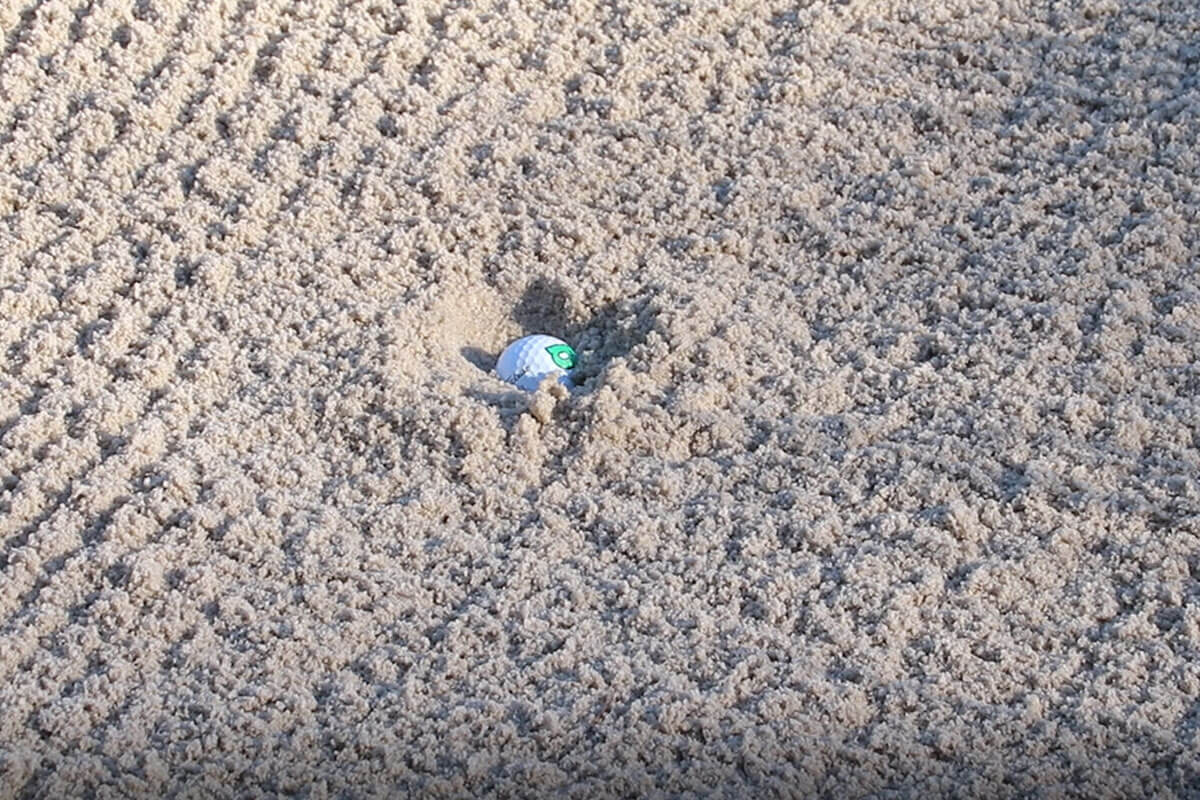
This is a problem because you won’t be able to access the ball cleanly with your swing. With sand up around the sides of the ball, you’ll need to get deep down into the sand to escape the bunker.
In some cases, with a particularly nasty lie, it might simply be impossible to get out in one swing.
Avoiding this Situation
Believe it or not, there are some steps you can take to reduce the chances of coming away with a fried egg lie.
This type of lie is most likely to occur when your ball is falling nearly straight down into the sand. When the ball is coming down from a high trajectory, it won’t have much forward momentum to move it away from its landing spot, so it will be more likely to stick in place. Also, these kinds of lies are more likely to occur on courses with soft sand conditions.
To stay away from a fried egg lie, keep these points in mind:
1. Careful on Short Wedges
Full-swing wedge shots from inside 100 yards or so are always a little riskier as far as a fried egg is concerned. That’s simply because the ball is going to be coming down from so high as it approaches the green complex.
If you hit the bunker instead of the putting surface, it’s always possible that the ball will plug. Keep this in mind as you pick your target and give yourself a little margin for error away from the sand.
2. Watch Out Going into the Wind
This is when a fried egg lie is most likely to occur. On an approach shot into the wind, the trajectory of your shot can ‘stand up’ and fall straight down into the sand.
Of course, into the wind shots are also more likely to come up short, so any front bunker should be carefully noted.
The Right Technique
Even with careful planning, fried egg lies are sure to come up from time to time. When they do, it is solid technique that will help you get out of the sand as quickly as possible.
The following steps are a great place to start but be sure to practice your own technique to find something that works for you.
1. A Steep Downswing
This is crucial when trying to dig the ball out of a poor lie in the sand. If you come in on a shallow path, you won’t (usually) be able to get deep enough into the sand to gouge the ball out.
To accomplish a steep downswing, there are a couple of changes you’ll need to make to your standard bunker technique. For one thing, you will want to set your wrists early in the backswing, hinging them shortly after the takeaway begins. Also, place the ball a little further back in your stance than normal, and choke down slightly on the club.
2. Make a Full Commitment
You can’t go into this shot with any doubts as to your plan. The shot may or may not come out as you hoped – there is some luck involved in this one – but it’s essential to be fully committed to the plan either way.
The club is going to lose a lot of energy as it hits the sand on the way down, so only a fully committed swing will be good enough to propel it through and get the ball moving.
3. Take Your Time on the Backswing
Many golfers go wrong on this point. You are probably feeling kind of anxious about the shot when the swing begins, so you may rush through your backswing and cut it short just to get the shot over with. Don’t make this mistake.
Without a full backswing, you won’t have the space you need to get the club up to speed before it reaches the sand. It might feel weird to make such a big backswing so close to the green, but it’s the only way to get the ball out of a fried egg lie consistently.
Square It Up!
On a normal bunker shot near the green, when you have a good lie, you’ll lay the face of your wedge open to maximize loft. That’s a good technique, but it’s not the right option here. Instead, you want to square the face up so you can use the leading edge to slice through the sand.
If the face is open, the bottom of the club will bounce off the sand, and you won’t get the dig you need.
Seeing a fried egg lie in a bunker is never good news. Even with good technique, you aren’t always going to get the results you desire. Spend a little time practicing from these kinds of terrible lies so you can minimize the damage when this situation pops up on the course.


LIV Golf Could Be Facing its Final Chapter

Foresight GC2 Review: A Surprisingly Affordable Launch Monitor From Foresight

FIRST LOOK: Rapsodo MLM2XPRO Adds Putting, Faster Performance & More

FIRST LOOK: Titleist’s 2027 Pro V1 and Pro V1x Are Officially Showing Up on Tour

2026 Presidents Cup Preview: Did Team USA Get It Right?
2026 Presidents Cup Preview: Did Team USA Get It Right?
FIRST LOOK: Rapsodo MLM2XPRO Adds Putting, Faster Performance & More
Foresight GC2 Review: A Surprisingly Affordable Launch Monitor From Foresight

Turning Stone: The Northeast’s Most Underrated Golf Destination
FIRST LOOK: Titleist’s 2027 Pro V1 and Pro V1x Are Officially Showing Up on Tour

We Played This Old Golf Course Where Thomas Edison Was A Member

Are You MEASURING Your Golf Swing Correctly? (This Can Help)

Zach Johnson Explains Why He Didn’t Pick Bryson DeChambeau for the Ryder Cup

Justin Thomas FIRES Coach before Ryder Cup…Who’s Next?

What Nobody Tells You About Great Ball Striking
-
 Equipment1 week ago
FIRST LOOK: Rapsodo MLM2XPRO Adds Putting, Faster Performance & More
-
 Equipment1 week ago
Foresight GC2 Review: A Surprisingly Affordable Launch Monitor From Foresight
-
 Equipment1 week ago
FIRST LOOK: Titleist’s 2027 Pro V1 and Pro V1x Are Officially Showing Up on Tour
-
Podcasts2 days ago
LIV Golf Could Be Facing its Final Chapter