
Golf Instruction
3 Simple and Smart Ways to Start Holding More Greens

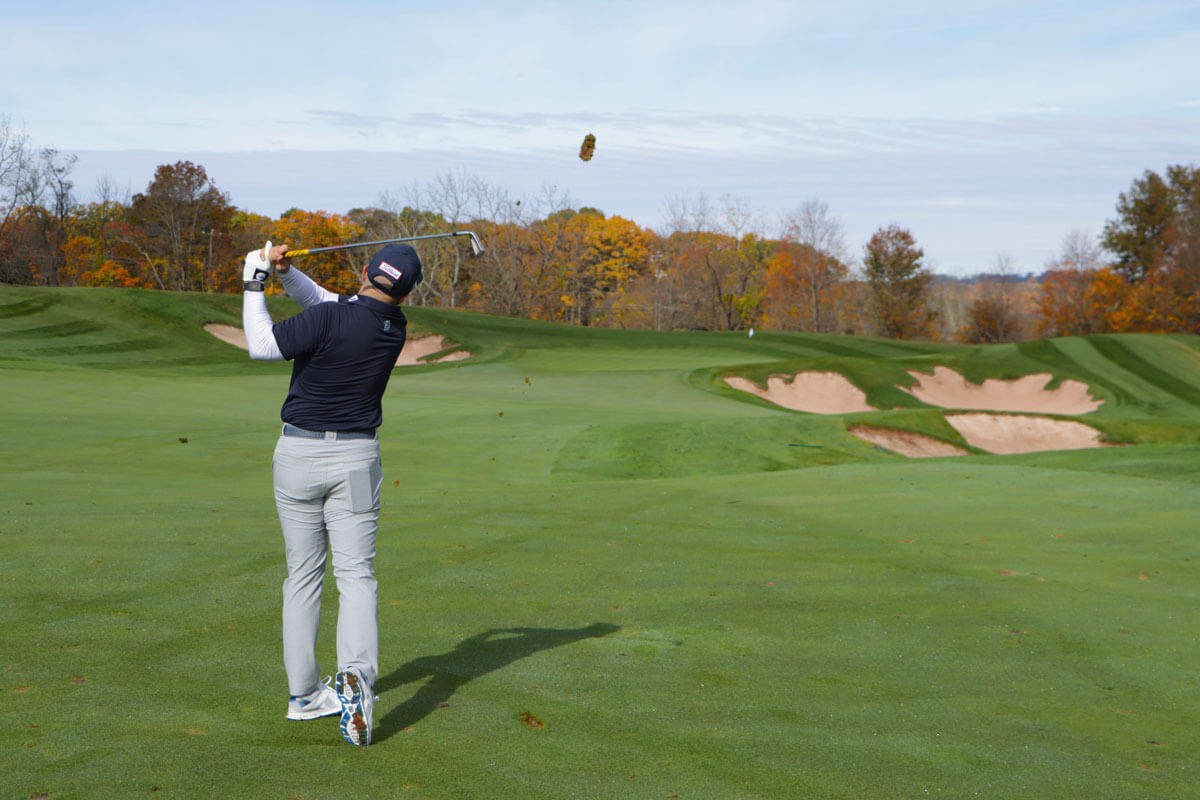
Hitting the green with an approach shot is an exciting accomplishment for many golfers. Of course, that excitement will be short-lived if your ball lands on the green but proceeds to roll off the back.
You don’t just want to hit the green with your approach shot – you want the ball to hold the green so you can set up a birdie putt.
If you are struggling to hold greens with your approach shots, we have some solutions for you in this article. By making some relatively simple adjustments, you might be able to hold more greens in upcoming rounds.
And, when you hold more greens, it’s quite likely that your scores will move in the right direction.
Two Ways to Get Your Ball to Stop
Before we get into the tips, let’s go over a refresher on what it is that makes a golf ball stop. There are two general ways you can get your golf ball to stop when it lands on the green – loft and spin.
With loft, you are bringing the ball down onto the green from as high as possible, using that trajectory to limit the ball’s forward momentum after it lands.
You can also use spin to stop the ball. When you load up an approach shot with a high rate of backspin, that spin will help the ball ‘grab’ the putting surface and stop it quickly. In fact, on a somewhat soft green, the ball may even spin back toward you a bit after it lands.
In the real world, it is the combination of loft and spin that stops the ball, not one or the other. For example, if you hit a high pitching wedge shot from the fairway, the high trajectory will help the shot stop, as will the spin rate. As your trajectories get flatter and your spin rate gets lower, it becomes harder and harder to hold greens.
It’s important to be realistic about what shots are going to hold greens consistently. A five iron out of the rough is always going to be tough to keep on the green, for example, even for a good player. But if you are struggling to hold greens with shorter clubs and from the fairway (where you’ll get more spin), it’s time to think about making some changes.
Tip #1 – Change Your Ball
This is perhaps the easiest solution to the problem of failing to hold greens.
Depending on the type of ball you are currently using, and depending on the dynamics of your swing, you might be able to generate more spin by changing to a different model. Obviously, this is a simple solution because you don’t have to change anything about your technique – just purchase a different ball and give it a try.
If you decide to search for a higher spin rate with a different ball, keep the following points in mind:
- Higher spin is a good thing when it helps you stop wedge shots, but it can cause trouble with longer clubs like the driver. Search for a ball that walks the line and gives you a playable spin rate with all clubs.
- You might need to spend more money on your golf balls to get more spin. Those that offer higher wedge spin rates tend to be more expensive than the budget balls most players start with.
- Changing your ball means changing the way your shots feel coming off the club – especially in the short game. Don’t make this kind of change right before a tournament or round where you want to play well.
Tip #2 – Improve Your Angle of Attack
For the player who is struggling to stop wedge shots or other short iron shots into the greens, angle of attack is likely where changes need to be made. Simply put, if you want to load up your short shots with spin and get them to stop quickly, you need to hit down through the ball.
Striking your ball on the downswing is going to help you impart more backspin – that backspin will both help the ball stop when it lands and also help it climb higher into the air as it flies.
Learning how to hit down on the ball properly is a complex topic that needs more than a few sentences of explanation. However, a good place to start is by focusing on balance and ball position.
If you place the ball roughly near the center of your stance, and you maintain your balance throughout the swing, it will become fairly easy to hit down and take a nice divot.
Players who struggle to hit down through impact often lean back away from the target in the downswing, trying to lift the ball off the turf. This move causes them to hit up instead of down, and a long list of problems can then arise.
Tip #3 – Adjust Your Target Distance
Your inability to hold greens may also be related to poor target selection. This is especially true when playing on a firm course where the ball can be expected to bounce and roll.
Take the example of an approach shot where you have 150-yards to the hole. That hole is cut near the back of the green, so you only have 155-yards to the back edge. How far should you try to hit the shot? If you said 150-yards, we may have found your problem.
Unless the greens are extremely soft, you shouldn’t be trying to hit the ball 150-yards in this scenario. Rather, you should be playing a shot that flies somewhere in the 140 – 145-yard range, depending on the firmness of the turf, slope of the green, etc. You need to give your shots room to bounce and come to a stop.
It’s common for recreational golfers to just read a yardage in a rangefinder or GPS device and then pull the club that matches that distance. Making this strategic mistake could be just as much of a problem as not getting enough spin or failing to hit down on the ball.
It’s a great feeling to stand over an approach shot knowing you have a good chance of not only hitting the green but holding it, as well. Consider the three tips we’ve listed in this article and hopefully you’ll be putting for birdie more often than ever before.


2026 Presidents Cup Preview: Did Team USA Get It Right?

Turning Stone: The Northeast’s Most Underrated Golf Destination

LIV Golf Filed for Bankruptcy…Now What?

17 Ways to Play Private Golf Courses Without a Membership

Has LIV Golf Just Been Saved by a Mega Investor?
2026 Presidents Cup Preview: Did Team USA Get It Right?
LIV Golf Filed for Bankruptcy…Now What?
Turning Stone: The Northeast’s Most Underrated Golf Destination

We Played This Old Golf Course Where Thomas Edison Was A Member

Are You MEASURING Your Golf Swing Correctly? (This Can Help)
Zach Johnson Explains Why He Didn’t Pick Bryson DeChambeau for the Ryder Cup
Justin Thomas FIRES Coach before Ryder Cup…Who’s Next?
