
Golf Instruction
Here’s How to Dial-in Your Yardages and be “Pin-High” More Often

What are my yardages?
Depending on how often you play, you may or may not have a strong sense of how far your ball typically travels with every one of the clubs in your bag.
Without this knowledge, it’s virtually impossible to be consistently hitting the ball pin-high or the proper distance with respect to your intention and the hole.
By most accounts, the best iron player to ever walk the earth, Tiger Woods, earned this distinction because of one facet of his iron play more than any other, according to Jack Nicklaus. The Golden Bear likens Tiger’s ability to hit the ball pin-high more often than the competition with his own innate ability to drive the ball longer and straighter than his opponents.
Good iron players know what it means to execute via sound distance control. On our approach shots, consistently playing to pin-high on the prudent side of the hole goes a long way in each’s quest to post lower scores. Hitting the ball pin-high with consistency, however, is no small feat.
If you’re used to playing the large majority of your golf on just one or two courses, you’ve probably grooved your swing/game to the specific, unique traits of these courses. For instance, if you hit your driver an average distance of 250 yards and you play 5 par 4’s in the 370-410 yard range on your home track, you probably know what your 120-160 yard approach game looks like.
For instance, let’s say you routinely play two par 3’s at your club’s course, which are 118 and 103, respectively. If you don’t already practice these shots, practice them! Too often, I’ll see amateurs ripping 30 plus 5 irons in a row when they may hit that same club once or twice over the course of an entire round. Practice the shots you’re going to face on the course.
Tailor your practice/warmup sessions to the specific course you’re going to play that day. Even if you’ve never played there before, it’s easy to check an online scorecard or take a virtual tour in order to get a better feel of what your round is going to look like. I’ve heard great players say that they like to visualize themselves playing the golf course on the night prior to a tournament round.
In order to utilize this skill effectively, you must have a concrete plan for how you plan on attacking the golf course. Each’s shot selection plan or roadmap is directly reliant upon their yardages with each club.
On your next trip to the range, start by grabbing your most lofted wedge and, from there, work your way up thru the bag after hitting just 3 or 4 shots with each club. After every shot with every club, record the carry distance and total distance of each shot as best you can.
Once you’ve hit, for instance, 39 balls, you should have 78 distances recorded. Finally, find the average distance your ball carried with each club by doing some basic math. While this exercise may be best carried out at an indoor range with simulators, you should also do this outdoors. With your irons, be especially mindful of how far each iron carries the golf ball on average.
More often than not, your average mid to high handicapper thinks they hit the ball further than they actually do with most, if not all, of their clubs. If your best one or two pitching wedge’s out of 10 both travel north of 140 yards while your remaining shots fall anywhere from 120-135 yards, don’t make the mistake of thinking your PW is your 135-140 yard club.
Chances are the same player above hits their average PW in the 125-130 yard range. I know it may feel cool to pull PW every time you’re facing an approach shot in the 135-140 range, but it’s not so cool when you end up missing the green more often than you hit it, thanks to poor club selection from that same distance.
If you’re one of those players who can hit the ball a mile on one swing and nowhere on the very next one, finding your yardages with each club presents more challenges. A 20 handicapper who generates north of 100 mph of clubhead speed with his driver may also hit their 9 iron 155 one swing and just 125 on the next shot.
If he also performs the above exercise and finds that his average 9 iron goes 135-140, there may be times on the course when he airmails the green and other times when he comes up short. If this is you, there’s a very strong possibility that you’re not on balance on most, if not all, your swings. Try choking up an inch or so on your club’s grip if this is you.
Choking up not only makes it easier to make better contact by shortening the length of the club in your hand but by making it easier to swing under control.
This doesn’t mean you need to purchase a BodiTrak mat or a DownUnder board in order to achieve better balance during the golf swing. Instead, keep it simple on the course and on the range by first making practice swings without a ball and coming to a full finish.
Remember, a full finish is one we can hold for as long as we want to after we’ve struck most any shot on the golf course. Golfers who swing out of balance on a consistent basis also strike the golf ball inconsistently. If we add substantial club-head speed to an off-balance golf swing, we’re going to struggle immensely with our distance control from shot to shot.
Holding your finish after every swing is a loosely defined and/or applied term, depending on your unique golf swing and your body’s limitations. I understand that most of us aren’t capable of making an aggressive golf swing at full speed while holding the finish like Rory McIlroy on every swing. Having said that, all players, to some extent, are capable of swinging to a balanced finish and doing toe-tappers.
On your next visit to the range, make sure you are able to tap your trail foot multiple times on the ground without altering your body’s position at the finish after every ball you hit that isn’t a chip or pitch. Often, this drill proves to be more difficult than one expects.
Many players will “cheat” by pushing more weight into their lead foot at the swing’s finish in a fashion that isn’t fluid or continuous. In order to get to a position where you can successfully perform toe taps with the ground, you must get as much weight as possible onto your left side (without falling over) at the finish.
Being off-balance during the golf swing directly contributes to quality/consistency of strike/path issues which effectively creates issues determining one’s yardages with each of their clubs.
Needless to say, human beings are not machines. The “perfect” golf swing doesn’t exist and never will exist despite today’s tendency to over-fixate on minute details in order to fix something that isn’t necessarily broken. This sort of Trackman-induced hypothermia commonly results from over-practicing in a fixed environment.
The only way you’re going to get a real feel for your yardages with every club is by taking your game to the golf course. On the course, we’re immersed in a changing environment with respect to both external and internal factors. As such, the more we play, the better we get.
During those instances when we’re confronted with an adrenaline surge on the golf course, for example, we may find that a well-struck 5 iron in this pressure-packed environment flys 6-7 yards further than every flushed 5 iron we hit on the range in the week prior to that same round.
If you’re one of those guys who makes his first swings of the day on the first tee, you’ll probably hit the ball longer as your round continues to progress. Until you are completely loose, you may want to club up on your approach shots/tee shots in order to increase the probability of hitting the ball to pin-high.
If I hit my typical 5 iron 195-200 yards, which includes an average carry distance of 185-190 yards, and I’m facing a 199-yard shot to a front-hole location guarded by a deep, green-side front bunker that’s only 5-6 paces from that day’s hole location, I’m not grabbing my 5 iron in hopes of hitting it tight by narrowly carrying that front bunker. In this common scenario, electing to hit my typical 4 iron, which goes 205-210, will leave me in a better spot more often than if I had hit my 5 iron.
My decision to club up is the higher percentage play from a risk assessment standpoint and, therefore, the proper and prudent one. Hitting more successful shots from off the green requires proper club selection with respect to line and distance. Any success that’s had without proper club selection generally is the result of sheer luck.
Dial in those distances come game time. After all, Tom Watson’s infamous quest to become the game’s oldest major champion took a turn for the worst when a well-struck fairway hybrid rolled past a back hole location and over the green on the 72nd hole.
Had he taken one less club, chances are he would’ve been the man hoisting yet another Claret Jug. Instead, Tom couldn’t get up and down on 18 and lost in a playoff to Stewart Cink.
Tom Watson knows his distances better than anyone. At that Open, some contend that he was probably in-between clubs. In response, he opted for the longer of the two with the hope of knocking it close to that back hole location. Tom knew better than anyone that taking more club meant assuming more risk in having his ball go over the green, which is precisely what happened.
Had he trusted his short game/putter more at the time, he would’ve chosen the shorter club, knowing that he could two-putt from anywhere on the green below the hole. When all you need is a par, find the dance floor by whatever means possible. If you do just that and still make bogey, your iron game certainly isn’t the issue!
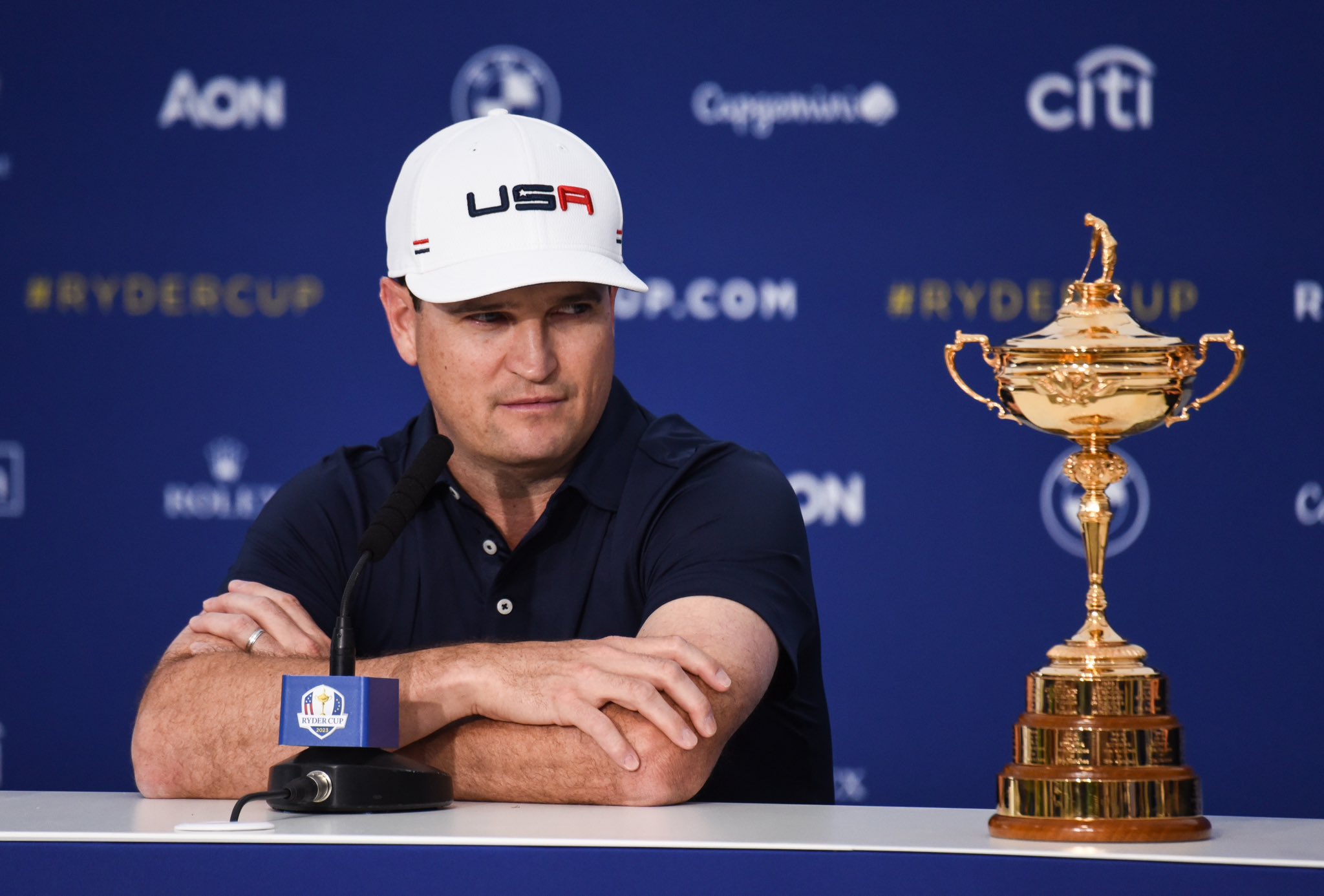
Cover Image via Twitter


LIV Golf Could Be Facing its Final Chapter

Foresight GC2 Review: A Surprisingly Affordable Launch Monitor From Foresight

FIRST LOOK: Rapsodo MLM2XPRO Adds Putting, Faster Performance & More

FIRST LOOK: Titleist’s 2027 Pro V1 and Pro V1x Are Officially Showing Up on Tour

2026 Presidents Cup Preview: Did Team USA Get It Right?
2026 Presidents Cup Preview: Did Team USA Get It Right?
FIRST LOOK: Rapsodo MLM2XPRO Adds Putting, Faster Performance & More
Foresight GC2 Review: A Surprisingly Affordable Launch Monitor From Foresight
FIRST LOOK: Titleist’s 2027 Pro V1 and Pro V1x Are Officially Showing Up on Tour
LIV Golf Could Be Facing its Final Chapter

We Played This Old Golf Course Where Thomas Edison Was A Member

Are You MEASURING Your Golf Swing Correctly? (This Can Help)
Zach Johnson Explains Why He Didn’t Pick Bryson DeChambeau for the Ryder Cup

Justin Thomas FIRES Coach before Ryder Cup…Who’s Next?
