
News
Michael Stewart: How Golf Literally Helped One Man Get Back on His Feet
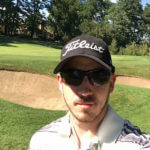
On March 14th, 2012 Michael Stewart was doing the same thing that so many guys do when they are on spring break. He didn’t have school in the morning. No real plans for the next day besides relaxing so it was a perfect opportunity to play some video games.
Falling deep into the world of digital make-believe it quickly hit 12:50 AM. Just then a thunderous crack hit the window behind him. An egg had just been thrown against his window. Not something you expect to happen so Michael ran outside to see where it came from. He got outside in time to see a minivan speeding away with laughter coming out of the opened windows.
A common prank that many kids pull on each other growing up. This was different. Michael wasn’t a student, he was a teacher.
He called out to his wife to come and clean the egg off the window while he ran out into the yard to try and see a license plate. The van had already sped away but Michael stood by a light pole to see if they would come back.
He guessed right, and the van did come back around. Standing by the street light he could see the van heading toward him, so he started to wave his hands for them to stop. Instead of stopping the van crossed the middle of the road, hopped the curb and hit Michael on his left side. His body was smashed into the front of the vehicles grill. His face hit the windshield and he was thrown onto his neighbor’s lawn.
The van sped away with no regard for his safety while Michael laid motionless on the ground. His first thought was “This isn’t good”.
His wife who was cleaning the egg off of their window saw the entire thing, so she came running to his side screaming. He yelled to her to “Go inside, call 911, feed the cat and turn off my Xbox 360.”
She grabbed the home phone and called for help. Michael was taken to Sunnybrook hospital for treatment. Four hours after the accident he was in surgery to have his L2 and L3 fused along with having two rods inserted into his back to support his spine.
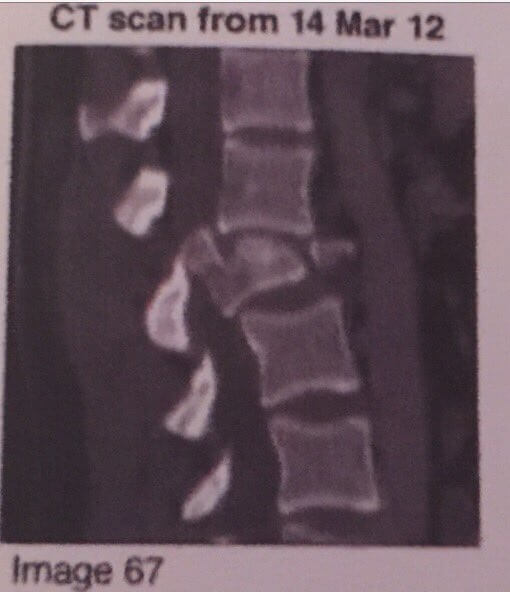
L3 to T11 of the spin are responsible for most of your lower body and Michael’s was in bad shape. The doctors had discovered that he also had a collapsed lung a nick on the spinal cord. This damage left Michael paralyzed from the waist down.
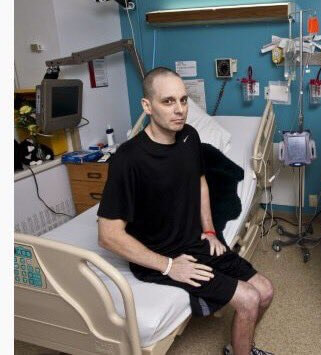
He later contracted an infection in his back that nearly killed him. The only way to treat the infection was a pick line into heart that caused him pain that he could only describe as 10/10. Because of the extent of his injuries, he was in the hospital from March 14th to April 30th, 2012. From there he was moved to a rehabilitation facility.
He lived there until July. By this point he was able to regain feeling in his legs and go from a wheel chair to walking with ski poles. He went from 200 pounds of muscle to 150 pounds of skin and bones.
Before the accident Michael was a physical education teach for 10 years. He ran the student council. He was the school’s Baseball and Basketball coach. When he had time, he was an avid golfer who loved the game.
The Rehab
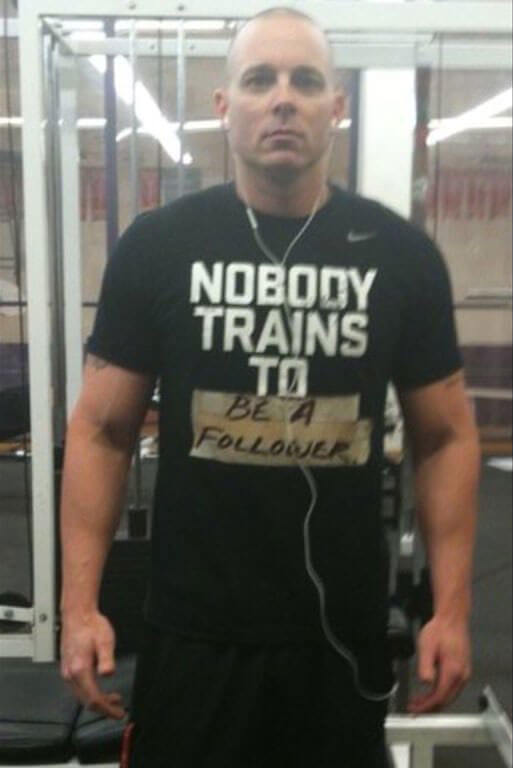
Michael was no stranger to hard work and grinding through adversity. He was going to need that determination and grit to begin his rehab process. The extent of his injuries faced Michael to relearn how to walk.
He regained the use of his legs, but they were not the same. 10 steps felt like a mile, he couldn’t take normal steps anymore. With help of ski poles Michael would slowly relearn how to walk. “I can’t feel much of my feet” so knowing when his foot is on the ground is difficult.
Think about when your legs fall asleep and then you get up to walk. You can’t feel the ground that well so for a few steps you have to focus on each step. It was like that for Michael, but with each step came debilitating pain in his back. Michael began five days a week of physical therapy, lifting weights and trying to get his body back. When he started therapy he was determined to go back to work and start coaching again. “It was like a slow breakup that was inevitable. I’ll never work again.”
Muscle fatigue coupled with chronic back pain will prevent Michael from going back to work. What it won’t do is prevent him from playing golf again. Before his surgeries Michael asked his doctor “will I ever golf again?” The doctor said let’s get you walking again and go from there but for Michael the “let’s go from there” wasn’t an option.
Because the game was such a big passion for him he was able to start incorporating golf into his rehab. “I used golf as the carrot, to keep working towards getting better.”
It took two years before Michael could make a putting motion again without falling over. With each putting stroke he would either fall forward or fall down.
Without the strength in his legs and the feeling in his feet the act of putting was incredibly difficult. Once he could make the putting stroke without falling over he got a putting green in his basement. Alongside of all of his other physical therapy exercises Michael would use golf to push himself further. ” I would try to make 10 putts without falling or stepping. If I did, I would start over.”
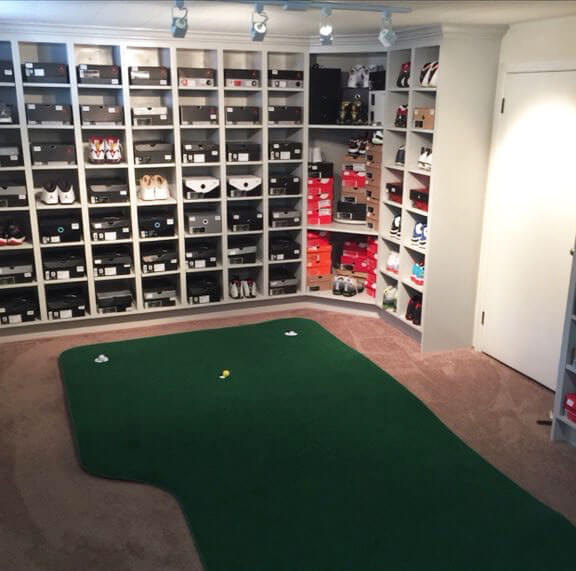
It would take six months before he could do these 50 times in a row. Now that the strength was up, it was time to move towards swinging a club. It took over a year of rehab before he could make it the range. The following summer he would start golfing again.
Back to the Course
With the help of his physical therapist Michael was back at the course. It started off rocky to say the least.
As he pulled his truck into a handicapped space an employee came out to tell him that he can’t park there. His Physical therapist came to his aid, explaining the situation and his injury.
At this point the employee actually recognized Michael. He was on the hit home improvement show “Holmes makes it right” (Season 1, Episode 7 “If the shoe fits”) on HGTV in Canada. The show came and renovated his backyard to make it more accessible for him along with building him a shoe room for his extensive shoe collection. The show had heard about the accident on the news and wanted to help him out.
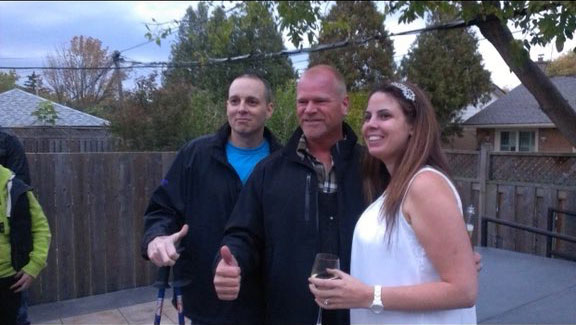
The employee apologized for being rude in the beginning and gave them a free round and a cart. Michael would start out playing anywhere from 2 to 9 holes. The pain and fatigue were too much in the beginning, so it would take some time before Michael would make it 18 holes.
With the help of blue flags on his cart to indicate that he was disabled golfer, he was able to start completing 18 holes of golf. The blue flags limit the number of steps a disabled player must take. This helps them keep up their strength, limit their pain and most of all, start enjoying the game of golf again. “If I tried to carry my bag and play golf, I would be lucky to finish one hole and it would be the death of me”.
Coach Gets a Coach
With his strength up and the assistance of the blue flags Michael was playing golf again. Due to his injuries and limited movement he had developed a slice and lost a lot of distance.
Michael started working with coaches to get his game back in check. One coach tried to get him into the “ideal position” but with his injuries, this was a lost cause. Another got him hitting it straight again, but it was causing pain in his elbows and it started to hurt too much. As you have already read, Michael doesn’t quite easily.
But Michael keeps working until he gets what he wants. That’s when he met Coach Piero.
His new coach understood that the conventional approach wasn’t going to work for Michael. He understood what he could and could not do. From there he adjusted his teaching and got Michael from a 21 index to an 8.
Because he didn’t have the strength he once had, he also relied on adjustable equipment. “The TaylorMade adjustable drivers have helped my ever-changing swing. Honest to God, the Twist face technology is like cheating.”
Thanks to modern equipment improvement, great coaching and dedicated health professionals Michael is back playing golf regularly.
Blue Flag Avocation
Michael has come across many amazing people on his journey. Because of his disabilities he needs some help. He can’t walk 20 feet without being in pain, so the blue disability flags help him out a lot.
On the golf course those 20 feet sometime extend to 50 feet and this is much more difficult on someone like Michael. As Michael says, “I’ve lost my shock absorbers.”
Grass is a natural shock absorber, so this extra distance is a little bit easier, but his challenges still exist. The way he gets around all of these issues is the golf cart.
He is allowed to drive his cart close to the green and tee boxes. When its cart path only he’s allowed to go 90 degrees and then go back to path. “It’s hard to face your limitations, and I do every time I golf.”
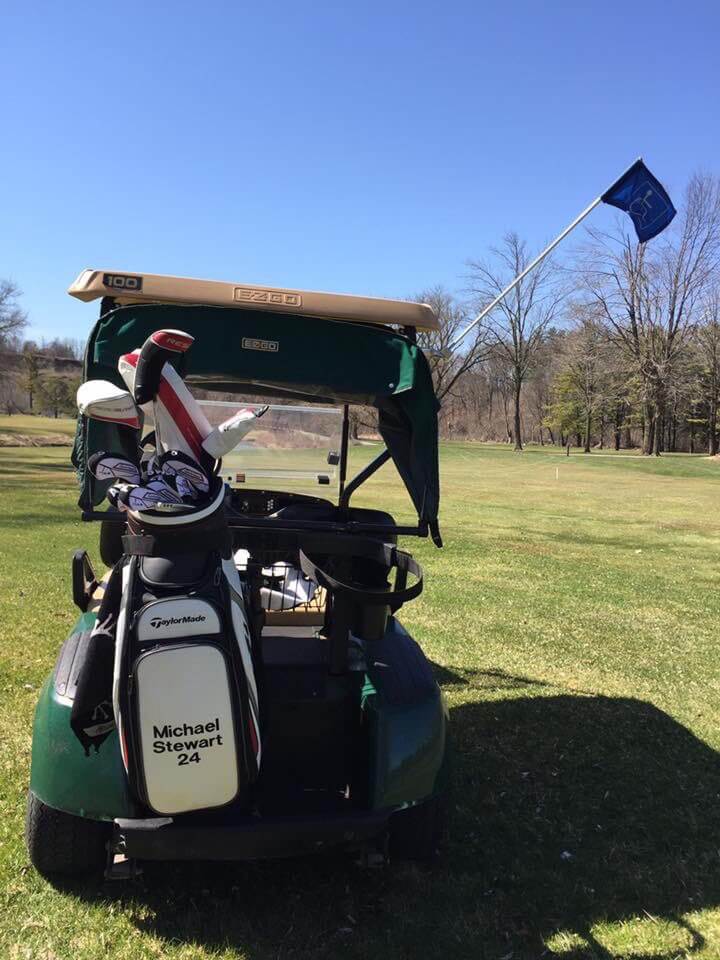 Every time he plays a new course he has different questions to ask besides the greens fee and the available tee times. He needs to know what their cart path rules are for disabled golfers. He doesn’t just show up and put a flag on his cart and do what he wants. He needs permission first. Some courses even have GPS systems in their carts that prevent them getting too close to green.
If he can’t get near the green, then his 18 hole round ends quick. He lets the players behind him know his limitations, so they know he has permission to do the things he does on the course to get around. He does this to avoid conflict with other golfers and workers.
Even with the steps that Michael follows he still runs into problems on the course beyond his physical limitations. On a few occasions he has been confronted by other members or players on cart path only days. They will waive their arms and yell “Its cart path only” and he would have to explain his situation.
One occasion when he ran into this situation he again pointed to his flag and stated that he had special permission to do what he was doing. The response of the member. “I don’t care.” As the man angrily started to approach Michael yelling at him about the rules of the course, Michael snapped. He yelled back at the man until he turned around and returned to his cart…two fairways over. He reported the incident to the director of the course and the individual hasn’t said a word to him since.
Michael has worked closely with the management at the Board of Trade County Country Club to advocate for other golfers with disabilities.
I had asked Michael what message he wants to spread to fellow golfers. He told me that: “Honestly I really don’t want to be an advocate for disabled golfers, I just want to golf. It’s a hard-enough sport, I don’t want the added pressure when I’m playing. Unfortunately, I’m not afforded that. For me to play, I need to use a blue flag and that unfortunately makes it almost mandatory for me to be an advocate.”
Golf is a game that offers so many things to so many people. For most of us it’s a way to unwind and relax. For others it’s an important way to get out with clients and get business done. For Michael it provided even more than that.
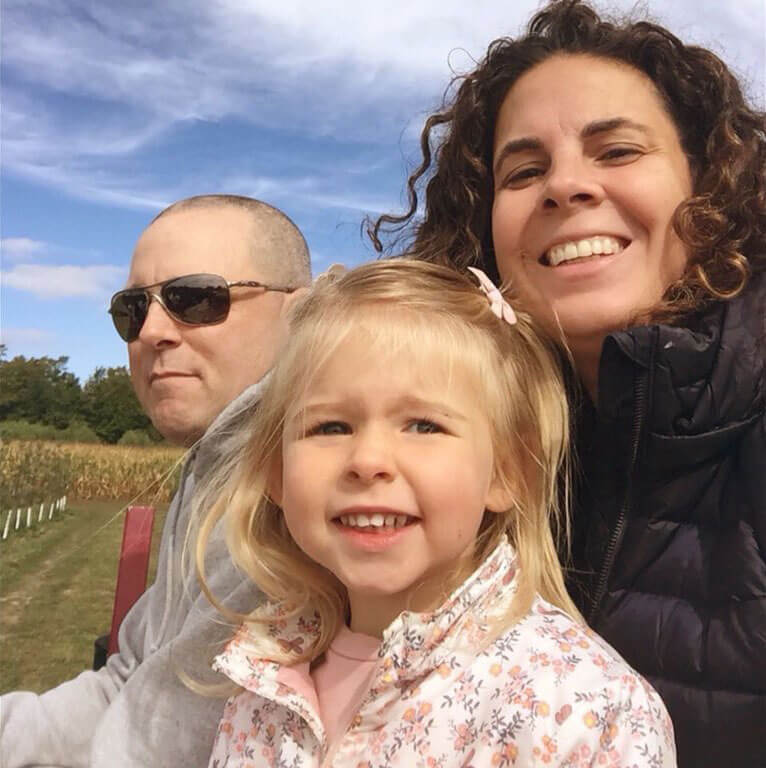
Michael has been able to use this game as a tool in his personal recovery. Because of golf, he can still do something he enjoyed before his accident.
He may not be able to walk the course like he did in the past, but he can still log a round on the scorecard. He can still get outside. He can still meet new people. Most of all he can share his story and inspire others that no matter your challenge, at the end of the day the golf course only judges you by your score, not your disabilities.


Ocean City Golf Trip Guide: Great Courses, Affordable Golf & A Beach Town Vibe

LIV Golf Could Be Facing its Final Chapter

Foresight GC2 Review: A Surprisingly Affordable Launch Monitor From Foresight

FIRST LOOK: Rapsodo MLM2XPRO Adds Putting, Faster Performance & More

FIRST LOOK: Titleist’s 2027 Pro V1 and Pro V1x Are Officially Showing Up on Tour
FIRST LOOK: Rapsodo MLM2XPRO Adds Putting, Faster Performance & More
Foresight GC2 Review: A Surprisingly Affordable Launch Monitor From Foresight
FIRST LOOK: Titleist’s 2027 Pro V1 and Pro V1x Are Officially Showing Up on Tour
LIV Golf Could Be Facing its Final Chapter
Ocean City Golf Trip Guide: Great Courses, Affordable Golf & A Beach Town Vibe

We Played This Old Golf Course Where Thomas Edison Was A Member

Are You MEASURING Your Golf Swing Correctly? (This Can Help)
Zach Johnson Explains Why He Didn’t Pick Bryson DeChambeau for the Ryder Cup
Justin Thomas FIRES Coach before Ryder Cup…Who’s Next?