
Opinion
Stop Blaming Amateurs for Everything

Dear Golf World,
We’ve had about enough.
First, you painted us as a bunch of sexist, pigs. And we said nothing.
Then you insulted our intelligence with one of the worst “listicles” I have ever seen. (Oh, I need golf balls and tees and a scorecard! Thanks, Golf Digest, what would have I done without you!) And we said nothing.
And then, of course, there is the absolute beating we take over our slow play.
Let’s start with “Arnie’s Rules“.
Rule #1: Don’t be the slowest player. Rule #3 Respect other people’s time. Rule #9 Lend a hand (because it helps speed up play).
That’s three out of ten rules that tell us to pretty much hurry the hell up and get through your round.
I’ll ignore some of Arnie’s other “rules” that infers amateurs are just classless hacks.
But wait, Golf Digest has twenty-five more ways to speed up play! Like play like you only have three hours! Stop wasting time taking out the flag stick! And stop telling all your stupid jokes and stories!
Or how about this gem,”Playing on the tail of the people in front of you will subconsciously push them to play faster, even if they try not to.”
In other words, slow players ahead of you? Then it’s cool to be an a@#hole.
But Golf Digest isn’t the only amateur-shaming outlet. Golf Channel likes to do it, too!
http://www.golfchannel.com/media/quick-tips-slow-play-and-long-ironhybrid-slice-correction/
http://www.golfchannel.com/media/ways-decrease-slow-play-among-amateurs/
Finally, there was the USGA, yes, that USGA, that used to run these commercials a few years ago.
No Title
No Description
The irony involving the USGA is that they knew the same year they were running the “While We’re Young” campaign who the number one culprit of slow play was…the golf course.
Of the top five causes of slow play, three of them were related to course-management practices and policies.
“Players can be blamed for a lot, yes, but if courses are sending out too many players too fast, nobody has a chance,” explained a former industry efficiency expert.
In 2013, the USGA began a major research project to solve golf’s serious slow play problem using new sources of data, including real-time observations from courses around the country. The association’s research department released what it called at the time “the first-ever dynamic model of pace of play” that August.
“If tee times are spaced at eight-minute intervals, but the first par-three takes an average of 10 minutes to play, a course has a mess on its hands by the fourth or fifth group of the day.”
In 2014, the USGA released their second Pace of Play report which showed the results of seventeen different research projects.
Once again, the common finding among the independent projects was how golf courses are actually operated by those who own them.
The easiest and most effective change course owners can make is to increase tee-time intervals from the traditional eight-minute intervals to ten-minute intervals. Basically, Golfers move like cars on the interstate. Rush hour is bad. Make too many merges too quickly, and gridlock ensues.
Guess who doesn’t really care about gridlock?
The golf courses.
Why?
Money.
Moving to 10-minute intervals would cost a course roughly 15 percent in revenue because fewer golfers can be accommodated on the tee sheet.
The second most important issue the report found, course set-up.
“A round that takes 4:18 where you don’t wait feels infinitely better than a round that takes the same time where you wait for 18 minutes.”
Having tees back on par 5s and reachable par 4s, to deter longer hitters from waiting to have a go at the green, while moving the tees forward on par 3s result in more greens in regulation for everybody.
The idea, says Pete Rouillard, senior VP of golf operations for SunBelt Golf Corporation is “to make every hole transition to a short par 3 at some point to improve the flow of a round.”
Guess what happened last year? The USGA got together again to study data collected from 2014. And while many of the solutions to slow-play remained the same, a rift appeared between golfers and course operators.
A solid 50 percent of golfers surveyed say that bottlenecks are more bothersome than the overall length of a round. However, 75 percent of surveyed course operators think overall time of a round is more important than fixing bottlenecks.
Again, course operators don’t want to give up those precious minutes in between rounds. Because those minutes equate to dollars and cents.
So tell me again, who’s fault is it for that five-hour round?
I’m looking at you, Golf World. Maybe it’s time you started putting a little more effort into shaming these money-hungry golf course operators and a little less time beating up the actual customers.
Cover Photo via YouTube


LIV Golf Could Be Facing its Final Chapter

Foresight GC2 Review: A Surprisingly Affordable Launch Monitor From Foresight

FIRST LOOK: Rapsodo MLM2XPRO Adds Putting, Faster Performance & More

FIRST LOOK: Titleist’s 2027 Pro V1 and Pro V1x Are Officially Showing Up on Tour

2026 Presidents Cup Preview: Did Team USA Get It Right?
2026 Presidents Cup Preview: Did Team USA Get It Right?
FIRST LOOK: Rapsodo MLM2XPRO Adds Putting, Faster Performance & More
Foresight GC2 Review: A Surprisingly Affordable Launch Monitor From Foresight
FIRST LOOK: Titleist’s 2027 Pro V1 and Pro V1x Are Officially Showing Up on Tour
LIV Golf Could Be Facing its Final Chapter

We Played This Old Golf Course Where Thomas Edison Was A Member

Are You MEASURING Your Golf Swing Correctly? (This Can Help)
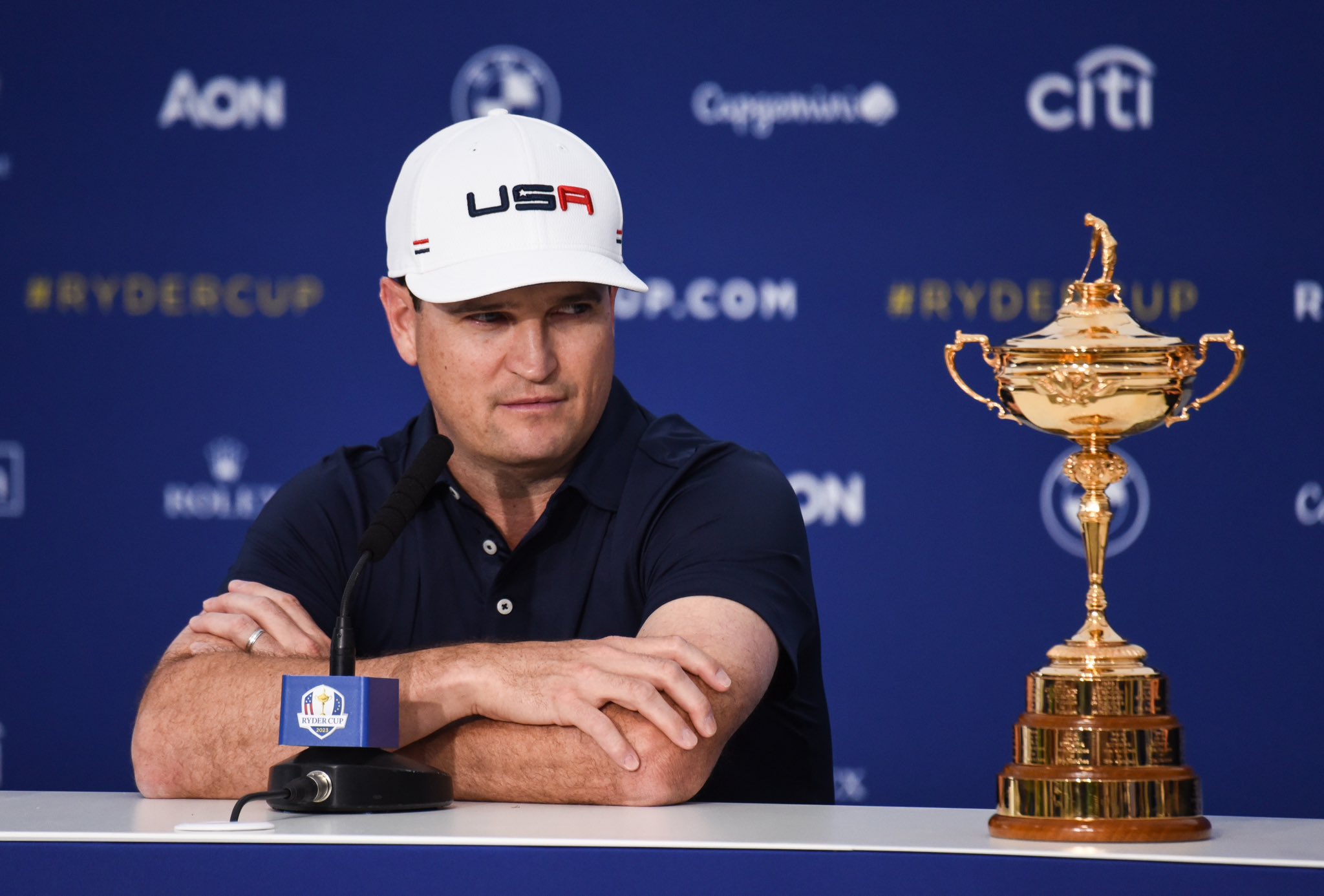
Zach Johnson Explains Why He Didn’t Pick Bryson DeChambeau for the Ryder Cup

Justin Thomas FIRES Coach before Ryder Cup…Who’s Next?
