
Golf Instruction
Take Your Putting To The Next Level With These Simple Tips – Rolling The Rock

When you really think about it, golf is two entirely separate games bottled into one. One game requires getting the ball airborne, while the other requires getting the ball into the hole by keeping it on the ground. There are players with good putters and shaky full swings and players where the opposite is true.
While putting is a very individual exercise, there are some basic fundamentals to keep in mind when on the greens.
Putting with your eyes over the ball enables you to see your intended line more effectively. Next time you’re on the practice green, address your ball like you normally would while keeping some sort of small object in your mouth.
Without moving your head or your body, take one of your hands off of your putter and grab the object out of your mouth and hold it, so it’s covering one of your eyes (ideally your dominant eye). Then, drop the object, so it falls directly underneath your eye and hits the ground.
If your object hit the ground, adjust your body accordingly so that when you drop the object from your eye, it hits your ball on the ground. This is a good way to check if your dominant eye is in the proper place with respect to your ball. Keep in mind that it’s better to have your eyes slightly inside the golf ball with respect to your body and the target line if you’re uncomfortable with your eyes directly on top of your ball.
Justin Leonard and Aaron Baddeley both preferred standing further away from the ball on the greens compared to the vast majority of other world-class putters in their respective eras.
If you’re comfortable putting with your eyes substantially inside the golf ball, do it. No matter the method, all great putters are confident in seeing/hitting their line with the appropriate speed or pace. When the heat turns up, the best putters in the world make more putts by acknowledging the presence of their nervous energy and electing to both channel and harness it in order to achieve a calmer, hyper-focused mental state.
The best players in the world get nervous just like anyone else would.
Unlike the average player, however, the best are able to navigate these tough moments through years of experience, putting themselves in various similar situations. Like anything else in life, performing well under pressure on the golf course involves putting yourself in those situations.
If you don’t, it doesn’t matter how many times you hit the range or play the casual nine holes with your buddies. Simulating tournament pressure is next to impossible, and being better prepared for the moment comes thru reps. The worst thing that can happen is failure.
Don’t Be Afraid To Fail
Almost all great champions are well-acquainted with the feeling of failure. As such, they aren’t afraid of it and tackle their goals ferociously without any reservations.
In order to achieve this clearer, heightened state of awareness with respect to each’s intention(s), the very best rely heavily upon a repeatable, comfortable routine. Simply put, the putting stroke in and of itself is a shorter, less complex motion/movement compared to other golf swings we make every time we’re on the course. As such, there are fewer technical or mechanical factors to consider when one is either putting or attempting to build a technically sound stroke.
A technically sound stroke is one that consistently sends the ball on your intended line with the speed you had originally intended. That’s it!
Get To Know Your Dominant Eye
In order to obtain a better understanding of how our vantage point affects our setup and our putting stroke, figure out what your dominant eye is. If you’re right-eye dominant, for instance, make sure you do the above drill while dropping the ball from your right eye.
This will give you a better line of sight which is incredibly important when determining where we want to hit the ball on the putting green. In fact, several pros like to close their non-dominant eye when reading greens in order to get a better feel for their line.
When we’re trying to determine our intended line for any putt, we must first understand that speed determines line. This means before we pick our line, we must decide how hard we want to hit the ball. For example, on a right-to-left uphill three-footer, we may decide we want to hit the ball a little firmer. The harder we hit the ball, the less the ball is going to want to take the break.
When in doubt, don’t give the hole away by selecting a line that’s more inside the hole as opposed to outside of it. Electing to roll your ball on a start line that’s just inside the right edge on that same uphill three-footer may force you to be more aggressive with respect to your pace.
You’ll find that your best putts are struck with conviction and belief regarding your intention at the onset. After you’ve chosen your speed and then your line in that order, trust that you’re going to execute it. We can’t lose shots when we commit to our intention or plan of attack on any putt or shot.
This doesn’t mean we’re going to hit every putt the way in which we had intended. It does mean, however, that we will increase the probability of rolling our putt(s)the way we intended to. Over an adequate sample size, the above translates into more holed putts.
Unlike many flat-to-uphill putts, the downhill, more delicate putts often require less speed or “dying speed” in order to maximize our chances of finding the bottom of the cup. When in doubt, it’s best to putt more defensively downhill and more aggressively uphill.
An uphill putt that’s struck firmly and misses the hole will generally leave less of a come-backer than a downhill putt struck in a similar fashion. On the other hand, an uphill putt that misses past the hole will often leave a trickier downhill tester than if we had missed short of the hole.
Obviously, the opposite often applies to the downhill ones.
Do your best to disregard all the talk/hype about the supposed advantages of missing on the “pro side” or the high side as opposed to missing on the low side or the “amateur side”. Despite what many golfers believe, a miss is a miss regardless of where you missed your putt in relation to the hole.
Having said that, great putters miss putts in a fashion which affords themselves tap-ins more frequently than others do. Missing an uphill putt on the pro side can leave a far more daunting putt on the way back compared to your miss on the low side, that’s more speed-conscious.
Do What Works For You
Like countless other tips you’ll hear with respect to putting and the entire game, there’s typically an equal and opposite phrase for each one which also makes sense when applied within the appropriate context. Ultimately, playing good golf is about reading between the lines in order to find some semblance of a happy medium that works for you.
Once we’ve found our “process,” commit to it and trust that you can play well and reach your own personal goals. Who’s to say you can’t?
A fundamental truth we sometimes fail to think about when we’re putting is the pace of our stroke. Ideally, our follow thru should be near to or the same length as our backswing. We can achieve an equal length stroke on either side of the golf ball by having a well-paced stroke that has a solid 1, 2 rhythm.
People with well-paced putting strokes not only putt with better pace or distance control but also hit their intended lines more often.
The more we rock the shoulders, the easier it is to obtain this smooth one-two rhythm. The more we engage our wrists or hands in the stroke, the more difficulty we will have obtaining the smooth Tiger-like tempo.
Find The Best Grip For Your Game
The grip you employ on the putting green can be the same grip you use for the full swing or something entirely different. Most good players choose to employ a different method of holding the putter than they would on any of their other thirteen clubs. Today, there is a wide array of putting grips featured by the best players on the top tours in the world. Whether you choose to putt cross-handed or like Bryson Dechambeau, allow your grip to have its day.
In other words, regularly changing your putting grip once a week when you play just twice in the same week is a recipe for taking one step forward and one or two steps back in your quest to improve on the greens. There is no right or wrong grip as long as it’s snug, comfortable, and relaxed.
Of all the mistakes witnessed on the greens, “choking” the putter grip is one that tends to stand out. Tiger says on a scale of 1-10, he likes to grip his putter at a 4.
That light grip pressure allows him to feel the putter head swinging by lessening the tension in his hands. The less tension we have, the more freedom we will exhibit in the resulting stroke.
For comparative purposes, Butch Harmon likes to see his students taking full swings utilizing a grip pressure at or near 6 on a scale of 1-10. Lighter grip pressure on the greens promotes the use of our shoulders and our bigger muscles more while also minimizing the role of our hands during the stroke. Overactive hands in the putting stroke make it more difficult to control the pace of your stroke, which negatively impacts both your distance control and how often you hit your intended line.
Fall Into A Routine
Lastly, make sure your pre-shot routine is relaxed, comfortable, and repeatable. Only you can decide what is best for you regarding the specifics of your routine. The tiny details and idiosyncrasies of your routine assume very little meaning with respect to both making more putts and the end result.
As long as the entire duration of your routine falls within the acceptable pace of play parameters outlined in the Rules of Golf, you can opt to make as many practice strokes as you see fit and/or read the putt from however many angles you feel is best.
While most of your playing partners may appreciate a faster round, exercising a more deliberate approach on the greens compared to elsewhere is vital in order to lower your scores consistently.
Lastly, your routine should evoke feelings of calmness and confidence leading up to the execution of the shot. If you think you’re going to miss a putt, chances are you’re going to miss it. At the very least, positive reinforcement only increases the probability that we will execute the shot in a manner that satisfies our intention at the onset.
As you continue working on your routine and making the necessary modifications to it along the way, be mindful that achieving more finite clarity and cohesiveness with respect to our end goal isn’t a task which happens overnight or in just a few days.
Consequently, don’t be discouraged if you’re not a noticeably better putter when you haven’t practiced the routine itself on the course much or under pressure enough yet. We have to put our practiced routine to the test by bringing it to the course and leaving our negative self-talk at the door for at least awhile.
Before too long, you’ll lean on your routine to sink that eight footer on the 18th green to win your weekend match. Those are the memories we lean on in order to produce similar results in future events.
In golf and in life, humans fall back or rely on their habits (good and bad) to carry them through any single event when under pressure. Consequently, the better our habits are the better our chances are of being successful.


LIV Golf Could Be Facing its Final Chapter

Foresight GC2 Review: A Surprisingly Affordable Launch Monitor From Foresight

FIRST LOOK: Rapsodo MLM2XPRO Adds Putting, Faster Performance & More

FIRST LOOK: Titleist’s 2027 Pro V1 and Pro V1x Are Officially Showing Up on Tour

2026 Presidents Cup Preview: Did Team USA Get It Right?
2026 Presidents Cup Preview: Did Team USA Get It Right?
FIRST LOOK: Rapsodo MLM2XPRO Adds Putting, Faster Performance & More
Foresight GC2 Review: A Surprisingly Affordable Launch Monitor From Foresight
FIRST LOOK: Titleist’s 2027 Pro V1 and Pro V1x Are Officially Showing Up on Tour
LIV Golf Could Be Facing its Final Chapter

We Played This Old Golf Course Where Thomas Edison Was A Member

Are You MEASURING Your Golf Swing Correctly? (This Can Help)
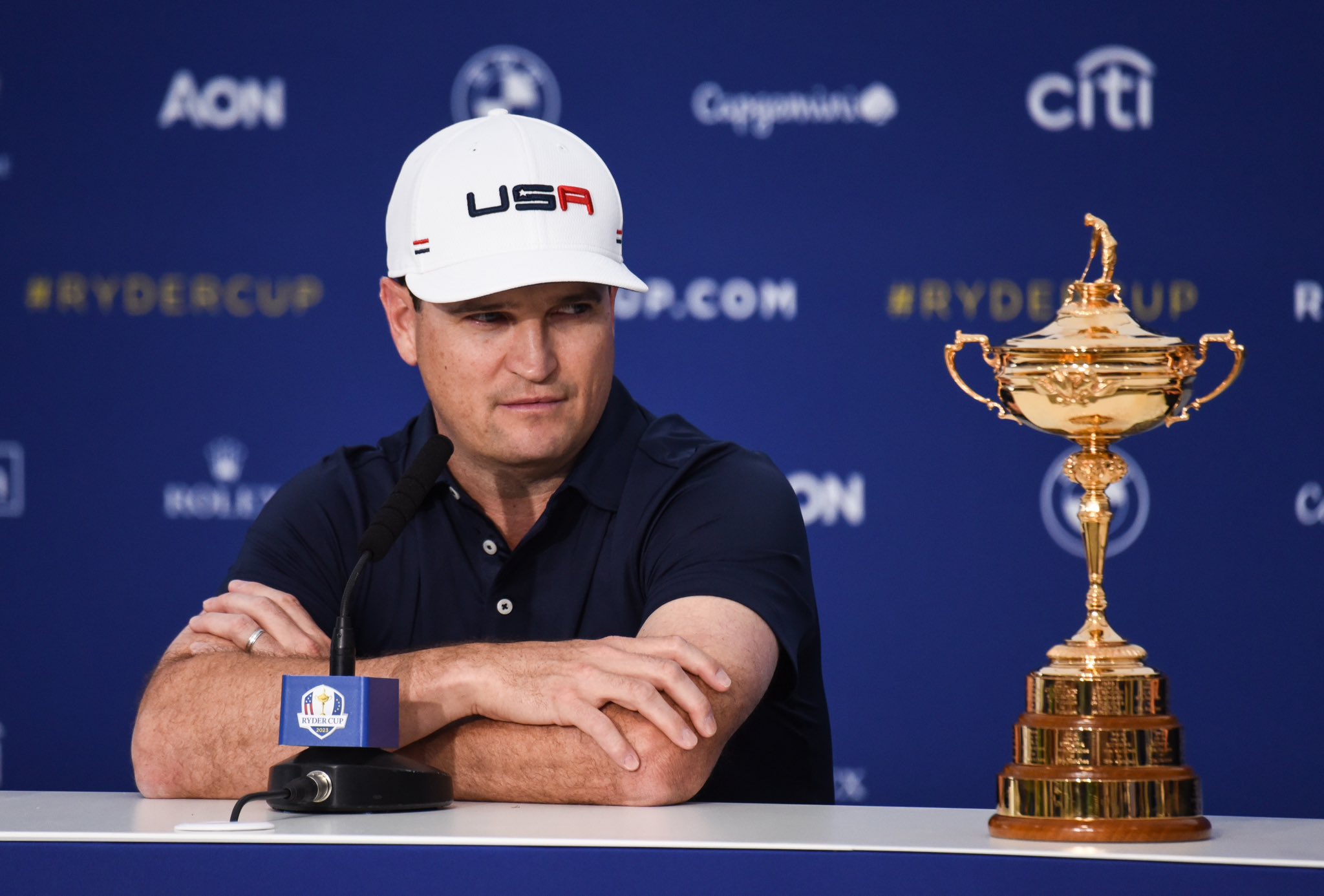
Zach Johnson Explains Why He Didn’t Pick Bryson DeChambeau for the Ryder Cup

Justin Thomas FIRES Coach before Ryder Cup…Who’s Next?
