
Opinion
The Post-Tiger Era Shan’t Be Toyed With

Retiring from professional-golf is much different than calling it quits in the NBA, MLB, NHL, or NFL.
In the game of golf, formal retirements aren’t commonplace. Unless you’re experienced in the art of making fake retirement-announcements like Michael Jordan and Tom Brady, then retiring from any of the four major pro-sports leagues comes with a level of certainty and finality that’s foreign to the game of golf.
Due to the fact that golfers represent themselves when other athletes represent themselves and their respective teams, golfers are free to compete on a basis that’s suitable for them; and aging-golfers who are well-past their prime can still compete within the events they’ve won.
Nineteen years removed from claiming his eighteenth major-championship title at the 1986 Masters, a 65 year old Nicklaus gave us the heads up that his final major-championship appearance would be the 2005 Open Championship contested at St. Andrew’s and, a year earlier, one of the Golden Bear’s greatest friends and rivals, the legendary Arnold Palmer, made his exit from the sport at the age of 74 after the seven-time major-champion competed in his 50th consecutive Masters in 2004.
While Jack and Arnie have earned the right to be legends of the game forever, the truth is they’re no longer relevant in today’s game; and it’s hard to believe that the greatest player ever, Tiger Woods, is nearing his end.
Yes, Tiger is just 47 years-old; but after a laundry list of knee, back, and other injuries-&-surgeries in addition to his most notable physical-setback, the 2021 car-crash, it’s fair to say the 82-time Tour-winner isn’t exactly a young-47.
Like other all-time greats in the game who’ve continued to play beyond their 50th birthday, Tiger has no reason to doubt his status for the game’s biggest events once he turns the big 5-0; unless his body has other plans.
At that future time, Tiger and his ailing body may be forced to transition to the Champions Tour after a long-run of unparalleled success at the PGA Tour level; a new chapter for Woods that has to be awfully enticing given the former-tour’s cart-friendly lifestyle.
Whether or not Tiger tees it up in six total events or just two within the 2023-‘24 season remains unclear, but what we do know is that Tiger gives it his all every single day; and the 15-time major-champion is going to find a way to be around over the next decade-plus at some limited capacity.
Because this is golf we’re talking about; not tennis and certainly not basketball, don’t expect Tiger to make any decisions on his retirement in the next five-years, at the very least.
As far back as I can remember, Tiger’s been my guy. I’m not one of those people that can be fairly described as “fake Tiger-fans”; the same guys whose fandom is fleeting in nature. Whether they chose to leave Woods’ side in light of Tiger’s fire-hydrant incident in November of 2009 or they did because Woods was “done”, “finished”, and/or “washed-up” as they’d put it at various instances from 2010 to 2018 (and beyond) doesn’t really matter in the slightest, as the damage had already been done.
In other words, Tiger’s real fan-base doesn’t have time for the fans who’ve decided not to stick with Tiger thru thick and thin; and nor does it have patience for the so-called Tiger-fans who are guilty of rooting for someone else just as hard (or harder) as (than) they’ve pulled for Woods in any tournament that’s featured Tiger in its field.
All of this pro-Tiger talk aside, Tiger moves the needle in the game of golf; and his 12-shot margin of victory at the 1997 Masters ignited a boom in golf-participation that hasn’t been matched since; although the Covid-spike in 2020 was significant enough that it’s worth mentioning. However, golf’s latest surge in popularity seems to be concealing the industry’s underlying issues; problems-&-weaknesses that’ve been pushed back a few years after 2020’s influx of new-&-returning players.
On the surface, professional-golf is (or seems to-be) in a good place during a modern era that’s filled with high-purses, deep-&-diverse fields, high TV-ratings, and excellent returns for equipment manufacturers and tangential markets-&-industries.
Undoubtedly, many of the “Tiger babies” who are playing professionally, collegiately, and/or on the amateur level represent a more athletic, refined breed of golfers than the elite players in past generations. Outside of the professional, elite-amateur, and collegiate ranks, public and private golf-clubs in the US are prospering as club’s continue to churn out rounds in record numbers.
On the flip side, the PGA of America is struggling to retain its members and to convert its associates into members. Presently, the PGA of America as an organization boasts close to 29,000 members; a number that’s reflective of declining membership-levels in every calendar-year since 2018.
In other words, our industry is plagued by a supply shortage; one that’s been there for several years now and has only gotten worse since the pandemic. Depending on your perspective, the golf-industry as a whole is either flourishing in terms of sheer quantity or dying by way of poor-standards in quality.
In May of 2022, one of Golf Digest’s (own) writers, Shane Ryan, published a piece titled “The Club Pro Crisis” which dives into golf’s supply-problems; issues that stem from glaring problems with the PGA of America’s universities, three-tiered educational-curriculum, recruiting (for the organization), leadership, and oversight.
Personally, I’m well-acquainted with a handful of (former, club-level) PGA associates-&-pros who are no longer part of the organization or are frustrated and nearing their end. While it didn’t get much attention in the press, the PGA of America set a dangerous precedent by moving the site of its 2022 PGA Championship from Trump-Bedminster to Southern Hills. Similar circumstances resulted in a pool of angry members who were upset following the PGA of America’s refusal to provide many of its members-&-associates with unemployment-compensation after they were out of work for months during Covid.
When it comes to the PGA of America’s shortcomings in recent years, the list goes on and on.
Despite the fact that the PGA of America and the PGA Tour are separate entities, they have some mutual-interests and work together hand in hand on a variety of subjects. Since 1997, golf-participation levels have increased markedly but not without its ebbs and flows; including 2007 and 2008’s economic-recession and the awkward-years between 2014 and ‘18 when Tiger (coincidentally) wasn’t healthy and, consequently, not able to play much.
Compared to other sports, the golf industry’s success (and or failing state) , historically speaking, is closely aligned with the economy’s wellbeing (or lack thereof) , and the “Roaring Twenties” (/1920’s) alongside the 1950’s “Golden Age of Capitalism” in America are a pair of decades where pleasant economic-trends were observed and also complemented by a surge in golf’s popularity. Similarly, “The Great Depression” lasting from 1929 to 1942 along with our nation’s “Great Recession” from 2007 to 2009 were both notable for its bad effects on golf. Presently, economic experts are predicting a slight decline in GDP for 2024.
What will golf lean-on once the economy starts to sputter?
By the time the Chicago Bulls’ and Washington Wizards’ shooting-guard, Michael Jordan, retired for real and the third-time from the NBA in 2003, the NBA’s popularity had skyrocketed in the US and abroad and much like the PGA Tour has since Tiger became its main-fixture in the mid-to-late nineties.
That being said, the NBA bridged the gap between the Jordan era and uncertain times by hitching its wagon to the star that was the Cleveland Cavalier’s 6-foot 8-inch small-forward, LeBron James. To this day, the NBA is still doing very well and its global presence has expanded dramatically; largely thanks to the Jordan era ushering in a new era of stars headlined by James alongside players from all over the world. That being said, it was behemoths of the sport like LeBron, Kobe Bryant, and Allen Iverson who were able to build upon what Jordan brought to their sport.
Tiger can definitely win again; I’m not sure it’ll be a major-championship but it’ll come before his time is up. Still, we need to get used to the idea that Tiger is on his way out; because let’s be honest, he is.
Jordan had LeBron, but who does Tiger have?
If Rory could win a major-championship or become an American citizen, the latter of which would never happen, he’d be a prime candidate. But, Rory can’t putt when it matters most, and the Northern Irishman just recently stepped-down from his role on the Tour’s policy-board. Rory wants to focus more on his golf game and I certainly can’t fault him for trying to do just that.
Meanwhile, I’d argue that 3 out-of the 5/6 biggest-&-best names in American golf are LIV players; including Brooks Koepka, Bryson DeChambeau, and Dustin Johnson. While I think all three of those major-winners attract more attention than the likes of Xander, Cantlay, Homa, Harman and (their) American-company not including Spieth and Thomas , I could be wrong; but let’s face facts: Nobody wants to watch the most boring show on-grass in Max Homa anymore.
In terms of American golf, Koepka and DeChambeau are instant box-office hits. They have swagger, hit the ball for miles, and win big-events; with the latter point failing to apply to the game’s most fashionable player, Rickie Fowler. Although Spieth may be a shell of his former-self and Thomas is in search-mode, people want to see those guys. Moreover, fans of golf want to see the Dallas native and the native Kentuckian compete against Koepka, DeChambeau, DJ, and even Mickelson and/or Reed.
The PGA Tour’s proverbial clock in its merger negotiations with LIV Golf is ticking down. We have yet to hear anything of substance about the deal that the Tour and LIV are (hopefully) figuring out. For the love of God, the Tour needs to merge with LIV and put this unfortunate situation to bed.
The stars need to be together, somehow, someway. It doesn’t matter if they’re together playing on LIV, the DP World Tour, the PGA Tour or some combination of all three; similar to the Norman-founded, out-of existence World Golf Championships events.
The post-Tiger era is banking on a united front in our great game. Without it, our entire sport could be heading towards a very bleak future.
Cover Image via X


Ocean City Golf Trip Guide: Great Courses, Affordable Golf & A Beach Town Vibe

LIV Golf Could Be Facing its Final Chapter

Foresight GC2 Review: A Surprisingly Affordable Launch Monitor From Foresight

FIRST LOOK: Rapsodo MLM2XPRO Adds Putting, Faster Performance & More

FIRST LOOK: Titleist’s 2027 Pro V1 and Pro V1x Are Officially Showing Up on Tour
FIRST LOOK: Rapsodo MLM2XPRO Adds Putting, Faster Performance & More
Foresight GC2 Review: A Surprisingly Affordable Launch Monitor From Foresight
FIRST LOOK: Titleist’s 2027 Pro V1 and Pro V1x Are Officially Showing Up on Tour
LIV Golf Could Be Facing its Final Chapter
Ocean City Golf Trip Guide: Great Courses, Affordable Golf & A Beach Town Vibe

We Played This Old Golf Course Where Thomas Edison Was A Member

Are You MEASURING Your Golf Swing Correctly? (This Can Help)
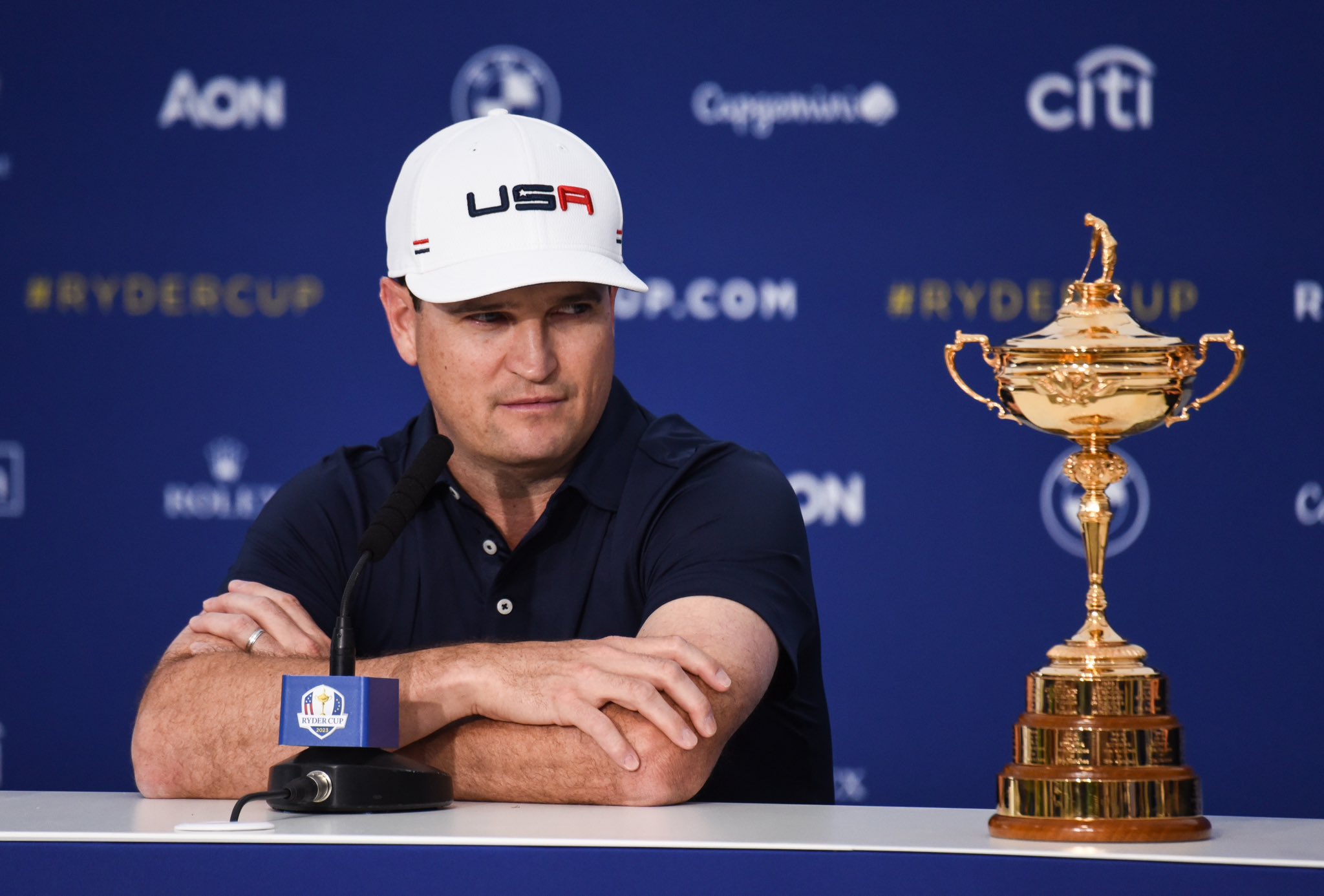
Zach Johnson Explains Why He Didn’t Pick Bryson DeChambeau for the Ryder Cup
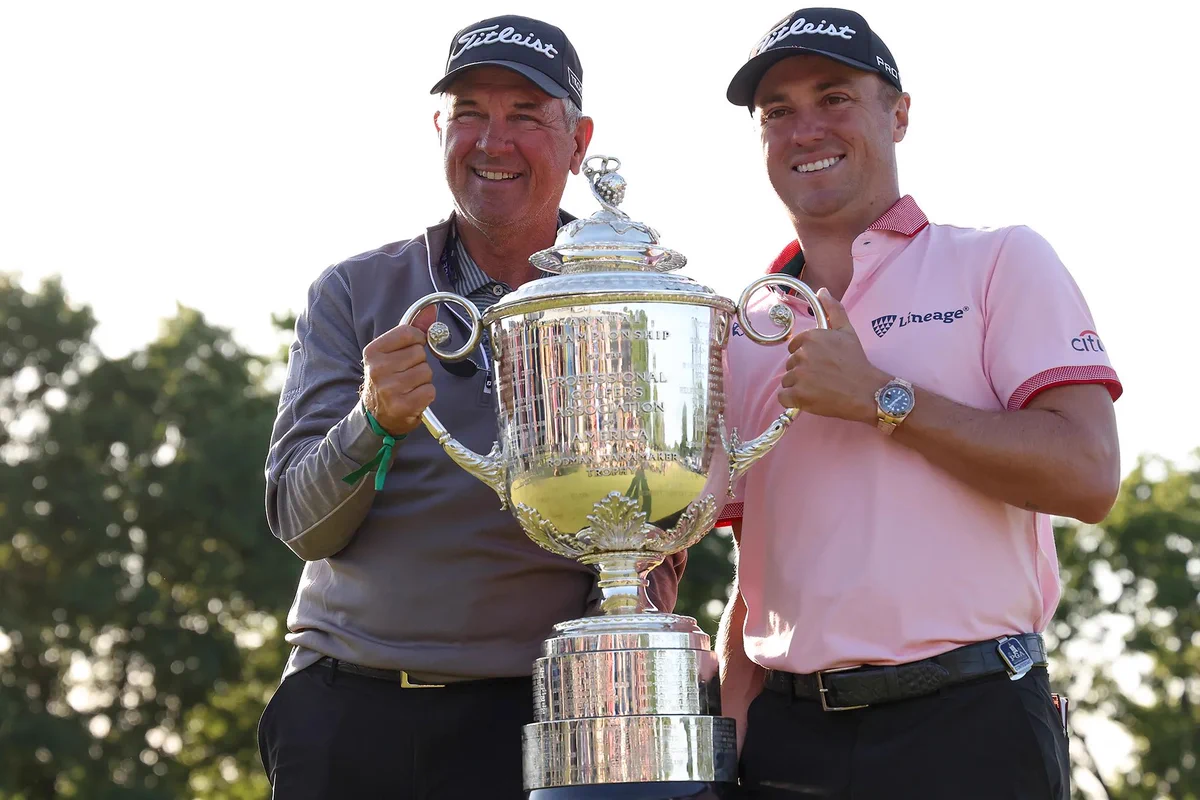
Justin Thomas FIRES Coach before Ryder Cup…Who’s Next?