
Golf Instruction
Here’s Why the “Pace” of Your Putting Stroke Matters so Much

Of all the recurring-problems that I stumble upon with different golfer’s putting-strokes, the most common one has to be the pace of the stroke.
As part of LIV-Golf’s “Team Championship” event at Donald Trump’s Blue Monster course in Miami, the CW network briefly cut from its on-course coverage to the range in order to catch a glimpse of the 2018 Masters champion, Patrick Reed, and how the former “Captain America” practices tempo-&-rhythm.
As Reed explained during his practice session, he focuses on maintaining a consistent, 3-to-1 pace for his full-swings. In other words, Reed wants his backswing to feel like it’s taking three-times longer to complete than the time it takes to finish his down-&-thru swing.
As a feel-player, Reed plays his best when he’s keeping it simple; and working on his tempo-&-rhythm in all facets of his game reflects that very notion. While your full-swing’s tempo is optimized by making a down/thru-swing that’s considerably faster than the duration of your back-swing, the effect that your tempo has on all of your swings cannot be overstated.
Unlike your full-swing’s (3-to-1 timed) tempo, the tempo of your putting-stroke (in its entirety) ought to be uniform and consistent.
Looking at the strokes of all of the game’s greatest putters, you won’t find a single one that isn’t well-timed. While it’s true that the Golden Bear, Arnold Palmer and many of their peers from that era hit-putts in a crouched setup-position of which inherently lent itself to a handsy-stroke, the tempo of their strokes remained constant and repeatable.
Just because they struck their putts with a tempo that’s faster than the average/typical pace (/tempo) of the modern-day, Tour-pro’s stroke doesn’t mean that the old-guard hit-putts with poor-tempo; or that their tempo was any less adequate than Cameron Smith’s or Tiger Woods’.
Simply put, you should be trying to hit your putts with a back-stroke that elapses in the same amount of time that it takes to complete your down and thru-stroke. In the event that your putting-stroke’s pace happens to be uniform, the length of your follow-thru should match that of your back-swing.
The best putters in the world rely on a smooth, well-timed stroke that’s consistently repeatable and holds-up under duress.
In the era of “Super-Stroke” putter-grips alongside “Perfect Practice” putting-mats, there’s a lot of emphasis being placed on your putting-stroke’s proper path-&-plane. Furthermore, certain-grips on the putter and certain-holds (on the grip) are being promoted to discourage hand-usage during the stroke.
While many of these grips, tips, and techniques have their advantages, they may not necessarily address the flaws in your stroke that are related to speed control. For as long as the game’s been around, good-putters understand that “speed determines line” on the greens; and not vice versa. In other words, understanding the path-&-plane of your putting-stroke answers the “line” related-questions, while exercising control of the pace of your stroke responds to the more pressing concern of the two; also known as the speed of your putts.
You can’t make a lot of putts without good speed; and you can’t have good-speed without good-tempo. On the greens, good-tempo typically means that the pace of your stroke is fairly constant throughout it; and it’s not to be confused with the slow-to-fast pace/tempo of your full-swings.
In the year-2019, pros on the PGA Tour converted 99.4 percent of their putts from between two and three feet. From between four and five feet, they made 80.72 percent of their putts.
Big difference, right?
Obviously, amateurs aren’t going to perform nearly as well as the average-professional does in a variety of areas; but it’s important to take note of the difference between a 2.5 footer and a 4.5 footer. Just as importantly, you need to take this into account when you’re standing over your first-putt; or any mid/long-range putt. Specifically, how exercising control over the pace-&-tempo of your putting-stroke is key in order to hit more putts with optimal speed. The better our speed is, the closer the ball is going to be to the hole.
Improving the pace of your stroke can be accomplished in a number of ways. In my experience, lightening your grip-pressure, quieting the movement of your body during the stroke, keeping your head still, getting your dominant-eye over the ball at address, and making practice-strokes as you’re looking at the hole helps a variety of golfers, from 30-handicap’s to plus-handicap’s, make well-timed putting-strokes that are repeatable, reliable, and hold-up under pressure.
If you want to make more putts, you have to make the hole as big as possible. In order to utilize the whole hole, you have to roll your putts with proper pace. The hole is only as big as your speed makes it, and you can’t use the hole’s size to your full advantage without a well-timed stroke.
Stop worrying so much about the line of your putt, and start honing-in on the putt’s speed. The next time you’re on the course, try reading all of your putts by initially determining what the halfway-point is between your ball and the hole, and, then walk to that point and on the low-side of the hole; (/AKA) where the putt is breaking towards. From that point, it’s easier to determine how flat, up-hill, or down-hill the putt’s going to be; and, ultimately, how hard you need to hit the putt. If your speed is dialed in, your line doesn’t need to be spot-on in order to sink the putt.
Instead of crafting the perfect putting-stroke, focus on the pace of your stroke; and enjoy the results that follow.
Your number of 3-putt’s will go down, and your worst lag-putts will end-up 4-feet from the hole as opposed to 8-feet or more. Trust your stroke’s pace and you’ll be well on your way to improving your putting.
Cover Photo via X


LIV Golf Could Be Facing its Final Chapter

Foresight GC2 Review: A Surprisingly Affordable Launch Monitor From Foresight

FIRST LOOK: Rapsodo MLM2XPRO Adds Putting, Faster Performance & More

FIRST LOOK: Titleist’s 2027 Pro V1 and Pro V1x Are Officially Showing Up on Tour

2026 Presidents Cup Preview: Did Team USA Get It Right?
2026 Presidents Cup Preview: Did Team USA Get It Right?
FIRST LOOK: Rapsodo MLM2XPRO Adds Putting, Faster Performance & More
Foresight GC2 Review: A Surprisingly Affordable Launch Monitor From Foresight
FIRST LOOK: Titleist’s 2027 Pro V1 and Pro V1x Are Officially Showing Up on Tour
LIV Golf Could Be Facing its Final Chapter

We Played This Old Golf Course Where Thomas Edison Was A Member

Are You MEASURING Your Golf Swing Correctly? (This Can Help)
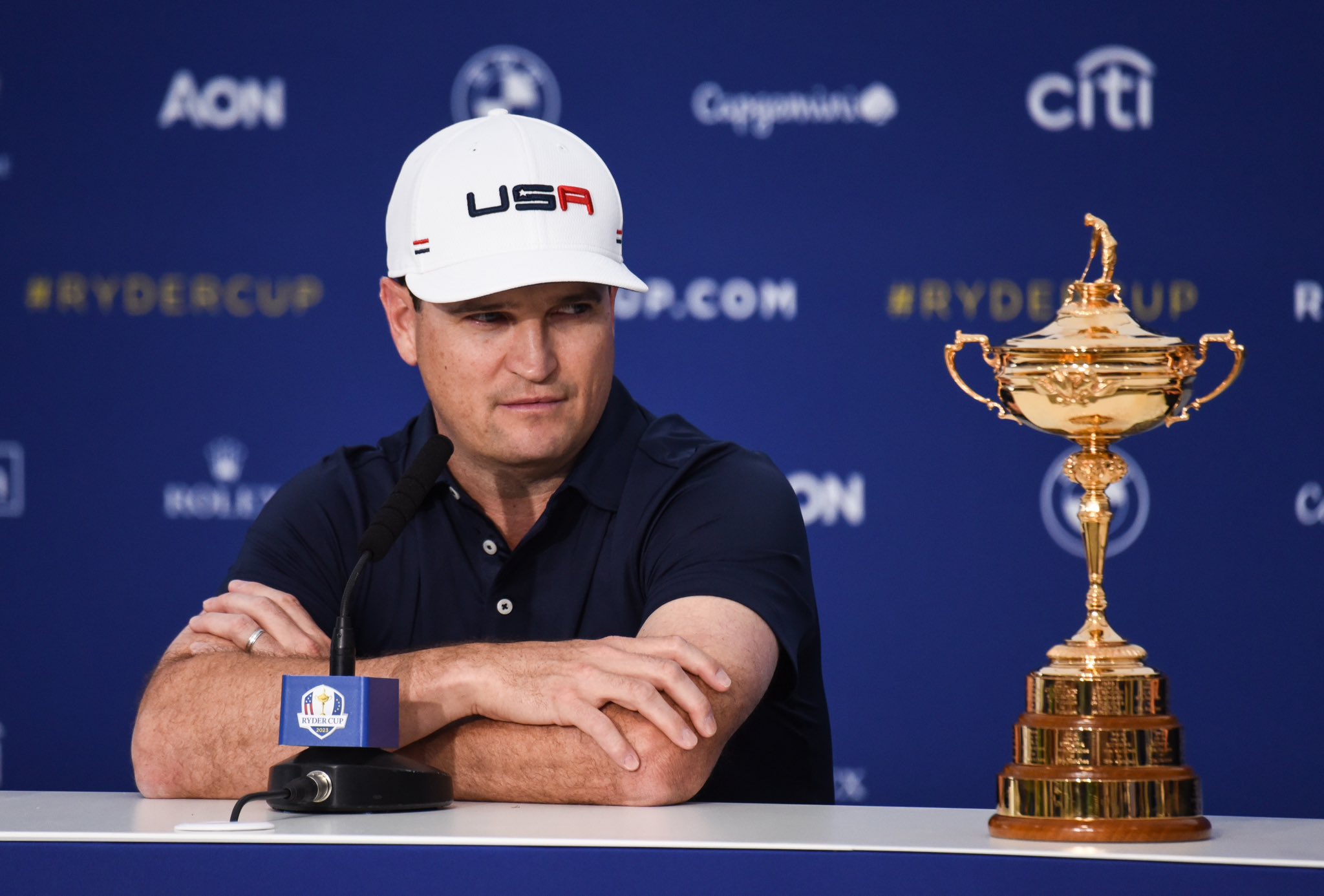
Zach Johnson Explains Why He Didn’t Pick Bryson DeChambeau for the Ryder Cup

Justin Thomas FIRES Coach before Ryder Cup…Who’s Next?
