
Training Aids & Drills
How to Improve Your Game and Lower Your Scores for $38

When I began my golf journey, I was never very analytical or paid attention to what parts of my game cost me the most. Over time, my game got sharper, and my scores improved, but for the last two years, I have hovered in the high 80s and occasionally the low 90s. While I had strong points in rounds, my scores never really improved.
Late last year, I decided I needed to find where I was losing my strokes, and it came to me that my approach game was really what was costing me in terms of proximity to the hole. Even when I’d hit a green, I wasn’t in super great shape, and I left myself, more often than not, with a challenging lag putt. I learned that when my approach game was bad, I was snowballing the issue into my putting.
With a bad approach, which translated into three putts on some greens, I was automatically starting with 3 or 4 on any given hole. This put pressure on my tee shot, which was rarely dialed. I sure did have my rounds, but those were never guaranteed, and what really helped me was when I’d get a few good pars or even the occasional birdie.
Until this year, I never knew where my scores were being pushed upward. A few months ago, I came across Journal 18, a comprehensive golf journal that helps track stats, progress, and mental thoughts throughout your rounds.
View this post on Instagram
It helped me shave at least five strokes off my game so far this year, along with other factors.
How it arrives
Journal 18 arrives to you in a pleasant little box that contains the journal, some tees, a thank you letter, and a bag tag.
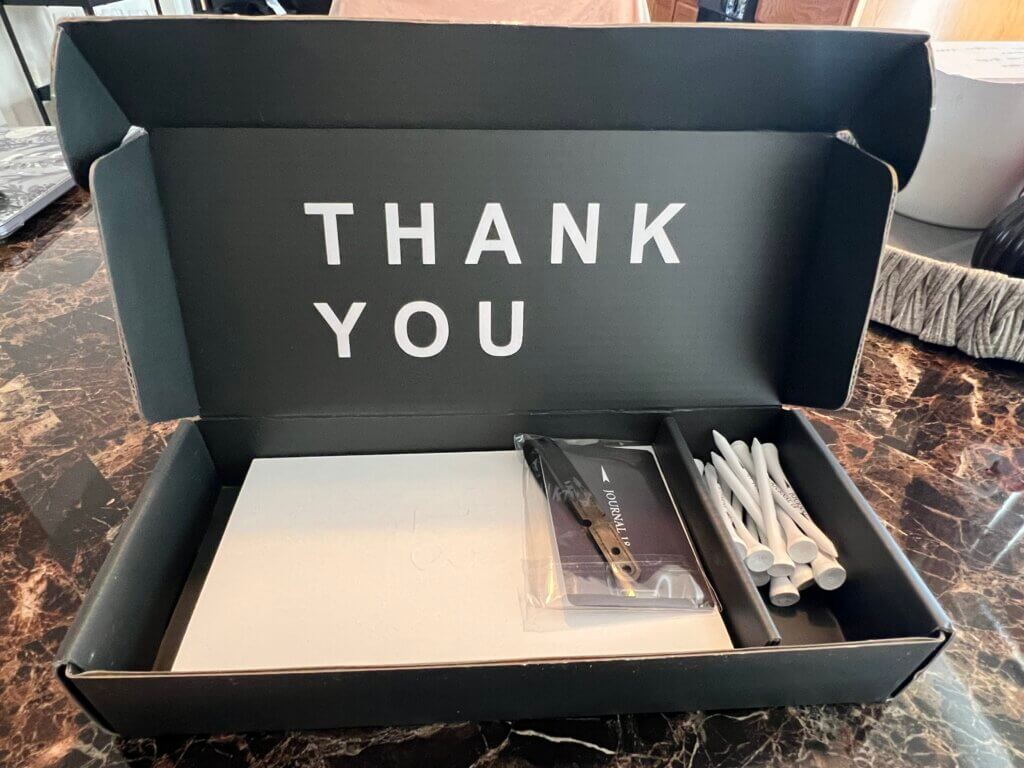
This is very welcoming, and I thought it was a great touch. Given that Journal 18 is a very one-of-a-kind company in the sense that there are not many immersive journals like this on the market, at least not to my knowledge, this is a great way to get customers off on the right start.
I could always use the extra tees (because my friends don’t usually have them), and I may not use the bag tag, but it’s a nice little addition for those who would. It’s a good company that truly appreciates your business, so if you’re going to give money to someone, why not give it to them?
The Journal
The journal cover is made from something similar to that of a composition book but thicker. It is durable and also has a nice sheen to it. If you get some mud or dirt on it, it will be easy to wipe away, which is a great little feature in case you want to play and track your performance in the rain.
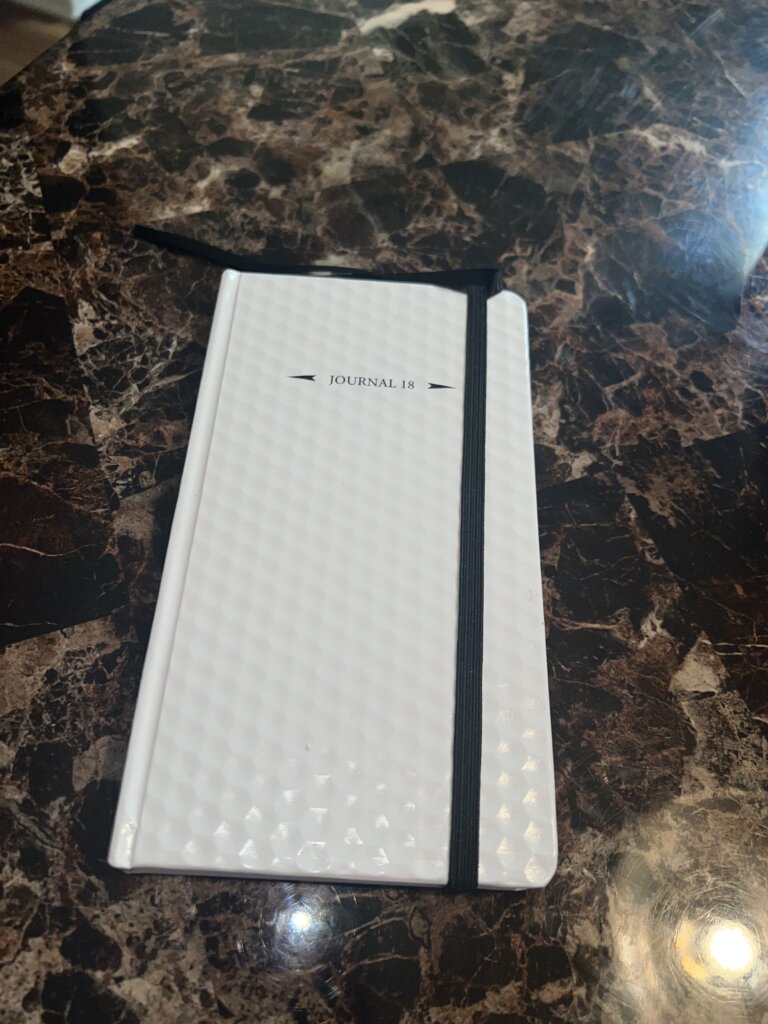
It also is the perfect size for your back pocket. It’s about the size of a yardage book, which makes it pretty ideal. I will admit that I didn’t ever keep it there, but I did carry it from the car to the clubhouse in my back pocket, so I know it fits. I usually kept it in the car so I could just write what my stats were for that hole when I was driving to the next tee box.
The Pages
Now, each round has four dedicated pages: a Pre-Round Thoughts and Goals page, a Scorecard page, a Drives and Approaches page, and a Post-Round Thoughts Page.
Yardages
Admittedly, my yardages don’t mean much to me. Generally, things are the same, and I know if I’m 134 away from the pin, I’m hitting a 9 iron. I don’t write these things down because I tend to get fixated on them. When a course is dry, like the one I played this past Saturday, my 9 iron got me pin high on a 157-yard approach that set me up for a birdie putt.
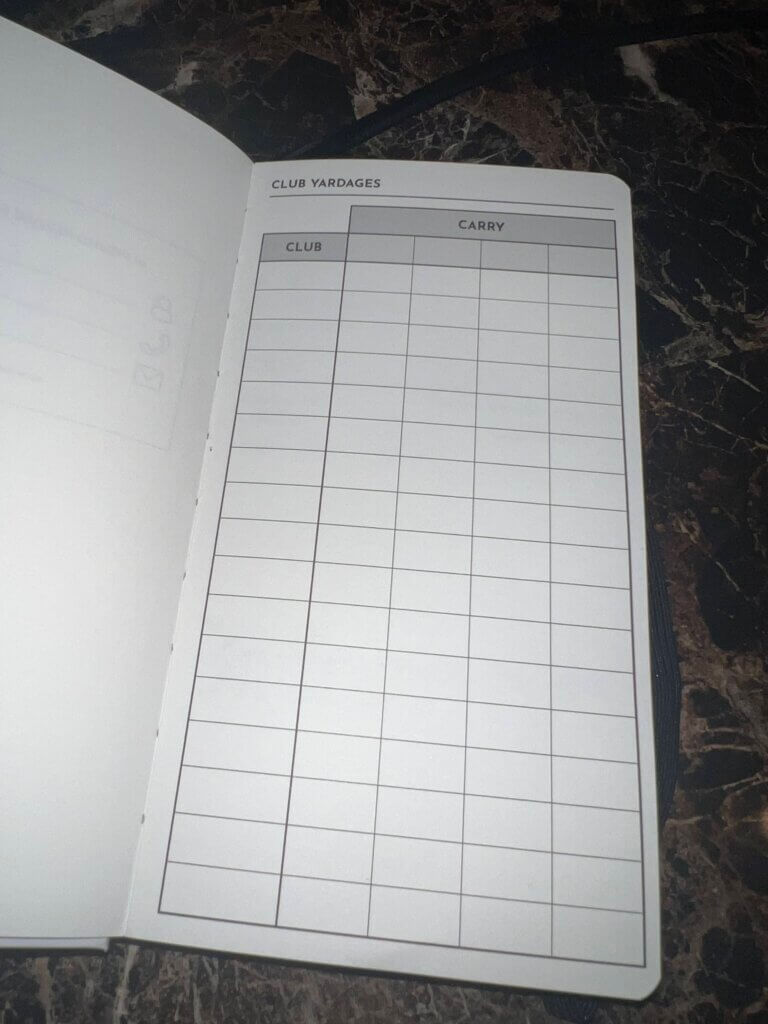
I don’t discourage anyone from writing their yardages down, I just don’t find that I need to write them. I know how far I am hitting each club, especially as I’ve improved this year.
Side note — As I mentioned earlier in this piece, my approach game cost me strokes due to proximity, which was mainly solved by getting fitted irons this year and by looking at the takeaways that the journal provided and going to the range and working on these shots and clubs specifically.
Pre-Round
The Pre-Round page is where I really found a lot of advantages. A lot of us, me included, tend to lose sight of why we came out on the course to begin with. Of course, I like to have fun. But playing well is fun, and that’s when I have the most fun.
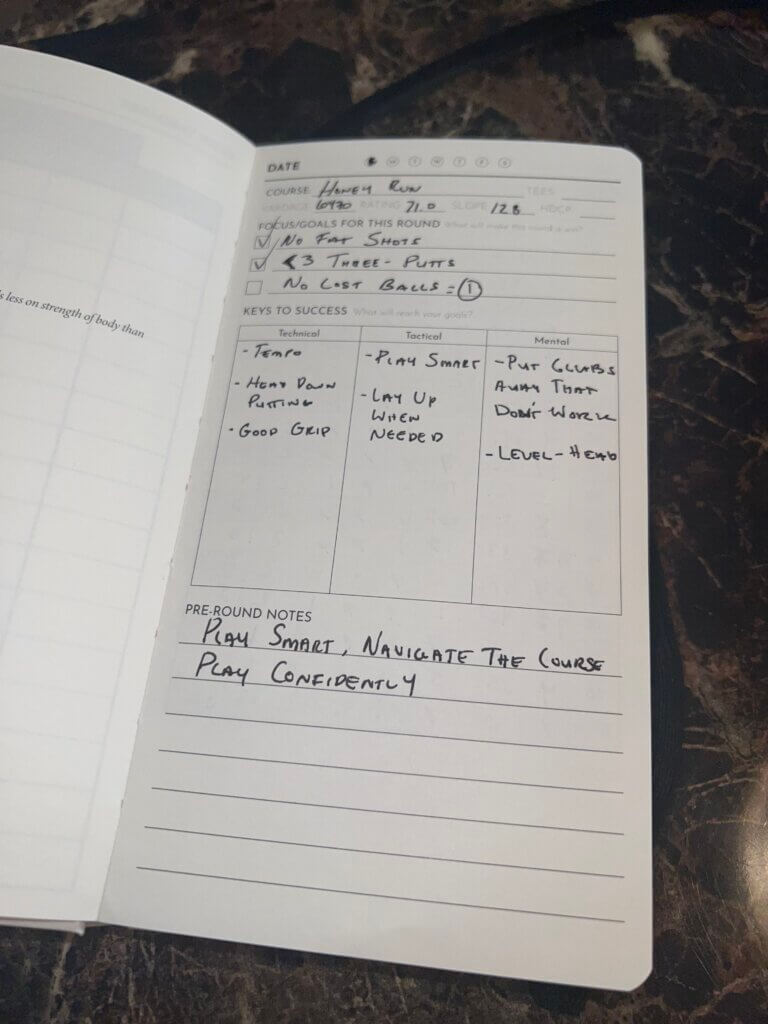
When I have a goal in mind with my round, I tend to play much better than when I don’t have an objective. As you can see here, I had three goals: no fat shots, less than three three putts, and no lost balls. I did lose a ball during this round but accomplished the other two.
I think writing down your goals helps solidify them for your round, and I believe that Journal 18 does a great job of putting things into perspective. What do you want to accomplish? What do you have in mind for this round? What would make you feel that this round of golf was a success?
Scorecard + Drives and Approaches
The Scorecard page is pretty self-explanatory.
Drives and Approaches is where I saw a big advantage in this journal.
Are you losing your tee shots out to the right? Are you hitting your iron shots short more often than not? Is that big slice setting you up for a punch out and a longer approach in?
These pages will tell you that.
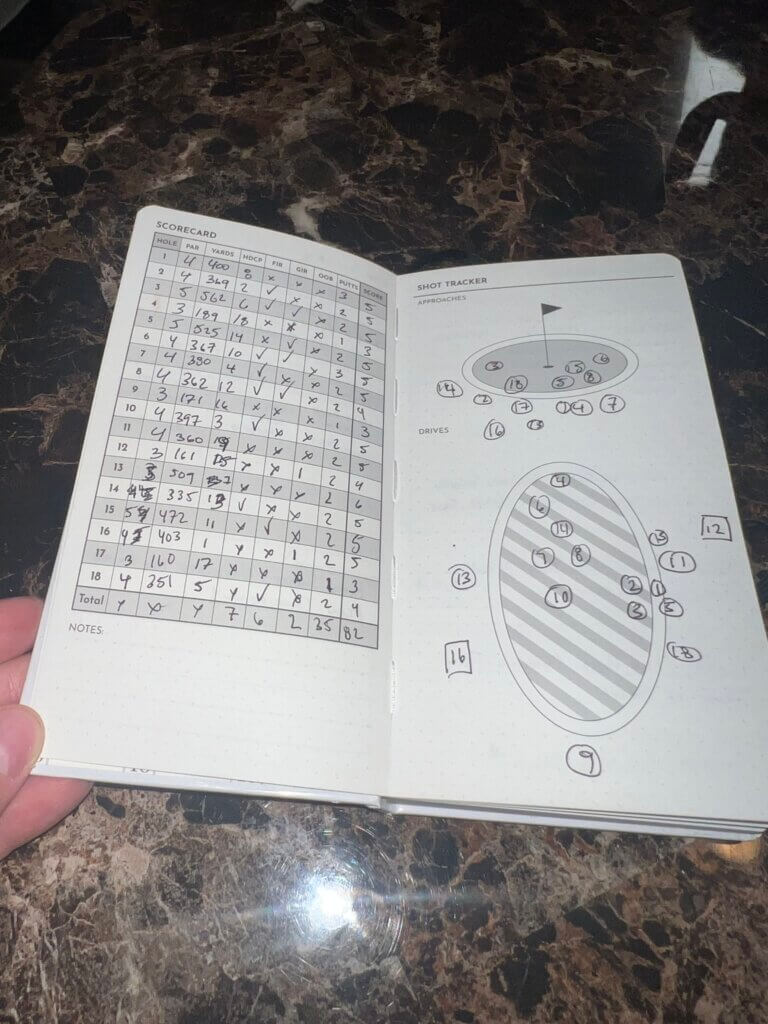
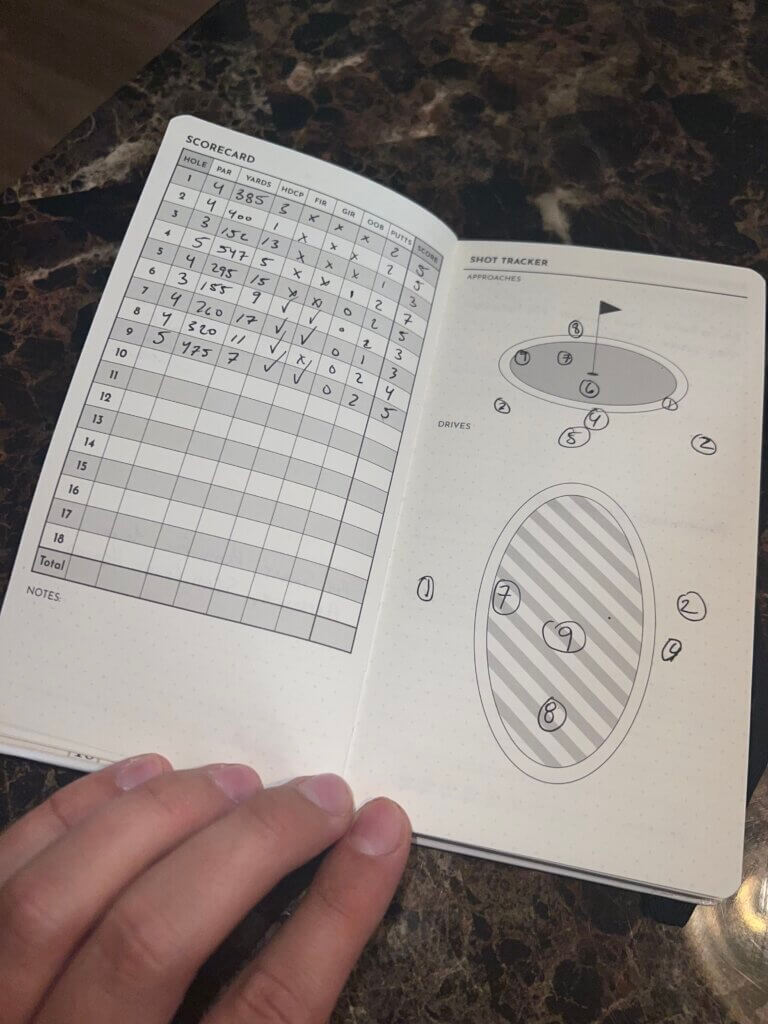
I tracked an 18-hole round and a 9-hole round, as you can see here. The tee shots were rather sporadic, and I was coming up short with a lot of my irons. This helped me realize I may need to take an extra club or play more of a runner with less loft.
It also helped me understand what kind of putts I needed to work on. After these rounds, I did a lot of work from 12 feet and in. I do wish it had some sort of column to help track the length of putts, as it is tough to gauge how far your approaches ended up from the hole. It’s very approximate.
Post-Round
The Post-Round page really puts some excellent things into play here. It gives you a chance to not only narrow in on what you did well but what you might have lost sight of during the round.
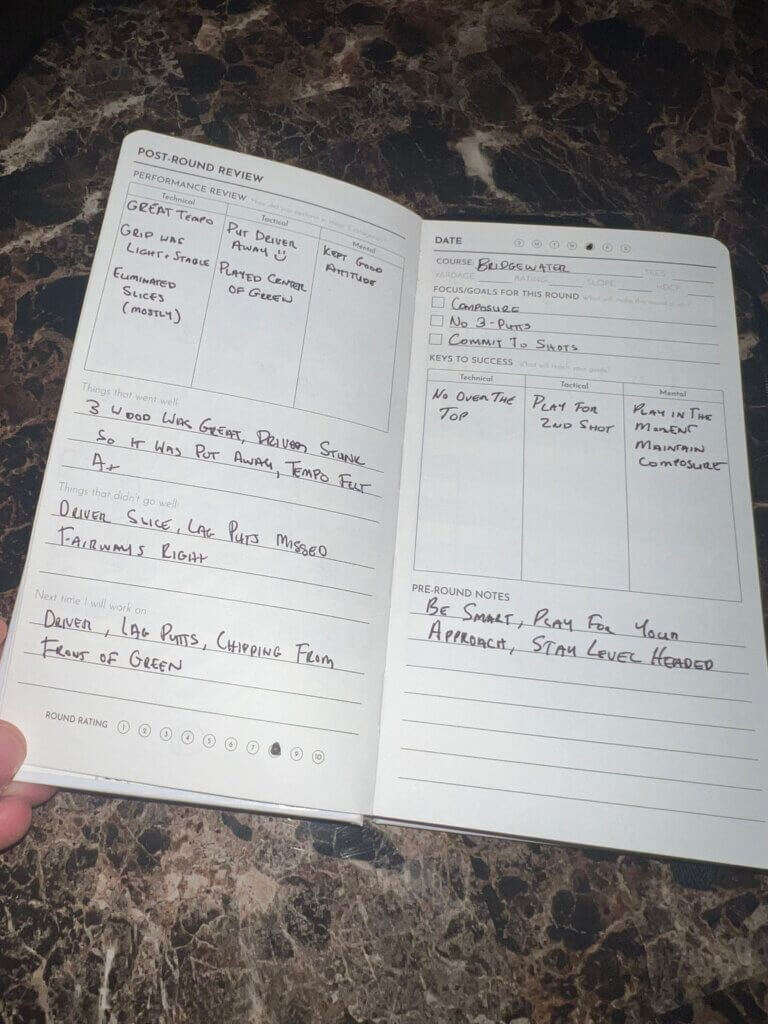
As you can see, I wrote down some of my strengths and weaknesses during this round. The tempo of my was great, but as previously mentioned, my iron shots consistently came up short.
In Summary
If you want to improve your game, this is really a great little buy for less than $40.
I’d like to see some more details in terms of proximity to the hole, especially with putt distance and other statistics. I’d also like to see this rounded into a subscription program because I truly believe that I will use all of these pages and then some more without any problem at all. I think there are a lot of advantages to this, and I think that many people could make it even more analytical with GIR and FIR percentages factored into the entire thing.
I’m sure there is room for that on these pages if you want to add it, and I know they’re only so big, but I feel like there might be some more important metrics than others.
For $38, you can pick yours up here, and I highly suggest it if you’re serious about improving your game and finding where you lose strokes.
Cover Image via Golf Channel


LIV Golf Could Be Facing its Final Chapter

Foresight GC2 Review: A Surprisingly Affordable Launch Monitor From Foresight

FIRST LOOK: Rapsodo MLM2XPRO Adds Putting, Faster Performance & More

FIRST LOOK: Titleist’s 2027 Pro V1 and Pro V1x Are Officially Showing Up on Tour

2026 Presidents Cup Preview: Did Team USA Get It Right?
2026 Presidents Cup Preview: Did Team USA Get It Right?
FIRST LOOK: Rapsodo MLM2XPRO Adds Putting, Faster Performance & More
Foresight GC2 Review: A Surprisingly Affordable Launch Monitor From Foresight
FIRST LOOK: Titleist’s 2027 Pro V1 and Pro V1x Are Officially Showing Up on Tour
LIV Golf Could Be Facing its Final Chapter

We Played This Old Golf Course Where Thomas Edison Was A Member

Are You MEASURING Your Golf Swing Correctly? (This Can Help)
Zach Johnson Explains Why He Didn’t Pick Bryson DeChambeau for the Ryder Cup

Justin Thomas FIRES Coach before Ryder Cup…Who’s Next?
