
Equipment
Reduced-Distance Golf Balls Will Kill the Game

For the past couple of months, there’s been two stories that keep finding their way into the headlines: (1) Tiger Woods’ return and most recent tournament performance; and (2) reduced-distance golf balls. Golficity discussed this in two separate articles back in November; one argued that fitness is really what’s “at fault,” while the other commented on USGA executive director Mike Davis’ statements, and the support he was receiving from Tiger and Bridgestone Golf president and CEO Angel Ilagan.
What makes this particularly interesting is that Mike Davis went as far as saying that “[t]he reality is this is affecting all golfers and affecting them in a bad way. All it’s doing is increasing the cost of the game.”
Now, I can certainly relate with him that golf balls have increased the cost of the game. I mean, almost every OEM is selling a box of balls for nearly $50. But there’s already a solution for that. Companies like Vice, Cut, and Snell have become popular because they’re making prove, tour quality golf balls for half the price.
BUT I’m really struggling to see how this is affecting all golfers in a bad way. I mean, in 2011 the USGA and PGA of America started the Tee It Forward campaign, which encouraged golfers to play from the forward tees.
Why?
Because they believed that amateur golfers were making the game too difficult on themselves by playing the wrong tees (i.e., making the course too long). And just so it was crystal clear, the Tee It Forward campaign included a chart which suggested that unless you were averaging 225 yards off the tee, you should not be playing a course longer than 6,000 yards.
Except for one small issue: Trackman data indicates that the average golfer has a swing speed of 93.4 MPH and an average total driving distance (not carry) of 214 yards. Using Trackman’s optimization estimator, 93.4 MPH swing speed would yield a maximum distance of 255 yards. As a result, under the Tee It Forward program, the amateur golfer shouldn’t be playing ANY of the Bethpage courses.
But somehow, less than 10 years later, the PGA has done a complete 180° and now believes that golfers are hitting the ball too far and that it’s gotten so out of control that it’s damaging the game?
Now, maybe this argument would have some credibility IF amateurs were hitting the golf ball an additional 50 yards. And only making matters worse, Mike Davis has been throwing around a 20% reduction figure when estimating an appropriate distance reduction.
So here are two scenarios just to illustrate how damaging the reduced-flight golf ball will be on a non-professional’s game:
Scenario #1
Remember that average golfer who was swinging 93 MPH and driving it ~214 yards? A 20% reduction means he’ll only be getting 170 yards out of his drives. And you thought having to hit a 5 iron into a green on a Par 4 was tough?
Now try imaging how miserable you’d be after puring a drive with your new $500 Epic driver, only to find out that you’ve still got ~240 yards before you hit the green.
Scenario #2
I looked at the Par 3s on two courses I frequent: Wild Turkey (Crystal Springs, NJ) and Galloping Hill (Kenilworth, NJ). From the Blue Tees, these courses measure out at 6,555 and 6,232 yards, respectively.
After taking the Par 3 distances from each course (Wild Turkey #2 at 163 yards, #7 at 181, #10 at 218, #14 at 187, and #16 at 170 and Galloping Hill’s #5 at 126 yards, #11 at 159, and #15 at 182) resulted in an average Par 3 distance of 173 yards.
Not too far, in fact 173 yards is my Srixon Z-765 6-Iron (28° of loft). But if I were playing a 20% reduced-flight ball, I’d now be looking at almost 210 yards, which demands a well struck 4-Iron (28° of loft). And while that’s not awful for me, the average golfer is now switching from a Hybrid to a Driver for a Par 3. Clearly, struggling with your slice wasn’t enough…
And as for that “it’s increasing the cost of the game” argument, Jack Nicklaus has suggested use of multiple golf balls based on a course rating system. So now you’re suggesting I buy golf balls specific to the course’s rating system? So much for saving money…
I get it, the pros are crushing the ball. But when Tiger won the Masters in 1997, he led the field in averaging driving distance for the week at just over 320 yards. In contrast, Justin Thomas ranked fourth in driving distance with 320 yards at the 2018 Honda Classic.
While a reduced-distance ball might make golf more competitive on the professional level, does anyone really believe that reduced-flight golf ball will help grow the game and help entice new amateur golfers?
Here’s the long and short of it: reduced-distance golf balls will only turn amateur golfers away from the game. And on that note, I really hope the decision-makers at the USGA and PGA America think twice about this before they kill the sport I’ve come to love.
Cover Image via Instagram


LIV Golf Could Be Facing its Final Chapter

Foresight GC2 Review: A Surprisingly Affordable Launch Monitor From Foresight

FIRST LOOK: Rapsodo MLM2XPRO Adds Putting, Faster Performance & More

FIRST LOOK: Titleist’s 2027 Pro V1 and Pro V1x Are Officially Showing Up on Tour

2026 Presidents Cup Preview: Did Team USA Get It Right?
2026 Presidents Cup Preview: Did Team USA Get It Right?
FIRST LOOK: Rapsodo MLM2XPRO Adds Putting, Faster Performance & More
Foresight GC2 Review: A Surprisingly Affordable Launch Monitor From Foresight
FIRST LOOK: Titleist’s 2027 Pro V1 and Pro V1x Are Officially Showing Up on Tour
LIV Golf Could Be Facing its Final Chapter

We Played This Old Golf Course Where Thomas Edison Was A Member

Are You MEASURING Your Golf Swing Correctly? (This Can Help)
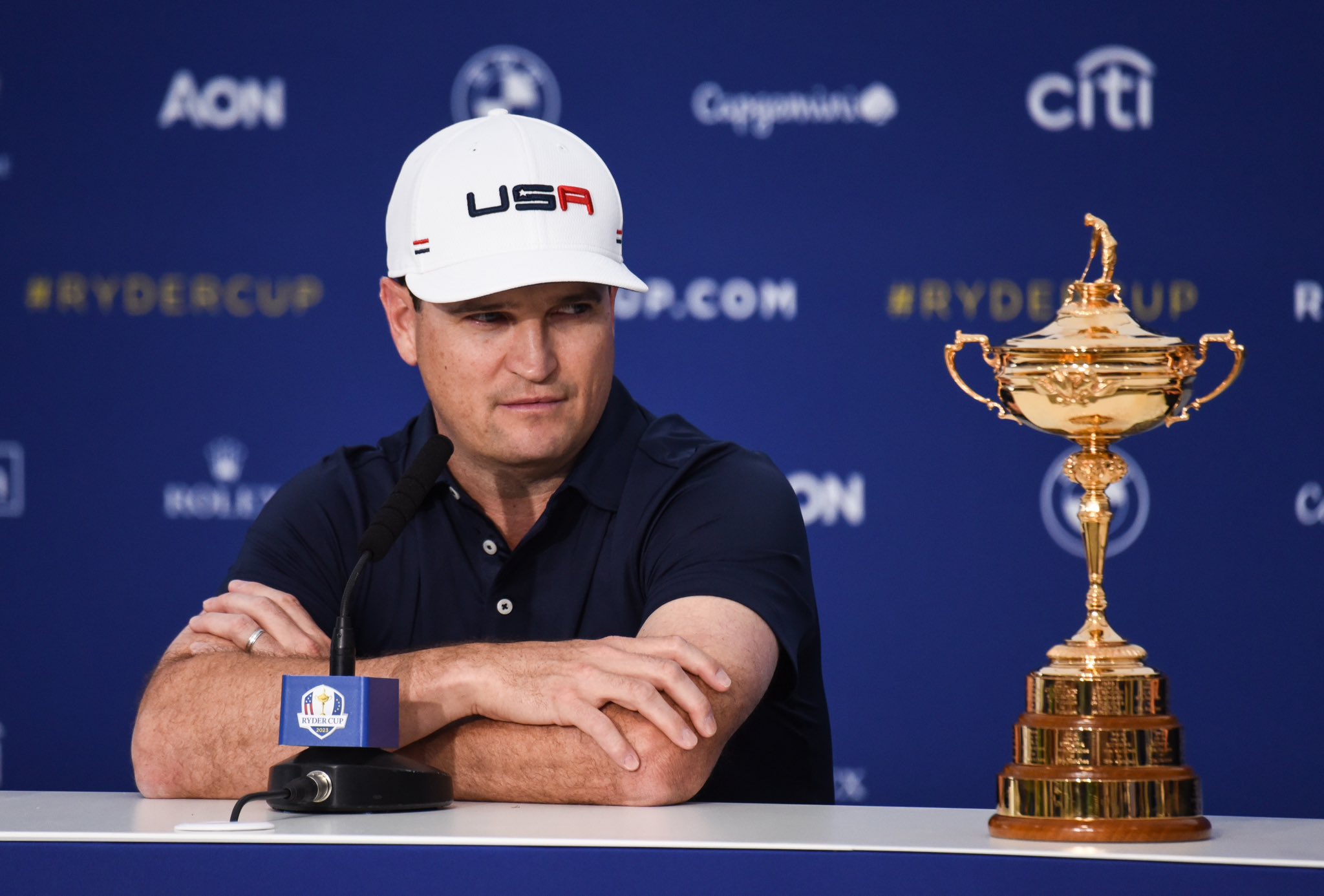
Zach Johnson Explains Why He Didn’t Pick Bryson DeChambeau for the Ryder Cup

Justin Thomas FIRES Coach before Ryder Cup…Who’s Next?

The ball goes too far – courses are too long and expensive
You are completely missing the forest for the trees. You are assuming that the amateur or new golfer is going to be playing the long courses with the reduced golf ball. In all scenarios, the purpose or place where the reduced ball would be used is at short, executive or par 3 courses. These courses allow people to play 9 holes in around 1 hour, on a course that usually has less of an economic and ecological impact than a par 72, 7000 yard course and are short enough not to frustrate and drive off the next generation of golfers.… Read more »
No Gimp ball here!…It’s a new NXT-GEN Hybird MD Golf Ball proportionally (distance-to-weight) developed for shorter courses & ranges. Meets US golf standards, Made in USA. Developed for golfers of all abilities who want the full game in half the time & cost.
Makes the game more enjoyable, efficient, economical & eco-responsible…the 4’E’s of sustainable golf.
Sorry, but you missed the buss on this one. Since we manufacture new NXT-Gen limited-distance Hybrid golf balls for shorter golf facilities, I should know. These balls are designed for proportional distance (meet US golf standards) to match Executive/par-3 & Mid-sized courses & smaller ranges. Basically they expand (improve) the smaller coursepar & play into a Big Course, allowing all-club-use, EZ-play performance, quick paced golf in half the time, reduced safety & golf damage, floats. More & more golfers of all abilities are now enjoying this Quick In – Quick Out form of play, due to the efficiency & covenience… Read more »
Eric,
Your crying about living in NYC and not playing golf, Why? You’ve golf a course right down the street, Mosholu GC. You just need the right golf ball, so get yourself some new Hybrid MD’s and play away! So who needs the big course anymore?