
Golf Instruction
SWING FIX: How to Get Rid of Your Snap Hook

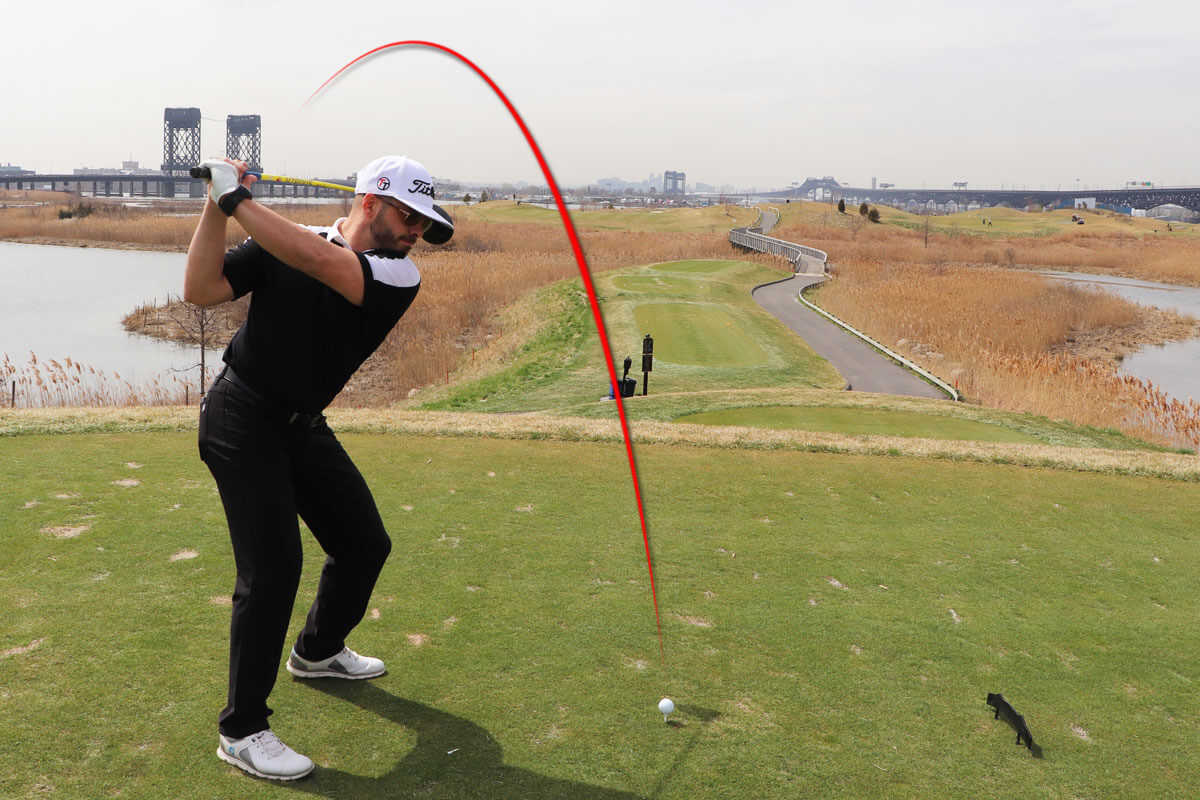
There are few feelings in golf worse than hitting a snap hook. Most of the time, you don’t even need to look up to know where the ball is headed – you could feel it at impact.
With a shut clubface and a swing path moving dramatically from inside-out, there is no other outcome than a diving hook. If you are a right-handed player, you can expect to see the ball curving hard to the left as soon as you pick your head up to watch the flight.
Not only are snap hooks hard to watch, but they have a harsh impact on your score, as well. Often, you won’t even find the ball after you hit this kind of shot. And, even if you do find the ball, it’s not likely to be in a good place. If you manage to escape the hole with just a bogey you should consider yourself lucky.
In this article, we’d like to discuss some strategies for eliminating your snap hook once and for all. With any luck, you’ll be able to take the ideas below and put them to work as you aim to improve your game and have more fun on the links.
How Does the Snap Hook Happen?
Clearly understanding the problems you face on the course is the first step toward correcting those issues. In other words, if you want to get over your snap hook, you need to understand what it is that causes that hook to occur.
Fortunately, the basics here are pretty simple. If the clubface is dramatically closed relative to your swing path when you contact the ball, you are going to hit a snap hook. For a right-handed golfer, that means the face is pointing significantly to the left of the path that the club is taking as it moves through impact. With the face in such a dramatically closed position, you’ll put an incredible amount of sidespin on the ball, and the shot will dive left shortly after taking off.
Of course, knowing that your clubface is closed is only helpful to a point – it’s figuring out how to solve that issue that is really going to allow you to make strides.
With that in mind, here are some of the common mistakes which lead to snap hooks.
Three Common Causes of a Snap Hook
Every golf swing is unique, but there are shared mistakes that are seen over and over again across the game. So, if you are currently trying to get rid of a snap hook, it’s likely that one of the three errors below is giving you trouble.
#1 A Faulty Swing Path
It’s easy to blame a snap hook on the position of your club face, but the bigger problem might be the path of your swing through the hitting area.
If you are swinging dramatically from inside-out, it won’t really matter what you do with your face angle – you’ll still be likely to hit a hook. And, if you do manage to hold the face open to match it up with the swing path, you’ll simply turn your hook into a push.
Swinging from inside-out dramatically is often an issue that goes all the way back to your takeaway. If you take the club away far to the outside of the target line, you’ll be at risk for dropping it inside during the transition. From that trapped inside position, you’ll have no choice but to swing dramatically from the inside just to make contact.

Diagram courtesy of FreeOnlineGolfTips.com.
In the end, you’ll hit a nasty snap hook, and the issue will actually be traced back to the very start of your swing.
If you feel that you are having trouble with your swing path, spend some time practicing a neutral takeaway where the club moves back away from the ball as close to the target line as possible.

Diagram courtesy of FreeOnlineGolfTips.com.
#2 Failure to Turn Through Impact
Rotation is a key element of the golf swing. It’s essential to rotate properly all the way through impact and into the finish, but this is an element of the swing that gives many players trouble.
Not only will good rotation help you strike solid shots and maximize distance, but it can also help you avoid snap hooks. If you give up on your turn at some point during the downswing, you might find that you hit a snap hook – even if most of the rest of your technique was just find.
Basically, when you stop turning your body, the club will close down quickly, and the ball will head left.
Usually, a poor downswing turn is related to a lack of confidence. When you feel unsure about the shot you are hitting, you bail on the rotation and wind up with a hook. This is why it’s so common for professional golfers to hit hooks when they are under pressure.
Before each swing, do your best to elevate your confidence and convince yourself that you are ready to hit a great shot.
#3 Overactive Hands
Contrary to popular belief, you don’t need to actively use your hands through the hitting area when striking golf shots.
Sure, your hands will be moving, but you shouldn’t be sending a message from your brain to your hands to do the job. Instead, you should be letting that motion happen naturally as a result of the other moves you have made earlier in the swing.
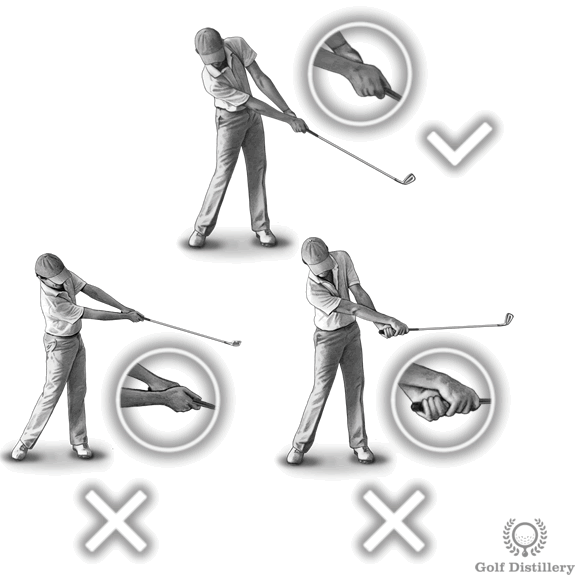
Diagram courtesy of GolfDistillery.com.
Work on fine tuning the other fundamentals of your swing and you should be able to settle your hands down through the hitting area.
Let’s Try to Hit Some Fades
There is nothing wrong with being a draw player for most of your shots but getting too deep into that pattern can cause your draw to turn into a hook. One way to keep your swing in a neutral position is to work on hitting some fades on the range during your practice sessions.
Even if you want to remain a draw player the majority of the time, adding a fade to your arsenal will make you more versatile and will help keep you away from the extreme moves that lead to a nasty snap hook.


LIV Golf Could Be Facing its Final Chapter

Foresight GC2 Review: A Surprisingly Affordable Launch Monitor From Foresight

FIRST LOOK: Rapsodo MLM2XPRO Adds Putting, Faster Performance & More

FIRST LOOK: Titleist’s 2027 Pro V1 and Pro V1x Are Officially Showing Up on Tour

2026 Presidents Cup Preview: Did Team USA Get It Right?
2026 Presidents Cup Preview: Did Team USA Get It Right?
FIRST LOOK: Rapsodo MLM2XPRO Adds Putting, Faster Performance & More
Foresight GC2 Review: A Surprisingly Affordable Launch Monitor From Foresight
FIRST LOOK: Titleist’s 2027 Pro V1 and Pro V1x Are Officially Showing Up on Tour
LIV Golf Could Be Facing its Final Chapter

We Played This Old Golf Course Where Thomas Edison Was A Member

Are You MEASURING Your Golf Swing Correctly? (This Can Help)
Zach Johnson Explains Why He Didn’t Pick Bryson DeChambeau for the Ryder Cup

Justin Thomas FIRES Coach before Ryder Cup…Who’s Next?
