
Opinion
Three Simple Rules, or What’s Wrong with My Swing?

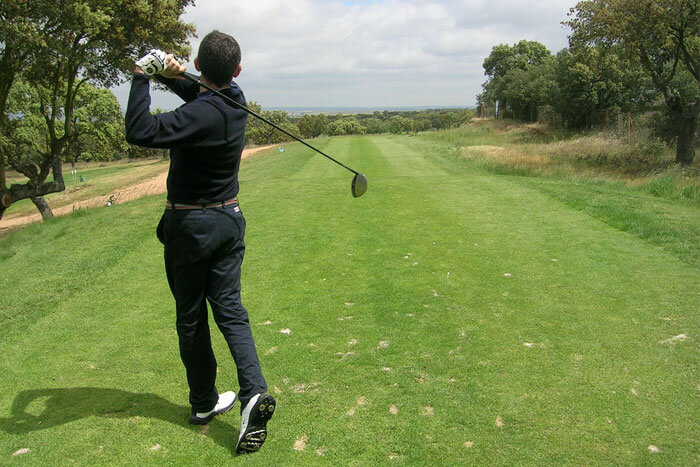
I’ve been reading a lot of articles about golf lately (I tend to do that when the weather doesn’t allow me to play), and for some reason I’ve been gravitating toward the subject of the swing. I expect that this is due to the fact that I have gone through quite a change in my golf swing recently. I have referred to my athletic history in earlier articles, but to sum-up…
I was a competitive runner for about seventeen years. My favorite races were the half and full marathons. Toward the end of my running career, I started having significant back injuries, which ultimately resulted in having two lower back epidurals within the span of a year in an attempt to stave-off the pain of a herniated disc. It was around this time that I started to really get into golf. I had to adapt my swing to compensate for my lower back issues and the fact that the only swinging I had ever done was that of a baseball bat.
In time, I gave up my running and turned to weightlifting. I remember my first round of golf after I’d been lifting for an extended period of time. My buddy said I looked like a T-Rex swinging the club. My arms were stiff, and I was slicing every shot off the tee. Just as I had when I suffered my back injuries, I had to re-learn my swing. I had to adapt to my changed physique and physical limitations. In short, I had to slow my swing down and focus more on making pure contact. This change went beyond the tee box and the fairway. I also changed my putting stance to a more “knees together” approach, reminiscent of Nicklaus (or that’s how I like to think of it).
I love to look at the swings of pro players and see just how different they are and analyze what makes their individual swing unique. Baseball has its “Batting Stance Guy,” Gar Ryness, who can mimic players’ stances in the box. Fans of the sport can identify the player being imitated simply by watching the mannerisms of Gar. The swing of both the bat and the club become a part of the identity of the athlete.
This leads me to the question…
If professional players have very unique swings and astute fans of the sport can recognize the golfer from the swing alone, why are many golfers taught to swing in a similar style? Why aren’t those same amateur golfers, or early-learners, taught a swing which accommodates their individual physical abilities?
I’m sure that one reason for this is for the teaching of basics. Just as in any sport, any newcomer must master the basics before tweaking specific areas of their sport. In many instances, if a new athlete doesn’t understand and perform the basics, then their growth and advancement in a particular sport will be hindered.
Open any publication dedicated to the sport of golf and you’ll see articles such as “Cure Your Slice with This One Move,” or “How to Swing Like ________.” When I was first learning the game of golf, I wasn’t really focused on my swing – I was more concerned with making contact with the ball. As I started to improve, I began to fine-tune certain aspects of my game. I studied swings and angles; I began worrying that my swing didn’t look like someone else’s, wasn’t as fast as another, didn’t take a divot every time, etc. I was worried that my lead elbow was too soft, or that my right elbow flew too much. I worked and worked at my swing, and changes came – almost all negative.
I’m one of those who can easily stall on the tee box. My mind can begin to race with all of the thoughts related to the golf swing in those seconds before impact. I’ve gotten better at stepping back and clearing my head of only the essentials. Now, I’ve tried to simplify my swing into three basic thoughts. I know that may sound too convenient, and I’ll admit – it can be. It’s not for everyone, and it’s not for every situation. So, here it goes… All of my learning summed up into three points, and points that I’m sure any golfer has heard time and time again – 1. Controlled tempo, 2. Keep your head still, and 3. Swing and let the ball get in the way. Sounds simple, but it works for me.
I don’t worry about my soft elbow or if I’m on a single plane. I’m not bothered that my knees may bend a little too much on the downswing. I don’t get upset if I don’t take the perfect divot. Now, I’m just concerned with making good contact and putting the ball where I want it (which is enough for me to be concerned with at the moment).
Granted, there are very intricate nuances to the swing that can be manipulated by the golfer, given the desired outcome of the shot. Should the swing produce a fade? A draw? How about an intended slice or hook? Then, we can go on to discuss shaping shots and angle of approach. We have to worry about flight angle and trajectory. All of this is important when looking to improve your game, but again, an argument could be made that even the instruction of these should be tailored to the individual.
On a recent online chat with a golf group, the question was asked, “Do you have a favorite/least favorite swing on Tour?” That question prompted many responses, accompanied with explanations for their respective choices. Could we have effectively answered that question if all of the swings were the same?
I just think that so many new golfers become disenchanted and frustrated with trying to get their body to do what it naturally does not want to do. Add to this the fact that many instructors with good intentions teach each individual the same way, not taking into account their physical abilities and limitations. Is it time to maybe rethink traditional golf instruction and tailor each lesson to the person being coached? We don’t all have to swing the same way or look the same doing it. Those differences are what make us unique as golfers.
Cover Photo via Flickr


LIV Golf Could Be Facing its Final Chapter

Foresight GC2 Review: A Surprisingly Affordable Launch Monitor From Foresight

FIRST LOOK: Rapsodo MLM2XPRO Adds Putting, Faster Performance & More

FIRST LOOK: Titleist’s 2027 Pro V1 and Pro V1x Are Officially Showing Up on Tour

2026 Presidents Cup Preview: Did Team USA Get It Right?
2026 Presidents Cup Preview: Did Team USA Get It Right?
FIRST LOOK: Rapsodo MLM2XPRO Adds Putting, Faster Performance & More
Foresight GC2 Review: A Surprisingly Affordable Launch Monitor From Foresight
FIRST LOOK: Titleist’s 2027 Pro V1 and Pro V1x Are Officially Showing Up on Tour
LIV Golf Could Be Facing its Final Chapter

We Played This Old Golf Course Where Thomas Edison Was A Member

Are You MEASURING Your Golf Swing Correctly? (This Can Help)
Zach Johnson Explains Why He Didn’t Pick Bryson DeChambeau for the Ryder Cup

Justin Thomas FIRES Coach before Ryder Cup…Who’s Next?
