
Golf Instruction
What Does It Mean to Have a Good Golf Swing Tempo?

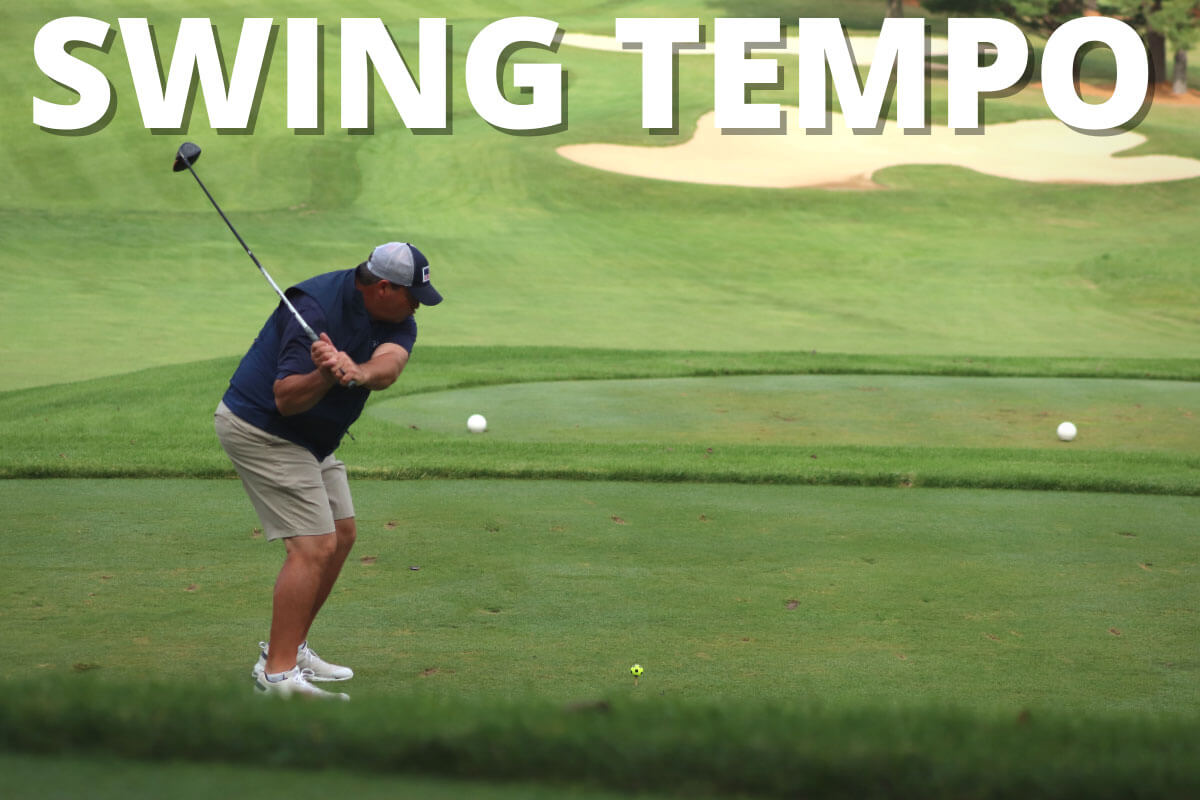
When watching golf on TV, we’ve all heard a commentator mention that a particular player has “good tempo.” That is obviously a compliment, but what does it mean?
What is it about a golf swing that signifies good tempo, and why would that benefit your game?
In this article, we are going to talk in detail about this important swing concept.
Golf Swing Tempo – A Basic Definition
In golf, tempo is a word used to describe the rhythm of your swing.
For an experienced golfer or golf observer, good tempo is something that you know when you see. It won’t take more than watching one or two swings to decide if a given golfer falls into the category of good tempo.
It’s worth noting that there isn’t one specific type of tempo that counts as good, or better than the rest. For instance, some people like the look of a slow swing tempo – and that can certainly work well – but a fast tempo can be just as effective when used properly.
Perhaps the defining characteristic of good tempo is the consistency of the pace of the swing from start to finish.
Whether you swing slow or fast, you’ll be on the right track with your tempo if you keep the overall pace of the action relatively smooth. It’s swings that seem out of sync and don’t flow from start to finish that would fall into the category of poor tempo.
Some Pro Golfers to Consider
Pretty much any golfer you see on Tour is going to have good tempo. Yet, when you watch them play, you’ll notice that their tempos are not consistent from one player to the next. This is proof that there is no one right way to do it – some pros swing slow, others swing fast, and yet they can all play at an incredibly high level.
There are plenty of examples of successful pros who have used a rather slow, smooth tempo. Fred Couples and Ernie Els are two major champions who were famous in part for their outstanding tempos.
View this post on Instagram
Interestingly, both Couples and Els were among the longest players of their day, despite those smooth tempos. The power that those two possessed is a sure indication that you don’t have to swing “hard” to hit the ball a long way.
At the same time, it’s easy enough to find examples of players with fast tempos who have had great success. From a previous generation, Nick Price was a world-class player with a very quick tempo. In the modern game, Tony Finau has a fast, short swing that is not only effective, but incredibly powerful.
Evaluating Your Swing Tempo
So, is your current swing tempo something that needs to be improved? Well, you’ll need to do a little homework to determine whether or not this is something you should be working on during your practice session.
To evaluate your current tempo, the best option is to record yourself on video hitting a few shots on the range. Try to capture at least a couple of swings with your driver, as well as a couple with a mid-iron. Once those videos have been recorded, take some time to sit down and watch them over and over to see what you find.
During this review process, you aren’t so much looking at the technical details of your swing as you are looking at the big picture. Watch the swing at full speed and see what you think of the overall rhythm.
Are you maintaining a steady pace from start to finish, or is one phase of the swing decidedly faster than the rest?
One common place for amateur golfers to rush is during the takeaway. Many golfers hurry through the takeaway phase, as they are anxious to get the swing underway, and they feel like starting the swing fast will help them build speed before getting back to impact.
Unfortunately, a rushed takeaway can cause a lot of problems. When you hurry at the start of your swing, it will be difficult to keep your body in sync with the club.
Even if you are going to use a relatively quick tempo overall, starting out with a smooth move away from the ball is a good idea.
The Mental Piece
Practicing your tempo can help you build a good rhythm that will serve you well when hitting shots. However, building that good tempo in practice is only part of what you need to accomplish.
You’ll also need to build your mental game to the point where you can sustain your tempo throughout an entire 18-hole round – which is a bigger challenge than you might realize.
View this post on Instagram
As you go through a round, changes to your mindset, mood, and attitude can have a direct impact on your tempo. For instance, if you get frustrated, your heart rate might go up a bit, and you might swing with a faster tempo as a result. Or, if you start to get tired and even a little hungry, you may find that your tempo lags and your swing falls out of rhythm on the low end.
Either way, losing track of your tempo in the middle of the round may make it tough to finish out the day with a satisfying score.
One of the keys to maintaining your tempo throughout a round is to do your best to stay on an even keel no matter what goes on during the day. Even if you hit a bunch of bad shots, or a bunch of good ones, try not to get too low or too high. Holding your mood somewhere in a neutral position is the best way to minimize variations in your tempo.
It’s safe to say that tempo is an overlooked component of this game in the minds of many average golfers. By working on your tempo in practice, and paying attention to it during rounds, you can make yourself a better player.


Ocean City Golf Trip Guide: Great Courses, Affordable Golf & A Beach Town Vibe

LIV Golf Could Be Facing its Final Chapter

Foresight GC2 Review: A Surprisingly Affordable Launch Monitor From Foresight

FIRST LOOK: Rapsodo MLM2XPRO Adds Putting, Faster Performance & More

FIRST LOOK: Titleist’s 2027 Pro V1 and Pro V1x Are Officially Showing Up on Tour
FIRST LOOK: Rapsodo MLM2XPRO Adds Putting, Faster Performance & More
Foresight GC2 Review: A Surprisingly Affordable Launch Monitor From Foresight
FIRST LOOK: Titleist’s 2027 Pro V1 and Pro V1x Are Officially Showing Up on Tour
LIV Golf Could Be Facing its Final Chapter
Ocean City Golf Trip Guide: Great Courses, Affordable Golf & A Beach Town Vibe

We Played This Old Golf Course Where Thomas Edison Was A Member

Are You MEASURING Your Golf Swing Correctly? (This Can Help)
Zach Johnson Explains Why He Didn’t Pick Bryson DeChambeau for the Ryder Cup
Justin Thomas FIRES Coach before Ryder Cup…Who’s Next?