
Golf Instruction
Wrist Angle Basics – Why Wrist Angles Matter in the Golf Swing

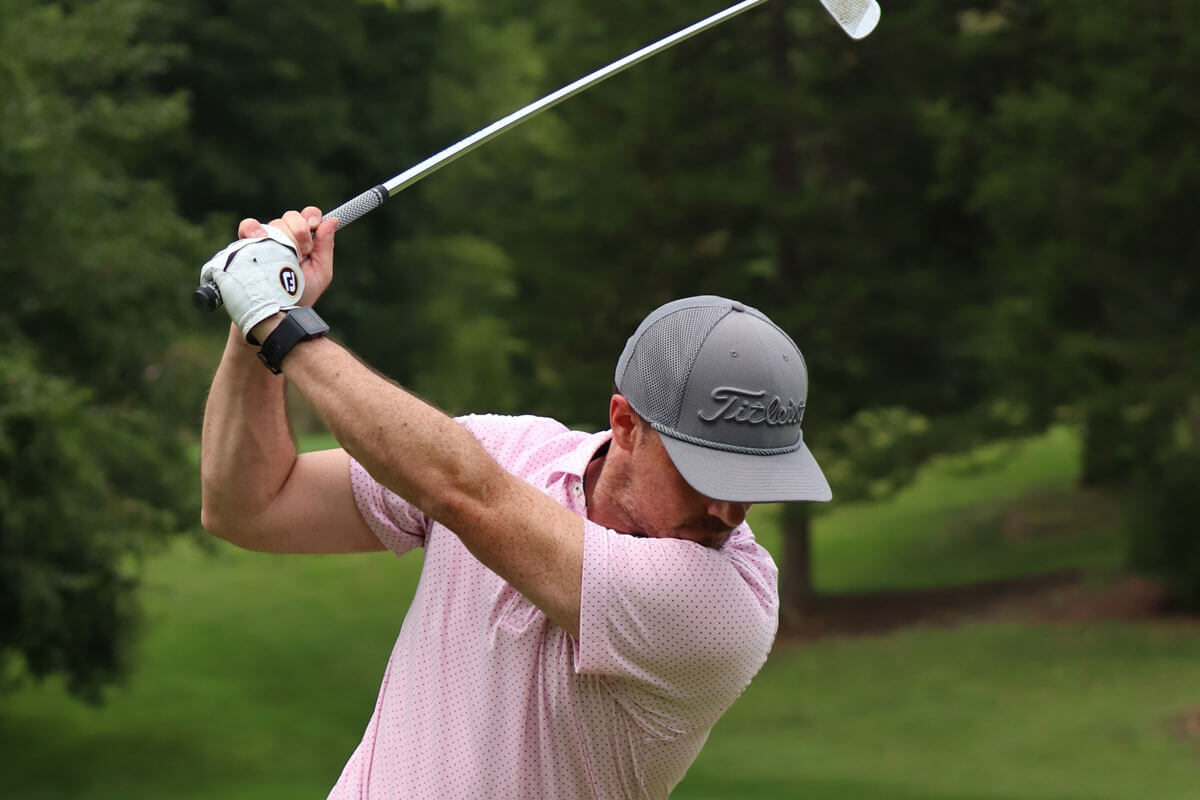
For most golfers, it’s best not to think too much about the technical aspects of the swing – especially while on the course. With that said, you do need a base of solid technique on which to build your game, as playing with bad fundamentals will always be an uphill battle.
One point to carefully manage is the wrist angles you establish in your swing.
Your wrists act like a hinge that connects your arms (and the rest of your body) to your hands and the club by extension. So, using the wrists correctly is an important part of golf.
Let’s work through some of the key points you need to watch for as you practice your golf swing technique and try to improve the way your wrists behave.
Establishing a Proper Grip
Without a good grip, nothing that you try to do with your wrists is going to matter in the swing. Your hands need to be in a good position around the handle of the club so your wrists will be free to do their work once the swing begins.
Even if you think your grip is already in good shape, let’s touch on three basic fundamentals for you to review.
#1 Light Grip Pressure
This one is essential. If your wrists are going to be free to hinge and unhinge in the golf swing, you’ll need to maintain a relatively light grip pressure from start to finish. Many amateur golfers go wrong on this point, holding the club way too tightly right from the start.
The best way to learn light grip pressure is to practice it on chip and pitch shots. As you get comfortable with your lighter grip, go ahead and gradually work up into bigger swings.
#2 Firm Connection
You need to settle on a method for connecting your hands in the grip. There are two types of grips that are by far the most popular – the interlock and the overlap.
An interlocking grip has the pinky of the right hand (for a right-handed golfer) locked between the second and third finger on the left hand. In an overlapping grip, that pinky finger simply rides on top instead of being locked between.
The choice is yours, but choose one and stick with it so you can get comfortable.
#3 Handle Across the Palm
This is a sneaky fundamental that often gets lost in the shuffle of other topics. You want the handle of the club running across the palm of your left hand (again, for a right-handed golfer) when you take your grip.
Some players make the mistake of running the handle up the palm, toward the base of the wrist. This is a costly error because it locks up the wrist and takes away the movement it needs to generate speed.
The Backswing Setup
If you have a good grip at address, you will already be well down the road to using your wrists properly. With a fundamentally-sound grip, it’s surprising to some people just how much of the rest of the swing falls into place naturally. But it’s not all automatic, of course, and setting your wrists during the backswing is one of the keys you need to manage.
In the early stages of the backswing, called the takeaway, you don’t want to be moving your wrists at all. This is a time for your shoulders to turn away from the target while everything else remains quiet.
Getting the swing started with a shoulders-only turn is one of the best things you can do for your game.
At some point, however, that shoulders-only phase will be over, and you’ll need to set the club before you arrive at the top of the backswing. Many players like to make this move roughly when their lead arm reaches parallel to the ground on the way back. You don’t have to do it precisely at that moment, but use that benchmark as a general guideline. This will give you time to set the club and feel like everything is organized when you get to the transition and move into the downswing.
An Automatic Unload
If you get through your backswing nicely, your wrist angles should be set at the top of your swing to where you have roughly a 90* angle between your lead arm and the shaft of the club. This angle may not be exactly 90*, and it doesn’t have to be, but it will probably be close.
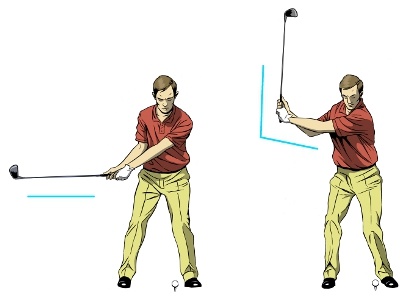
Image via Golf-Info-Guide.com
From there, you are going to start into the downswing, and you’ll want to hold that angle as long as you can. Holding that angle will maintain the potential for speed that you can unleash at some point prior to striking the ball.
Where many people go wrong is, they feel that it’s necessary to think consciously about releasing your wrist angle as you get to impact. That’s not the case. Instead, you want to focus on the rotation of your body. If you rotate through the shot properly and don’t hold back in your downswing, you should find that the club releases naturally and your wrist angles are straightened out when you get to the ball.
Trying to time your release manually is a recipe for disaster. The downswing moves way too quickly for you to gauge precisely when you need to start straightening out your wrists. And, even if you did get the timing right, you’d probably lose speed because you are worried more about your wrists than turning your body through the shot.
Keep your hips turning through impact and trust that your wrists will get into position on time thanks to the forces created through a rotational swing.
The angle of your wrists in the swing is important and it is something you should work on from time to time. However, if you focus too much on this point, you run the risk of creating a swing that is too mechanical and lacks rhythm.
Spend some time getting your wrists into the proper positions and then leave this point in the background as you focus on consistency keys like balance, tempo, and rotation.


Ocean City Golf Trip Guide: Great Courses, Affordable Golf & A Beach Town Vibe

LIV Golf Could Be Facing its Final Chapter

Foresight GC2 Review: A Surprisingly Affordable Launch Monitor From Foresight

FIRST LOOK: Rapsodo MLM2XPRO Adds Putting, Faster Performance & More

FIRST LOOK: Titleist’s 2027 Pro V1 and Pro V1x Are Officially Showing Up on Tour
FIRST LOOK: Rapsodo MLM2XPRO Adds Putting, Faster Performance & More
Foresight GC2 Review: A Surprisingly Affordable Launch Monitor From Foresight
FIRST LOOK: Titleist’s 2027 Pro V1 and Pro V1x Are Officially Showing Up on Tour
LIV Golf Could Be Facing its Final Chapter
Ocean City Golf Trip Guide: Great Courses, Affordable Golf & A Beach Town Vibe

We Played This Old Golf Course Where Thomas Edison Was A Member

Are You MEASURING Your Golf Swing Correctly? (This Can Help)
Zach Johnson Explains Why He Didn’t Pick Bryson DeChambeau for the Ryder Cup
Justin Thomas FIRES Coach before Ryder Cup…Who’s Next?