
Equipment
OPINION: The USGA and R&A Ball Rule Proposal Hurts Golf

Mark March 14, 2023 in your calendar. It’s a day that will live in golf infamy and be remembered as the day that golf’s governing bodies—the USGA and R&A—decided to take the first step towards ruining golf.
View this post on Instagram
On Tuesday, the USGA and R&A jointly announced a proposed model local rule (MLR) that allegedly targets “elite competitions only.” The proposed rule looks to rein in professional golf’s boogie man—“excessive” driving distance—by enacting certain rule changes that will reduce golf ball distances by approximately 15 yards.
As an initial matter, 15 yards is a less than a five percent ball reduction—which poses the question, “why even bother?” And how did the USGA and R&A come to this 15-yard number? By testing golf balls at 127 MPH club speed—more than 12 MPH faster than the average clubhead speed on the PGA Tour—with 11 degrees of launch and 2,220 RPMs of backspin in an attempt to prohibit balls from traveling more than 320 yards on carry and roll.
If these exaggerated numbers jump out at you, it should because the powers are claiming that “if adopted, [the rule] will have no impact on recreational golf…” The problem is they are dead wrong.
View this post on Instagram
One of golf’s unique aspects is that golfers around the world have the ability to play the same game, under the same rules, with the same equipment, down to the ball, that is being used by the game’s most accomplished and try to compete (excluding the uber-private courses, like Augusta) on the same 18 holes. Where 99% of us will never have the opportunity to take at-bats in Yankees stadium or run routes in Lambeau Field, every golfer has the opportunity to take on the Major and Ryder Cup venues like Bethpage Black, TPC Harding Park, and Pinehurst No. 2 to see how they fare. And now the USGA and R&A is looking to detract from that experience.
Indeed, the immediately obvious dilemma this creates is, perhaps, the preeminent events hosted by these two entities: the U.S. Open and Open Championship. Both of them allow amateur golfers to compete for the opportunity to tee up next to the world’s best golfers. But if the MLR is enacted, will amateurs—whose eligibility is largely dictated by their handicap—be required to compete with MLR-compliant equipment leading up to the equipment or will they only be required to compete when competing in designated “elite competitions”? You can, likewise, foresee the voluminous ball disputes that will inevitably rise (is that a Pro V1 or the MLR-Pro V1?) at amateur events that require MLR equipment.
Speaking of which, what are “elite competitions”? Does that include state open championships, the U.S. Amateur, NCAA events? Should golfers expect their local club to start requiring the use of MLR equipment in events to ensure a “more authentic” golf experience in competition play?
Perhaps most problematic are the golfers who—despite the fact that the average male amateur golfer doesn’t drive the ball over 250 yards—will demand the most authentic experience and play the MLR equipment. If you thought the 5-hour rounds at your local course were bad enough, be ready to tack on an extra 30 minutes when amateurs feel the need to punish themselves while hitting 4-irons, rather 6 or 7s, into greens on par-4s.
View this post on Instagram
Adding to that complexity, how do the USGA and R&A think manufacturers like Titleist and Callaway will respond to the MLR? The simple truth—which the rule makers do not want to acknowledge—is the R&D costs for MLR-compliant balls will, inevitably, be passed onto the consumer. Thought it was bad enough trying to find your preferred golf ball during the supply chain dilemma? Don’t worry, with the MLR, golf balls will become more expensive to help ball developers offset the new, unanticipated costs to develop a top-performing MLR-compliant ball.
The unfortunate reality is that golf can be cost prohibitive—between equipment and running costs (greens fees, gloves, balls, etc.)—for many, and now—under the guise of making golf a “more of an elite sport” (as stated by the R&A’s chief executive, Martin Slumbers)—rule changes stand to make the game even more expensive during a time when golf is finally experiencing some desperately-needed growth.
Do I understand the USGA and R&A’s goals of preserving the integrity of the game? Absolutely. But when the R&A’s representative claims the MLR is being enacted because “[w]e want the game to be more athletic,” I call BS, because the modest distance gains that have been uncovered over the past 20 years—less than 5% (15 yards)—are, in fact, largely due to the drastic improvements and emphasis on golf fitness. TPI was, in fact, founded in 2003, which is coincidentally the starting period the USGA and R&A like to pick on when emphasizing the “damaging” increase in driving distance.
View this post on Instagram
In sum, I stand with Titleist for the reasons they articulated on social media hours after the MLR’s announcement. I believe one of the most unique and enriching aspects of golf is that I can equip myself with the same equipment available to the game’s best and, absent any barriers, try to take on courses that the likes of Tiger Woods and Jon Rahm have stepped foot on to see how I can score (and have a newfound appreciation for good they are when I tally up the scorecard at the 19th hole).
At this time, the MLR is a proposed rule with a tentative implementation date of January 1, 2026. The comment period on the MLR closes on August 14, 2023, so I strongly urge golfers to press their local clubs and pros to voice their concerns with the USGA and R&A in the hopes that this ridiculous rule can be vetoed by the game’ most important participants: amateurs.
Cover Image Via Twitter


Ocean City Golf Trip Guide: Great Courses, Affordable Golf & A Beach Town Vibe

LIV Golf Could Be Facing its Final Chapter

Foresight GC2 Review: A Surprisingly Affordable Launch Monitor From Foresight

FIRST LOOK: Rapsodo MLM2XPRO Adds Putting, Faster Performance & More

FIRST LOOK: Titleist’s 2027 Pro V1 and Pro V1x Are Officially Showing Up on Tour

2026 Presidents Cup Preview: Did Team USA Get It Right?
FIRST LOOK: Rapsodo MLM2XPRO Adds Putting, Faster Performance & More
Foresight GC2 Review: A Surprisingly Affordable Launch Monitor From Foresight
FIRST LOOK: Titleist’s 2027 Pro V1 and Pro V1x Are Officially Showing Up on Tour
LIV Golf Could Be Facing its Final Chapter

We Played This Old Golf Course Where Thomas Edison Was A Member

Are You MEASURING Your Golf Swing Correctly? (This Can Help)
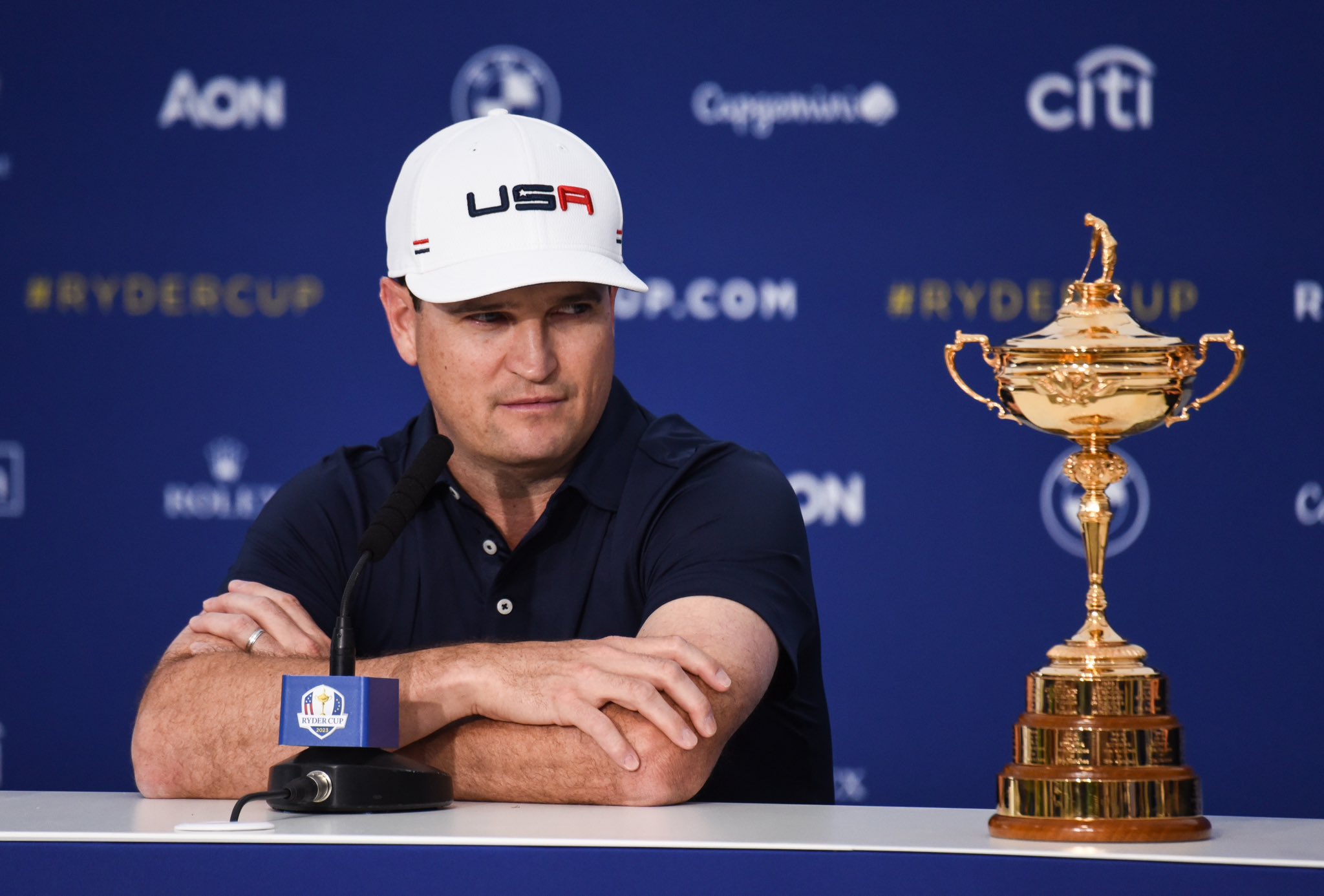
Zach Johnson Explains Why He Didn’t Pick Bryson DeChambeau for the Ryder Cup

Justin Thomas FIRES Coach before Ryder Cup…Who’s Next?