
Club Selection
Stop Wasting Strokes with These 5 Ways to Play Smarter Golf

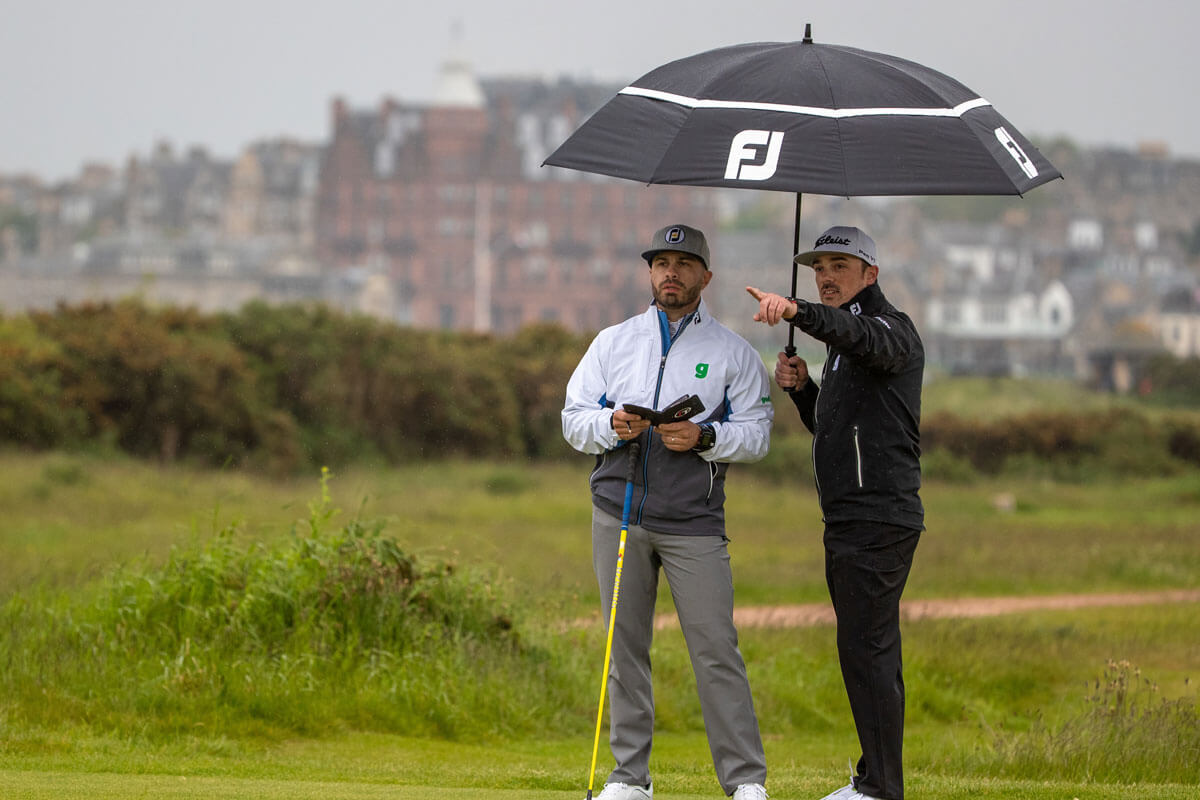
Playing a round of golf requires you to make an ongoing string of decisions, from the first tee to the last green. While the physical challenges associated with this game are many, there are just as many mental challenges that need to be overcome. If you tend to waste strokes due to poor decisions, this article is for you.
Below, we have highlighted five key tips for playing smarter golf. Ultimately, you’ll need to develop your own course management style which highlights your strengths and minimizes your weaknesses, but these tips are a great place to start.
An Important Note on Playing Smart Golf
Before we start with our list of tips, we need to highlight an important note regarding course management strategy. Some golfers seem to think that they are not good enough to worry about course management – that’s just not true!
Even if you still have a lot of work left to do on your swing technique, it’s never too early to start playing smarter golf. You might be surprised to find how many strokes you can save by making better decisions, even if you don’t many any changes to your swing mechanics.
#1 – Don’t Assume Driver
One of the classic course management mistakes made by amateur players is assuming that every par four or par five hole will need to be started with a driver. Sure, you’ll hit driver on most of these holes, but it’s probably not called for on all of them. Clubbing down to a fairway wood, hybrid, or long iron can help you keep the ball in play and position yourself for a better approach shot.
To decide what club to hit off the tee, there are a couple of factors to keep in mind. The first consideration is, of course, the length of the hole.
On a 450-yard par four, you’ll almost certainly hit a driver (unless you can really pound it off the tee). However, if the hole is 350-yards, you might have a variety of options at your disposal – so keep an open mind.
The other key is the width of the fairway and any hazards that may be in play. If you are facing a narrow fairway but the course has minimal rough and there are no hazards on the hole, hitting your driver may still be the right option. But when water or out-of-bounds is present, playing it safe with a shorter club is a smart plan.
#2 – Read the Slope – On Every Shot
You already know that it’s important to read the slope of the ground when getting ready to hit a putt. After all, that slope is going to determine which way the ball is going to turn as it rolls. But did you know that you should be reading slopes on every other shot during your round as well?
The importance of this point comes down to the desire to play from below the hole. By knowing which side is the low side, you can favor that direction and play uphill more frequently.
This point is particularly important on approach shots from short range. When hitting a wedge into the green, always figure out which side of the hole would leave you with an uphill putt, and then attempt to place your ball in that position. More uphill putts will almost certainly lead to more makes, and it should cut down on three putt greens, as well.
#3 – Each Hole is a New Challenge
Too many golfers let one hole bleed into the next from a course management perspective. For instance, if you bogey one hole, you might be tempted to play the next hole more aggressively, in an attempt to ‘make up’ for that bogey. In reality, however, you can’t make up for a bogey – it’s already done and there’s nothing you can do about it. The best thing you can do is play the next hole smart with a strategy that suits your game and the challenge in front of you.
With this in mind, consider establishing your course management plan before your round begins. Figure out which club you will hit off the tee on each hole, and how you will attempt to get from tee to green safely. Then, during your round, don’t change this strategy just because you are playing better or worse than expected!
The only reason you should change your game plan in the middle of a round is if the conditions require you to do so – such as having the wind up come up. Otherwise, stay with your game plan and keep your emotions out of it.
#4 – Ignore the Flag (Sort of)
Okay – so we aren’t actually suggesting that you ignore the flag on all of your approach shots, as that is not likely to be beneficial. If you hit a great drive and only have 80-yards to the hole, you should probably aim your wedge right at the flag and try to make a birdie (in most cases). However, for the average golfer, there comes a point where the approach shot is long enough to justify simply aiming at the middle of the green and ignoring the flag entirely.
As you practice on the range, take note of how accurate you are with your various irons. In other words, at what point do you start to lose some control over your ball flight? For an accomplished player, that point might be down into the long irons. For a newer golfer, anything longer than a sand wedge might be a struggle.
Once you evaluate your control, decide on a yardage that you will use as your cut-off point for aiming at the flag. If you pick 150-yards, for example, you’ll aim at the flag inside of that number, and aim at the middle of the green when farther away. Give this method a try during an upcoming round and you might be surprised by the results.
#5 – Play Your Game
This might be the most important tip in the article. One of the best things you can do from a course management perspective is to play your game independently of what others in your group are doing.
Everyone else going for the green on a short par four? That’s fine – but it doesn’t mean you have to. Other players aiming for the flag on a long par three over water? Again, they are free to do what they want, but that doesn’t mean it’s a good decision.
You’ll be a better golfer the day you decide to stick to your own strategy and ignore the plans of those around you.


LIV Golf Could Be Facing its Final Chapter

Foresight GC2 Review: A Surprisingly Affordable Launch Monitor From Foresight

FIRST LOOK: Rapsodo MLM2XPRO Adds Putting, Faster Performance & More

FIRST LOOK: Titleist’s 2027 Pro V1 and Pro V1x Are Officially Showing Up on Tour

2026 Presidents Cup Preview: Did Team USA Get It Right?
2026 Presidents Cup Preview: Did Team USA Get It Right?
FIRST LOOK: Rapsodo MLM2XPRO Adds Putting, Faster Performance & More
Foresight GC2 Review: A Surprisingly Affordable Launch Monitor From Foresight
FIRST LOOK: Titleist’s 2027 Pro V1 and Pro V1x Are Officially Showing Up on Tour
LIV Golf Could Be Facing its Final Chapter

We Played This Old Golf Course Where Thomas Edison Was A Member

Are You MEASURING Your Golf Swing Correctly? (This Can Help)

Zach Johnson Explains Why He Didn’t Pick Bryson DeChambeau for the Ryder Cup

Justin Thomas FIRES Coach before Ryder Cup…Who’s Next?
