
Players
When Honesty Hurts: Famous Rules Incidents in Golf’s Major Championships

In the 1925 US Open, after assessing himself a one-stroke penalty for unintentionally causing his golf ball to move from a difficult lie in deep rough, Bobby Jones was universally praised by patrons and the media. The self-imposed penalty forced a 36-hole playoff between Jones and Scotsman William Macfarlane, which Bobby would subsequently lose—denying him a record fifth US Open.
The act of honesty incidentally elevated Jones’ legacy to stratospheric levels, but Bobby himself always shirked any praise regarding the event. “You might as well praise me for not robbing a bank,” the seven-time major champion insisted.
Golf—and major championship golf in particular—has an intimate history with heartbreak. Examples abound: Sam Snead at the US Open, Doug Sanders in the 1970 Open Championship, Scott Hoch in the 1989 Masters, Greg Norman in essentially every major in which he contended. However, the severity of heartache seems amplified when infraction of a forgotten or overlooked rule—rather than poor play—is the source of the anguish.
While Bobby Jones and his long-ago incident at the 1925 US Open may not have caused any longstanding grief, Bobby is likely alone in that category. Following is a collection of golf’s most historic—and most costly—tales of rules infractions in major championships.
7) Dustin Johnson ~ 2010 PGA Championship (Whistling Straits)
DJ’s struggle with the USGA’s rules committee is well-documented—and almost amounts to a sporting rivalry of its own. Dustin’s infractions in both the 2010 PGA Championship, and the 2016 US Open (keep reading—we’ll discuss that incident forthwith!) were two of the most inflammatory officiating controversies in recent memory.
Dustin Johnson hits his tee shot on the 18th hole during the third…
Dustin Johnson hits his tee shot on the 18th hole during the third round of the 92nd PGA Championship on the Straits Course at Whistling Straits on August 14, 2010 in Kohler, Wisconsin. Get premium, high resolution news photos at Getty Images
Aged 25 during the 2010 PGA Championship—and searching for his first major victory—Johnson trailed the clubhouse leaders Martin Kaymer and Bubba Watson by one shot with three holes to play. After sinking clutch birdie putts at sixteen and seventeen, Dustin claimed the lead by one, but blocked his teeshot on eighteen into a waste area high in the dunes. Needing only a par to claim the Wanamaker Trophy, Johnson bogeyed the hole. After a closer inspection by rules officials, however, DJ had grounded his club before striking his second shot from the dunes.
Prior to the tournament, players were notified that all sandy areas on the Straits Course, even unraked waste sites, were designated as bunkers. As the Rules of Golf specify that grounding clubs in bunkers is strictly prohibited, Johnson was assessed a one-shot penalty and expelled from a playoff with Kaymer and Watson.
A PGA of America rules official chats with Dustin Johnson on the 18th…
A PGA of America rules official chats with Dustin Johnson on the 18th green during the final round of the 92nd PGA Championship on the Straits Course at Whistling Straits on August 15, 2010 in… Get premium, high resolution news photos at Getty Images
Interviewed after the incident, DJ was composed and collected as always—but the deflation was obvious. “It didn’t look like a sand trap to me. It didn’t even look like sand. It looked like dirt.” Although Dustin later redeemed himself by winning the 2016 US Open at Oakmont, he wouldn’t accomplish that feat without overcoming another officiating incident.
6) Byron Nelson ~ 1946 US Open (Canterbury Golf Club)
Due to World War II, the 1946 United States Open was the first edition of the tournament hosted since 1941. The event was also noteworthy for three of its legendary contenders, the biggest stars of the era: Ben Hogan, Sam Snead, and Byron Nelson. Snead co-led the tournament after round one, while Hogan co-led after round two. Nelson co-led after round three, despite suffering one of the more overlooked rules incidents in major championship history.
On hole thirteen, Nelson’s caddie accidentally kicked his player’s golf ball, resulting in a one-stroke penalty for unintentionally altering the ball’s position. Initially, it wasn’t apparent that the penalty would be consequential to the tournament’s outcome. However, Nelson tied for a three-way playoff with Vic Ghezzi and Lloyd Mangrum on Saturday afternoon, whereas he would otherwise have claimed the tournament by a one shot margin.
Mangrum won the eighteen-hole Sunday playoff by a single shot, and Lord Byron departed Canterbury Golf Club wondering what might have been.
Byron Nelson of Toledo, Ohio, skims one off the first tee, making his…
Byron Nelson of Toledo, Ohio, skims one off the first tee, making his bid for gold honors in the U.S. Open at the Canterbury Golf Club in Cleveland. Nelson made it in 71. Snead and Penna took top… Get premium, high resolution news photos at Getty Images
5) Dustin Johnson ~ 2016 US Open (Oakmont Country Club)
Despite forfeiting an opportunity to play in that 2010 PGA Championship playoff six years prior, it appeared the golf gods wouldn’t permit Dustin Johnson to claim his first major championship without enduring another fiasco. During the 2016 US Open’s final round at Oakmont Country Club, Johnson was playing in the penultimate group—with overnight leader Shane Lowry and his partner Andrew Landry in the final group. After birdieing the second hole, Johnson was only two shots back.
Dustin Johnson of the United States hits a shot on the third hole…
Dustin Johnson of the United States hits a shot on the third hole during the second round of the U.S. Open at Oakmont Country Club on June 17, 2016 in Oakmont, Pennsylvania. Get premium, high resolution news photos at Getty Images
As Johnson addressed his par putt on the fifth green, the ball appeared to move slightly—and DJ subsequently stepped back. Officials approached him and discussed the matter. Johnson’s playing partner, Lee Westwood—who, after playing the first five holes at five-over par, was eliminated from contention—insisted that Dustin’s ball hadn’t moved. Rather than electing to immediately assess a one-stroke penalty, USGA rules officials informed Johnson that the footage would be reviewed, and a decision would be reached later in the day. Johnson, therefore, was instructed to continue playing without knowing whether he’d scored par or bogey on the fifth hole.
The USGA’s decision to keep the matter ambiguous became quickly important, as Johnson was tied for the lead by hole nine—thanks in part to overnight leader Shane Lowry’s front nine score of 39. Consequently, Johnson didn’t know whether he was truly tied with Lowry, or instead trailing by a shot. Apparently destined to surmount rules controversies to attain major championship glory, Johnson overcame the ambiguity during Oakmont’s back-nine—posting a three-under 69 to win by three shots. If Dustin was still haunted by any demons from Whistling Straits, they were exorcised at last.
Dustin Johnson of the United States kisses the winner’s trophy after…
Dustin Johnson of the United States kisses the winner’s trophy after his victory at the U.S. Open at Oakmont Country Club on June 19, 2016 in Oakmont, Pennsylvania. Get premium, high resolution news photos at Getty Images
4) Lloyd Mangrum ~ 1950 US Open (Merion Country Club)
Lloyd Mangrum, who was the beneficiary of Byron Nelson’s rules debacle four years prior in the US Open at Canterbury Golf Club, was four years later the victim of a similar incident. Playing in a three-way playoff with Ben Hogan and George Fazio for the 1950 US Open, Mangrum was matching Hogan shot-for-shot through fifteen holes.
Fazio, who bogeyed four of the final five holes, had already tumbled from contention. Assessing a par putt on the sixteenth green, Mangrum absentmindedly lifted his ball to remove a small insect. Later, Mangrum was informed that such an action constituted illegal movement of the ball—and therefore incurred a two-stroke penalty. After Hogan birdied the following hole, Mangrum lost the playoff by four shots.
Hogan, just sixteen months removed from a car accident that nearly claimed his life and was likely to end his golf career, had accomplished perhaps the greatest physical comeback in the sport’s history.
Making one of the most spectacular comebacks in modern sports…
Making one of the most spectacular comebacks in modern sports history, Ben Hogan is shown swinging his golf club during a three-way playoff, for the U.S. Open Golf Championship with Lloyd Mangrum and… Get premium, high resolution news photos at Getty Images
3) Bobby Jones ~ 1925 US Open (Worcester Country Club)
As of 2018, Bobby Jones remains the only golfer to achieve the calendar year grand slam—that is, winning each of the game’s four major championships in a single season (note: in Jones’ era, the grand slam was considered to be the United States Open, The Open Championship, the US Amateur, and the British Amateur). Jones won 13 major championships, helped design Augusta National Golf Club, and cofounded The Masters Tournament. However, Bobby Jones’ true character is perhaps best illuminated by an oft-forgotten incident that transpired on the sweltering morning of June 3, 1925.
Playing the first round of the 1925 United States Open Championship, Jones was—of course—a tournament favorite. On the eleventh hole of his morning round, however, the twenty-three-year-old former champion encountered a debacle. Pulling his teeshot into the lengthy rough right of the fairway, his ball was nominally buried from view. Assuming an adjusted stance and preparing to strike his second shot, however, Jones noticed his ball move slightly.
Bobby Jones takes a swing at the Augusta National Golf Club in…
Bobby Jones takes a swing at the Augusta National Golf Club in Augusta, Georgia in 1948. Get premium, high resolution news photos at Getty Images
Jones glanced around—to spectator, caddie, and rules official alike—and nobody else appeared to notice. Knowing that the incident would cost him a potentially significant penalty shot, Jones could have glossed the issue over. Buried in the deep Worcester rough, nobody had seen the ball shift position. But that wasn’t how Robert Tyre Jones Jr. operated.
Jones informed a rules official, who insisted that he didn’t notice the ball moving. Moreover, the official inquired whether Jones’ caddie had witnessed the alleged incident. The caddie shook his head. Jones, however, insisted that he’d seen it—and the penalty was therefore inflicted. Jones played on.
After the fourth round the following afternoon, Jones was tied with Scotsman William Macfarlane—and the two embarked upon an eighteen-hole playoff. After perseveringly matching his opponent’s score in the playoff, Jones tenaciously battled through a second eighteen-hole playoff—which he lost by a single stroke.
Praised many years afterword for his sportsmanship—and for reporting an incident that necessitated the playoff with Macfarlane, and therefore cost Jones his fifth US Open—Bobby Jones replied, “You might as well praise me for not robbing a bank.”
2) Woosie ~ 2001 Open Championship (Royal Lytham & St. Annes)
Eleven years earlier the champion at Augusta National, the now forty-three-year-old Welshman Ian Woosnam appeared poised to capture his second career major championship. After the third round of the 2001 Open Championship at Royal Lytham and St. Annes, Woosnam was tied for the lead with Bernhard Langer, David Duval, and Alex Cejka. On the second hole, however, Woosnam’s odds of winning would take a spiraling nosedive. After departing the driving range earlier that day, Miles Byrne—Woosnam’s longtime caddie—had forgotten to remove an extra driver from his player’s golf bag. As the Rules of Golf specify that a player can include no more than fourteen clubs in a bag at any given time, Woosnam had technically violated that policy with the extra driver.
Ian Woosnam of Wales looks on is despair after being told by PGA tour…
Ian Woosnam of Wales looks on is despair after being told by PGA tour official John Paramor that he has too many clubs in his bag and will be given a two shot penalty on the second tee during the…
“You’re going to go ballistic,” Byrne informed his employer on the second tee, immediately before explaining what had occurred.
Byrne was right. Woosnam violently threw the extra club into a bush, shortly before incurring a two-shot penalty for the infraction. Despite the incident, Woosnam would shoot an even-par round of seventy-one, but still lost by four shots to champion David Duval.
Ian Woosnam drives off from the 13th tee during the 1st round
Ian Woosnam drives off from the 13th tee during the 1st round Get premium, high resolution news photos at Getty Images
“The incident itself doesn’t trouble me at all,” Woosnam explained when asked about the fiasco years later. “I put it behind me a long time ago. But it does bother me that when I go to tournaments, like at the Masters this year, people are still shouting, ’Hey Woosie, how many clubs you got in that bag?’ That does my head in.”
1) Roberto De Vicenzo ~1968 Masters (Augusta National Golf Club)
Suffering a one-shot defeat in The Masters Tournament at the hands of a rules infraction seems like the content of nightmares, rather than a narrative of the real world. However, this was precisely what Roberto De Vicenzo—victor in the 1967 Open Championship at Royal Liverpool—endured after signing his scorecard in the 1968 Masters Tournament.
Shooting a scintillating round of 66 on the final day, De Vicenzo appeared poised to win his second major championship. However, it is essential that players carefully proofread their scores after each round, as signing an incorrect scorecard is an offense punishable by a penalty stroke. In the euphoria of believing he’d won The Masters Tournament, De Vicenzo overlooked a crucial error on his card. On the difficult seventeenth hole, his playing partner—1973 Masters champion Tommy Aaron—had recorded a par when De Vicenzo had actually achieved birdie. Since the scorecard had already been signed, however, a one-stroke penalty was imposed, and De Vicenzo missed a playoff with champion Bob Goalby by a single shot.
Augusta, GA- MASTERS GOLF. Argentinian Roberto de Vicenzo and Bob…
Augusta, GA- MASTERS GOLF. Argentinian Roberto de Vicenzo and Bob Goalby, the man who won the 1968 Masters Tournament “through the back door” of error, sit together at presentation ceremonies after… Get premium, high resolution news photos at Getty Images
Upon receiving knowledge of the scorecard fiasco, and learning of his elimination from the playoff with Goalby, De Vicenzo uttered one of golf history’s more memorable—if tragic—phrases: “What a stupid I am!”
Cover Image via Instagram


Foresight GC2 Review: A Surprisingly Affordable Launch Monitor From Foresight

FIRST LOOK: Rapsodo MLM2XPRO Adds Putting, Faster Performance & More

FIRST LOOK: Titleist’s 2027 Pro V1 and Pro V1x Are Officially Showing Up on Tour

2026 Presidents Cup Preview: Did Team USA Get It Right?

Turning Stone: The Northeast’s Most Underrated Golf Destination
2026 Presidents Cup Preview: Did Team USA Get It Right?

LIV Golf Filed for Bankruptcy…Now What?
FIRST LOOK: Rapsodo MLM2XPRO Adds Putting, Faster Performance & More
Turning Stone: The Northeast’s Most Underrated Golf Destination
Foresight GC2 Review: A Surprisingly Affordable Launch Monitor From Foresight

We Played This Old Golf Course Where Thomas Edison Was A Member

Are You MEASURING Your Golf Swing Correctly? (This Can Help)
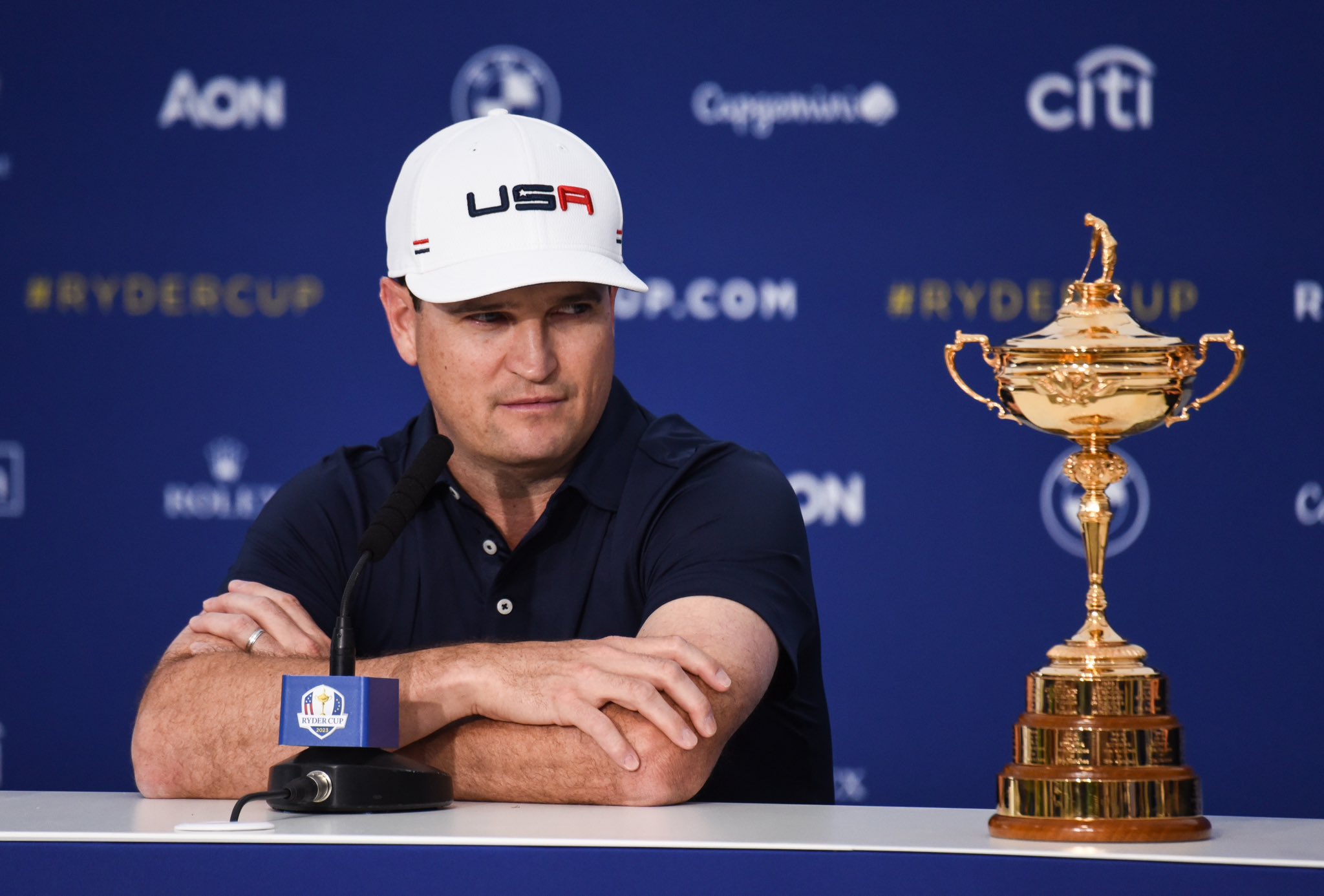
Zach Johnson Explains Why He Didn’t Pick Bryson DeChambeau for the Ryder Cup

Justin Thomas FIRES Coach before Ryder Cup…Who’s Next?