
Golf Instruction
Using the “Half Swing” Drill for Better Ball Control

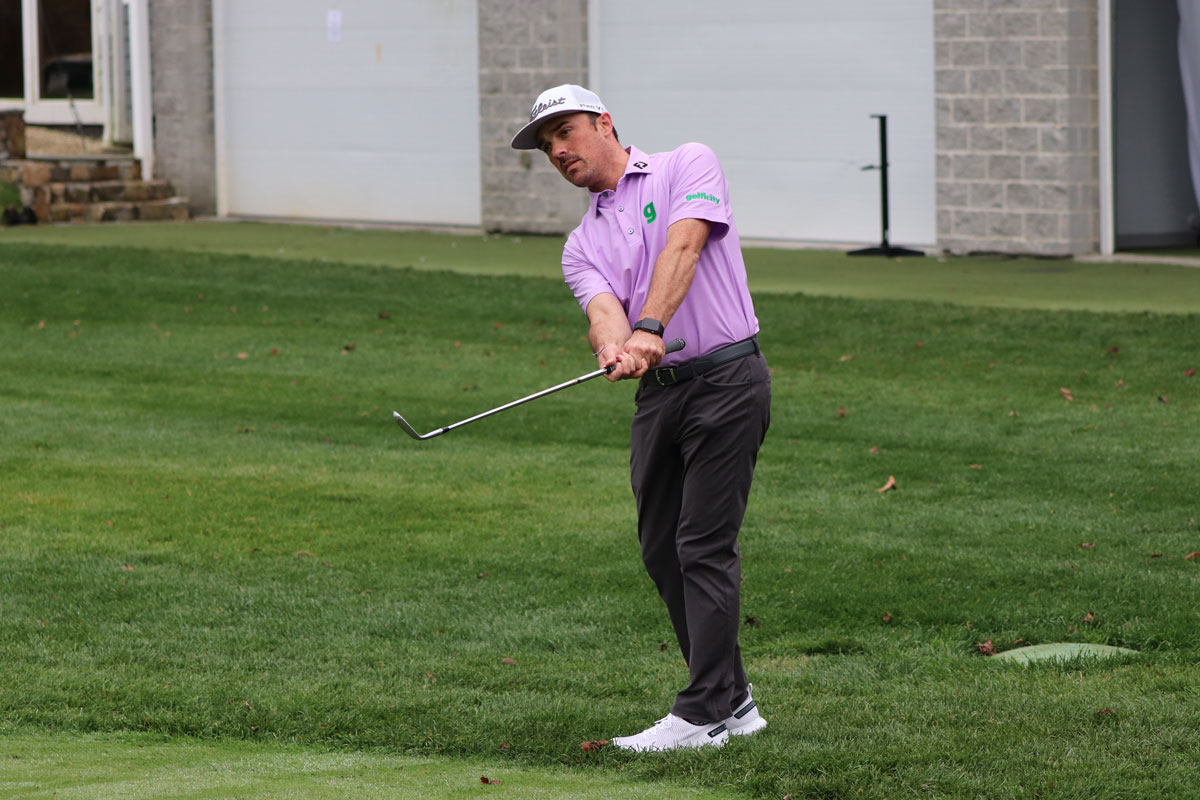
The modern game of golf is obsessed with power.
And, let’s be clear – we love hitting the ball hard too!
There is no doubt that adding distance to your game can help you shoot lower scores, and it’s just plain fun to launch a drive out into the distance.
With that said, ball control remains an essential element of playing well.
If you can’t control your ball, it won’t matter how hard you hit it. In fact, the harder you hit it, the harder it will be to find as it veers off into the rough, the trees, and beyond.
To help you gain some control over your ball flight, we’d like to introduce you to a simple “half swing” drill. By adding this drill to your practice routine, you may be able to tighten up your misses and play better golf overall.
Why a Half Golf Swing?
One of the inherent challenges that come with hitting solid golf shots is the fact that the swing happens so quickly.
Once the swing gets going, it’s hard to pay attention to every little move you are making – which is why so many players struggle to get better.
If you could slow things down for a moment to work out the details of your technique, you might be able to make significant improvements.
That’s where a half swing drill comes into the picture.
When you only make a half swing, the speed you generate will be greatly reduced, and you’ll better be able to observe your mechanics as a result. Of course, making a half swing doesn’t entirely replicate the experience of hitting a full shot, but many of the key components are still present.
Once you get comfortable with the way your half swing works using this drill, you can proceed to make full swings while keeping the same principles in mind.
Performing the Half Swing Drill
Let’s get right into how you can use a half swing drill to improve your ball striking and ball control.
Half swing drill in golf
No Description
In this example, we are going to assume you are at the driving range and you are hitting shots with this drill. However, you can also use it away from the course or range, just making “dry” practice half swings without hitting any shots.
- The best club to use for this drill is one of your short irons, so get started with a nine-iron or pitching wedge. You can try out other clubs later once you get comfortable with how the drill works
- Pick out a target on the range and take your normal stance as if you were going to hit a full shot. Since you are only making a short swing, it makes sense to pick out a target that is much closer to you than one you would use on a full shot
- With your stance set, begin the swing as you would for any other shot. However, as you swing back, prepare to stop the backswing and transition into the downswing when your left arm becomes parallel with the ground (for a right handed golfer)
- After you have made this early transition into the downswing, swing through the shot and on into your finish. You can swing up to a full finish if you would like, but your half swing may only create enough momentum to take you into a partial finish
That’s it! This is a simple drill, and at first, you might not quite be sure what you are trying to accomplish.
In the next section, we’ll explain what to focus on while hitting half shots and how this drill can help you become a better ball striker.
Three Half Swing Drill Keys
Now that you are hard at work using the half swing drill, be sure to focus on these three keys to get the maximum benefit from your efforts.
#1 One-Piece Takeaway
Without having to focus on swinging all the way up to the top of the swing, you should be able to keep your thoughts trained on the basic elements of your technique. One of those elements that are often overlooked in traditional practice is the takeaway.
A solid takeaway can dramatically improve your ball striking, and this drill gives you a good place to work on it.
Specifically, focus on keeping your hands and wrists quiet while your big muscles do the work of moving the club away from the ball.
A stable, steady takeaway will put the club in a consistent position swing after swing, and will help you control the position of the clubface effectively.
#2 Transition With the Lower Body
This might be the greatest gift the half swing drill has to offer…
In a normal swing, many golfers fail to get the lower body involved, as they let the hands and arms start the downswing from the top. That isn’t going to work so well with a half swing, since there is limited space between the club at the ball when you make the transition.

Photo via GolfDistillery.com
So, to build up any speed before impact, you’ll need to use your lower body.
When you change directions, turn your hips toward the target and use that lower body action to pull the club through the hitting area.
This is a powerful move that can elevate your ball striking if you carry it over to your regular swings.
#3 Balance
There is no time to correct for poor balance when making such a short swing.
Some golfers get into bad habits related to balance in their full swings, as they might drift off the ball and then try to recover before impact. You can’t do that with a half swing, so you have to stay in the right place all the way through.
Pay close attention to how your balance is working anytime you use the half swing drill.
You won’t get to launch the ball hundreds of yards down the range when using the half swing drill, but it can quickly help you gain control over the way you strike the ball.
Give this drill a try during an upcoming practice session to see what it can do for you.


LIV Golf Could Be Facing its Final Chapter

Foresight GC2 Review: A Surprisingly Affordable Launch Monitor From Foresight

FIRST LOOK: Rapsodo MLM2XPRO Adds Putting, Faster Performance & More

FIRST LOOK: Titleist’s 2027 Pro V1 and Pro V1x Are Officially Showing Up on Tour

2026 Presidents Cup Preview: Did Team USA Get It Right?
2026 Presidents Cup Preview: Did Team USA Get It Right?
FIRST LOOK: Rapsodo MLM2XPRO Adds Putting, Faster Performance & More
Foresight GC2 Review: A Surprisingly Affordable Launch Monitor From Foresight
FIRST LOOK: Titleist’s 2027 Pro V1 and Pro V1x Are Officially Showing Up on Tour
LIV Golf Could Be Facing its Final Chapter

We Played This Old Golf Course Where Thomas Edison Was A Member

Are You MEASURING Your Golf Swing Correctly? (This Can Help)
Zach Johnson Explains Why He Didn’t Pick Bryson DeChambeau for the Ryder Cup
Justin Thomas FIRES Coach before Ryder Cup…Who’s Next?
